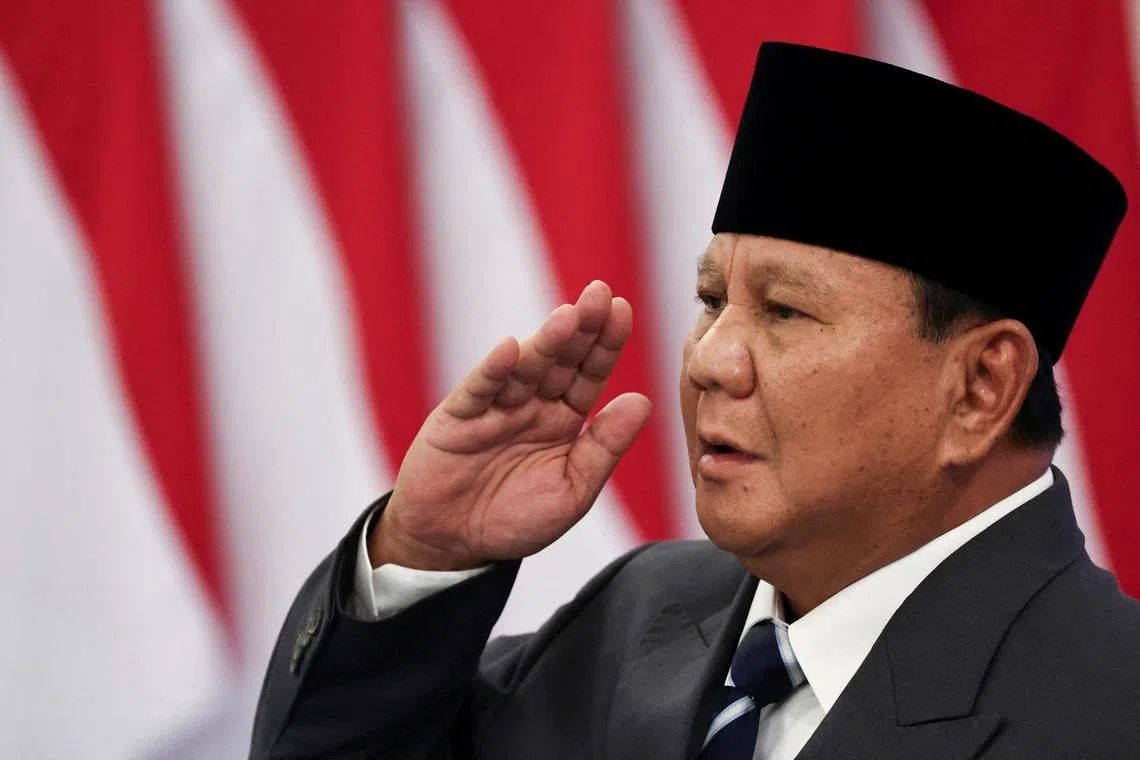
Indonesia's human rights commission has demanded the government shut down military training components in President Prabowo Subianto's signature Red and White Cooperatives initiative, citing five fatalities that occurred within the first ten days of a 45-day programme designed to prepare managers for the nation's cooperative network. The intervention underscores growing concerns about the expanding military role in civilian economic projects under Prabowo's administration, marking a significant challenge to a flagship programme intended to reshape Indonesia's village economy.
Launched in July of the previous year, the Red and White Cooperatives programme represents an ambitious economic initiative aimed at establishing approximately 80,000 village cooperatives throughout Indonesia. The scheme targets job creation and underpins the government's wider objective of achieving 8 percent economic growth by 2029. These cooperative units are expected to provide essential commodities to rural communities, distribute government-subsidised cooking gas and fertiliser, and strengthen local economic resilience in a nation where agricultural and village-based livelihoods remain central to millions of Indonesians' survival.
The training phase, which nearly 35,000 prospective cooperative managers must complete before assuming operational roles, commenced on June 14 and continues through July 31 across multiple military installations in different regions. This mandatory basic military training requirement has become the focal point of the human rights controversy, raising questions about whether such instruction serves legitimate purposes in preparing individuals to manage economic cooperatives focused on commerce and member services.
Pramono Ubaid Tantowi, an official representing Indonesia's human rights commission, articulated the agency's position with pointed clarity, emphasising that cooperatives function as business-oriented economic institutions whose success depends on managerial expertise, member-focused service delivery, and sound organisational governance. According to Tantowi's assessment, basic military training fails to advance these essential competencies and instead diverts resources and exposes participants to unnecessary risks. He advocated instead for capacity-building programmes centred on strengthening business management capabilities, leadership development, and financial literacy skills directly applicable to cooperative operations.
Defence Ministry officials have defended the training regimen, with Major General Ketut Gede Wetan, head of human resource development, attributing the five deaths occurring between June 17 and June 26 to diverse medical causes including cardiac arrest, heat stroke, tuberculosis, and pneumonia rather than training intensity. The ministry emphasised that all participants underwent pre-training medical screening and received clearance before enrolment. Wetan characterised the training as non-combat focused and stated it involved no strenuous physical demands, framing the programme as fundamentally different from military conditioning exercises.
Yet the human rights commission has demanded a comprehensive government investigation into the circumstances surrounding each death, requesting that police obtain forensic autopsy findings to establish definitive causation. This forensic demand signals scepticism regarding the defence ministry's explanation and suggests the commission views the deaths as potentially preventable and possibly linked to training conditions or systemic failures in health monitoring. The request for criminal investigation pathways indicates the commission may view the deaths as raising accountability questions.
The defence ministry has pledged to undertake what it describes as a comprehensive evaluation of the training programme, committing to enhanced health monitoring systems, early identification procedures for participants presenting health vulnerabilities, and adjustments to activity intensity levels. The ministry additionally indicated that the Health Ministry would integrate into the training oversight process, suggesting a recognition that civilian health expertise should complement defence sector management of the programme.
Prabowo's ascension to the presidency in 2024 has coincided with an observable expansion of military institutional involvement in civilian governance spheres, extending military engagement into policy domains historically managed through civilian channels. The Red and White Cooperatives programme, positioned as his administration's flagship economic development initiative, exemplifies this trend toward militarisation of civilian affairs. This pattern carries implications for how Indonesia balances institutional autonomy across the state apparatus and raises questions about the appropriate boundaries between military and civilian administrative responsibilities in democratic governance.
For Malaysian observers and regional analysts, the controversy illuminates broader Southeast Asian tensions surrounding military influence in civilian economic governance. As nations across the region grapple with questions about appropriate military roles, Indonesia's experience with the cooperative training deaths provides cautionary evidence about risks arising when military institutional cultures, training methodologies, and safety standards intersect with civilian economic programmes lacking comparable health and safety oversight mechanisms. The incident demonstrates how well-intentioned development initiatives can encounter serious implementation challenges when designed without sufficient attention to the specific capacities and limitations of executing institutions.
The human rights commission's intervention also reflects Indonesia's institutional capacity to challenge executive initiatives through independent oversight mechanisms, a feature distinguishing Indonesia's democratic architecture from more authoritarian regional examples. However, the fact that deaths occurred before such intervention became public underscores potential gaps in real-time monitoring and early warning systems that might have prevented fatalities through faster course modifications. The controversy ultimately questions whether military institution building represents the optimal pathway for developing cooperative management expertise in rural Indonesia, suggesting that alternative civilian-led training frameworks might better serve economic objectives while eliminating unnecessary health risks.
As the defence ministry implements its promised evaluation and the government confronts calls for programme termination, the incident will likely influence future decisions about military involvement in civilian economic initiatives across Indonesia. The outcomes of the forensic investigations and any resulting policy adjustments could establish precedents affecting how subsequent Prabowo administration development projects are structured, particularly regarding institutional assignment and interagency coordination between defence and civilian sectors.

