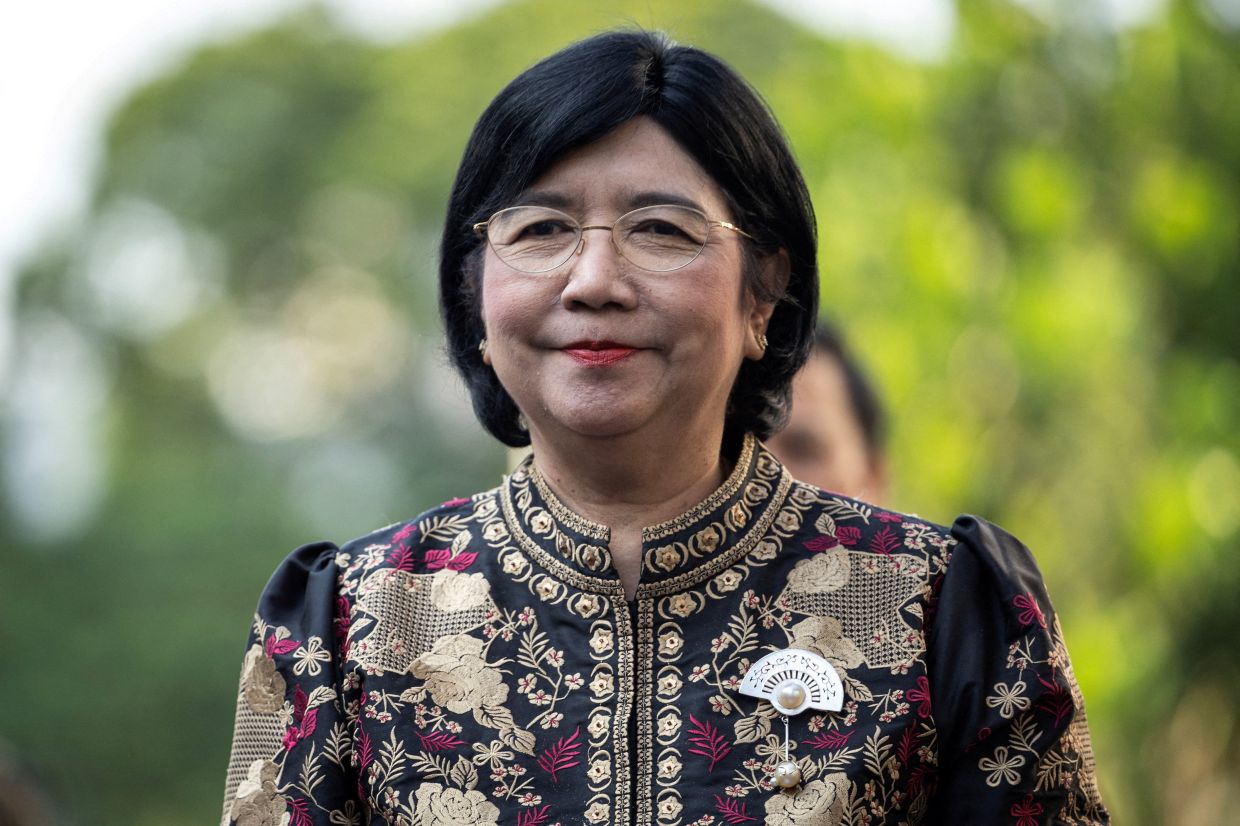
Indonesian President Prabowo Subianto has nominated Destry Damayanti as the sole candidate for the position of central bank governor, according to an announcement from the presidential office on Monday. The move comes after Perry Warjiyo's unexpected resignation in late September, which had triggered considerable uncertainty among investors regarding the future direction of Indonesia's monetary policy and the independence of one of the region's most important financial institutions. Damayanti, who has been serving in an interim capacity since Warjiyo's departure, brings extensive experience from her tenure as senior deputy governor since 2019, making her institutional knowledge and continuity central to the succession decision.
The financial markets have reacted positively to the clarity provided by the nomination. The Indonesian rupiah strengthened considerably following the announcement, reaching its most robust performance against the United States dollar in nearly three months, touching levels not seen since mid-June. This immediate market response underscores investor relief at having a clear path forward for the central bank's leadership after weeks of speculation about potential candidates and the institutional uncertainty that typically accompanies such transitions in emerging markets.
Damayanti's elevation represents a promotion from within Bank Indonesia's hierarchy, where she had already assumed operational leadership during the interim period. Her extensive background in the institution positions her to maintain policy continuity while navigating the complex economic challenges facing Indonesia at present. The nomination also signals Prabowo's confidence in preserving institutional structures rather than introducing external candidates, a choice that may bolster perceptions of stability within the monetary authority.
Parliament, which is dominated by Prabowo's broad coalition of supporting parties, has been allocated one month to deliberate on and either approve or reject the nomination. Historical precedent strongly favours approval, as the legislature has not refused a sitting president's choice for central bank governor since 2008—a span of sixteen years that demonstrates the general deference typically shown to executive nominations for this critical position. Nevertheless, the parliamentary review period provides an opportunity for scrutiny and public discourse about monetary policy directions.
Warjiyo's unexpected departure had reignited investor concerns about Indonesia's macroeconomic management and the independence of its central banking functions. These anxieties reflected broader apprehensions about fiscal discipline within the government, transparency standards in equity market operations, and questions about whether the central bank might face pressure to prioritise growth objectives over price stability and currency management. The G20 nation's economic credibility had already been under strain before Warjiyo's resignation, with foreign investors increasingly cautious about new commitments to Indonesian assets.
The central bank operates under significant competing pressures in the current economic environment. On one hand, President Prabowo has articulated an ambitious growth target of 8 percent annually, substantially above Indonesia's recent performance of approximately 5 percent. Achieving this expansion would require monetary accommodation and credit expansion, objectives that align with government ambitions to accelerate infrastructure development and consumption. Conversely, Bank Indonesia must simultaneously manage persistent inflation concerns, protect the rupiah's exchange rate stability, and maintain the credibility required to anchor expectations.
During Warjiyo's tenure as governor, the central bank has implemented a series of measures to defend the rupiah and manage capital outflows. Throughout this year, policymakers elevated the policy interest rate by 100 basis points, implemented special rupiah hedging incentives for foreign investors, and introduced high-yielding short-term Bank Indonesia securities designed to attract and retain capital inflows. These interventions represented an attempt to establish a floor under currency valuations without completely surrendering monetary policy to growth acceleration.
Damayanti will inherit an institution already stretched between these competing mandates. The timing of her nomination and likely confirmation occurs as emerging markets generally face renewed pressures from capital reallocation, with investors reassessing risk-reward relationships across the developing world. For Malaysia and other Southeast Asian nations, Indonesia's central banking choices carry regional implications, particularly regarding capital flows, currency volatility, and regional financial stability. A continuation of Damayanti's steady institutional approach may provide reassurance compared to scenarios involving more dramatic policy shifts.
The selection process also reflects the political dynamics within Prabowo's governing coalition. By choosing an internal candidate with established credibility among international investors and central banking peers, the administration may be signalling that despite its ambitious growth agenda, it recognises the importance of maintaining institutional independence and market confidence. This balancing act will define Damayanti's tenure as she seeks to accommodate government development priorities while preserving the central bank's operational autonomy and inflation-fighting credibility.
Looking ahead, Damayanti's confirmation would provide stability to Indonesia's economic management during a period when regional growth has moderated and external pressures on emerging market currencies have intensified. Her intimate knowledge of Bank Indonesia's operations, institutional culture, and the relationships cultivated with international monetary authorities over decades positions her to navigate these challenges with institutional memory intact. The coming weeks will reveal whether parliament's expected approval proceeds smoothly, and whether Damayanti can sustain the delicate equilibrium between supporting national development ambitions and maintaining the central bank's independence.

