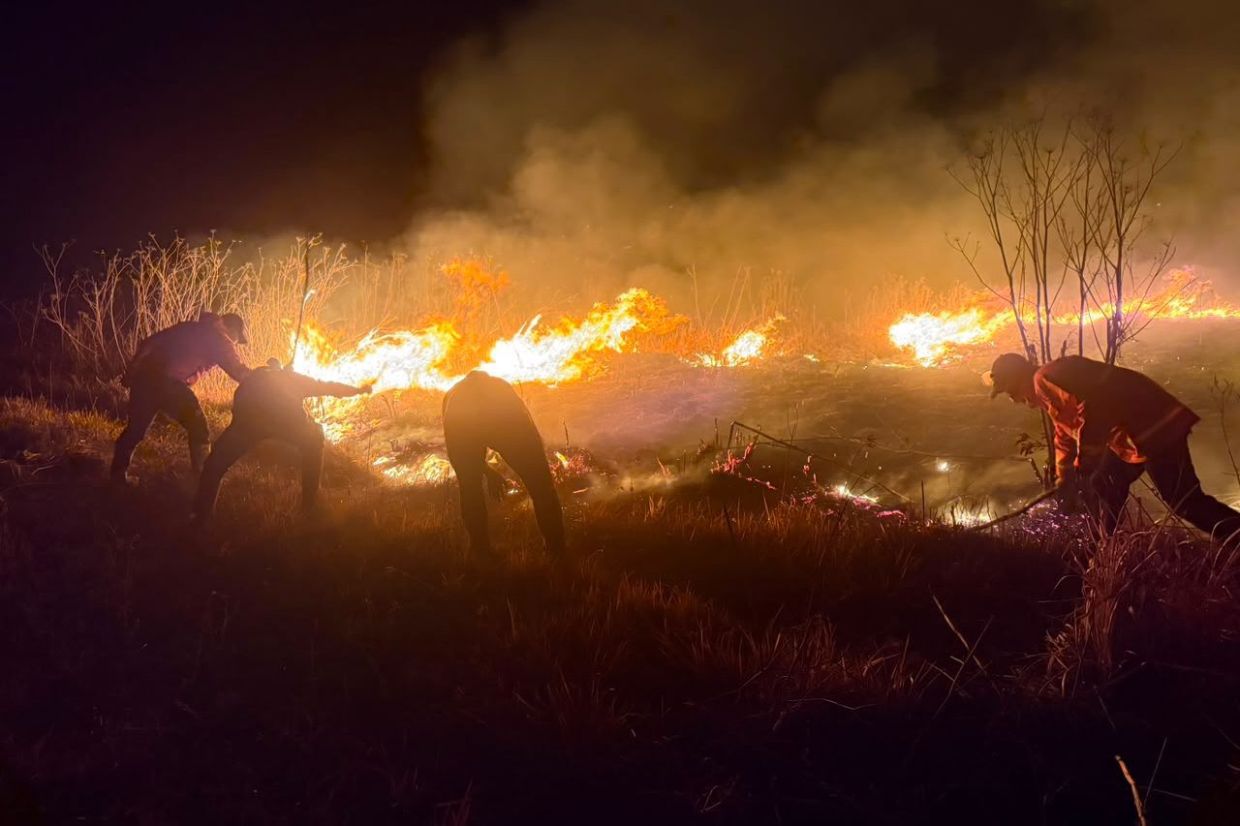
A rapidly expanding wildfire at Mount Bromo in East Java has now consumed roughly 520 hectares of the iconic volcanic landscape, with authorities warning that conditions continue to deteriorate as meteorological factors amplify the flames' destructive reach. The fire reignited with intensity on Saturday night, spreading across slopes and into the mountain's natural savanna grasslands, prompting regional officials to declare the situation increasingly dire.
The Bromo Tengger Semeru National Park (TNBTS) Authority, under the leadership of head Rudijanta Tjahja Nugraha, attributed the dramatic escalation in burned area directly to weather conditions. Sustained winds of considerable force since Saturday afternoon have created ideal conditions for rapid fire propagation, carrying embers and flames from higher elevations down towards lower terrain with alarming speed. The geographical layout of Mount Bromo—with its interconnected slopes and accessible grassland formations—has proven particularly vulnerable to lateral spread once the fire establishes momentum.
Environmental factors have conspired to create a combustion crisis. The region's vegetation, already severely desiccated by seasonal dry conditions, offers minimal resistance to advancing flames. Dried grass, shrubs, and other plant matter throughout the affected zone possess negligible moisture content, transforming the landscape into essentially a tinderbox awaiting ignition. This aridity is not unusual for East Java during certain periods, but when combined with human-caused fire, it creates catastrophic potential.
Authorization of the suspected human origin of the fire came from park authorities on Friday, though investigation into the precise circumstances and responsible parties has been delegated to law enforcement agencies. Forestry Minister Raja Juli Antoni emphasized that Indonesia maintains strict penalties for individuals engaging in forest and land burning, signalling the government's determination to hold perpetrators accountable. The minister's statement underscores an official stance treating such incidents as serious crimes rather than mere accidents.
The immediate management response has been comprehensive in scope. The TNBTS Authority implemented complete closure of Mount Bromo to all tourist traffic beginning Saturday evening at 10pm, with no specified reopening date. This decision, while economically painful for the tourism sector and local communities dependent on visitor spending, reflects the priority placed on both active firefighting operations and preventing additional loss of life. Visitors whose plans were disrupted have been offered either rescheduling accommodations or full financial reimbursement, mitigating some of the disruption caused by the emergency.
The significance of this wildfire extends beyond immediate environmental damage. Mount Bromo represents one of Southeast Asia's most recognizable and visited natural attractions, drawing tourists from across the region and internationally. The park serves not only as a recreational destination but also as a crucial ecosystem within East Java. Prolonged closure carries ramifications for local economies and for Indonesia's tourism reputation during a period when the sector remains sensitive to operational disruptions.
The expanding fire presents particular challenges for firefighting teams operating in mountainous terrain. Access to affected zones at higher elevations can be limited, while weather conditions that spread the flames—the same strong winds—complicate aerial suppression efforts and ground operations alike. The vegetation composition of savanna grasslands, while less dense than forested areas, can actually facilitate rapid fire spread due to the continuous fuel source grass provides across open terrain.
For Malaysian readers and the broader Southeast Asian context, Mount Bromo's situation serves as a reminder of the transboundary nature of environmental hazards in the region. Wildfire smoke from East Java can drift across maritime zones and potentially impact air quality in neighbouring territories. Indonesia's experience managing this crisis also offers relevant lessons for fire prevention and response strategies applicable across the region, where seasonal dry periods regularly create wildfire risks.
The investigation phase will prove crucial for understanding how human activity triggered the fire and whether systemic failures in monitoring or enforcement allowed it to initiate. Evidence collection in active fire zones presents logistical challenges, but authorities will need comprehensive findings to strengthen future prevention measures. The perpetrators' identification and prosecution will send important signals about the consequences of forest burning in protected areas.
Recovery from this incident will unfold across multiple timescales. Immediate priorities centre on extinguishing active flames and preventing further spread. Medium-term concerns include ecosystem restoration and assessment of damage to the park's biological diversity. Longer-term challenges involve strengthening surveillance and enforcement mechanisms to prevent recurrence, particularly given the vulnerability of dry-season conditions that will return predictably each year.

