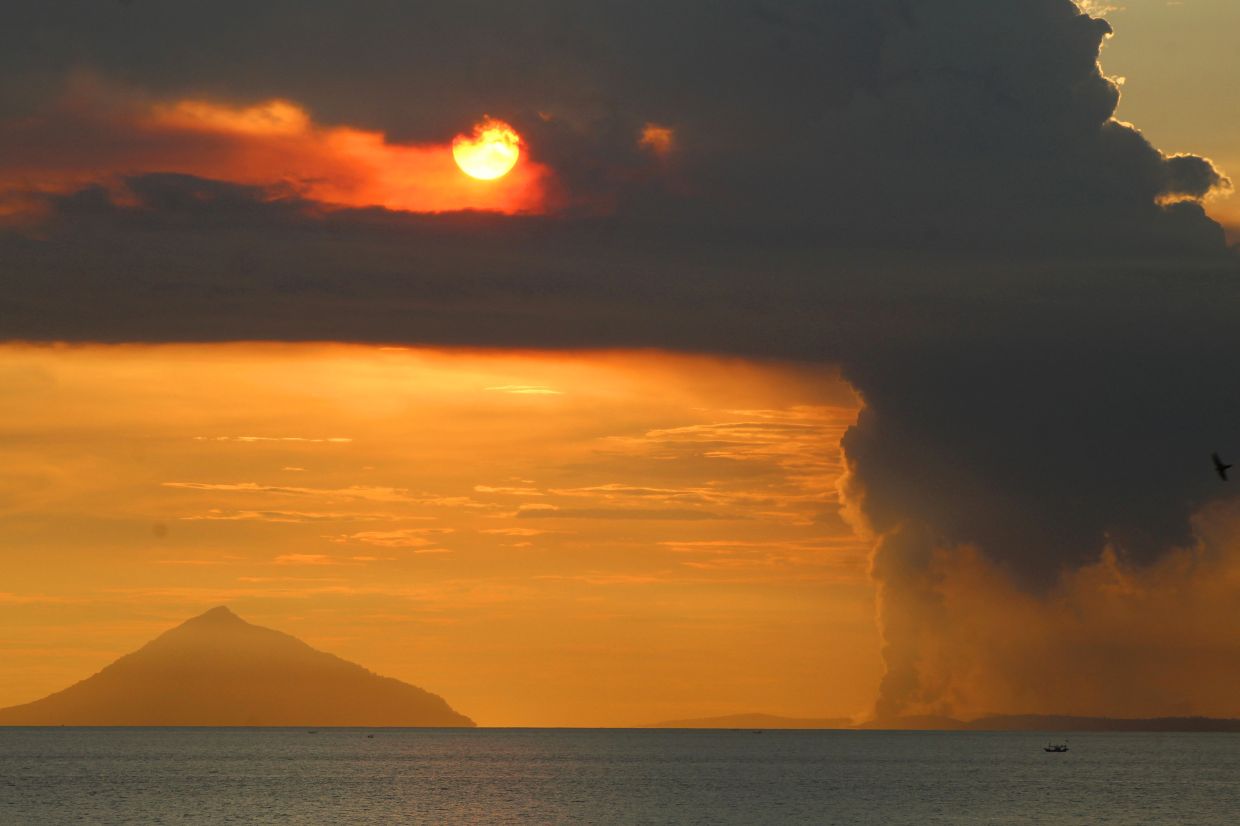
Mount Anak Krakatau, situated in the strategically important Sunda Strait separating Sumatra and Java, erupted on Tuesday, July 7, in the early morning hours, demonstrating the ongoing volatility of one of Southeast Asia's most closely monitored volcanic systems. The eruption at 8:21 a.m. local time produced a substantial ash column rising approximately 100 metres into the sky, with the gray plume drifting toward the north-west. Indonesia's Geological Agency of the Energy and Mineral Resources (ESDM) confirmed the eruption, noting that seismic instruments recorded a maximum amplitude of 11 millimetres with a duration spanning roughly 15 seconds.
Despite this fresh eruption, officials emphasised that the volcano's alert classification has not been altered from its current designation. Andi Suwardi, who heads the Mount Anak Krakatau Observation Post in South Lampung, explained that whilst eruptions persist with fluctuating intensity, the volcano's threat level remains unchanged at Level III (Watch) — the second-most serious category in Indonesia's four-tier volcanic warning framework. The distinction between alert status and eruption frequency reflects the complex nature of volcano monitoring, where authorities differentiate between the volcano's current activity pattern and the potential hazard it poses to surrounding communities.
The escalation to Level III alert occurred on Friday of the previous week, following a pronounced increase in volcanic activity that commenced on June 10 after an extended period of relative dormancy. The weeks preceding the alert upgrade revealed a dramatic surge in seismic events, with tremors and low-frequency earthquakes averaging more than 50 daily occurrences between June 18 and 19. By late June, this frequency had intensified further, reaching an average of 97 events per day from June 16 through July 2. This pattern of acceleration typically signals to volcanologists that magma is accumulating and finding pathways toward the surface, presenting genuine cause for heightened vigilance.
The eruptions themselves commenced on Thursday of the previous week, marking the beginning of the current eruptive phase, with the July 7 event representing the fifth eruption in this sequence. In response to the escalating volcanic unrest, authorities implemented a three-kilometre exclusion zone surrounding the crater, effectively restricting all civilian access and activity within that perimeter. The observation post maintains continuous 24-hour surveillance, with monitoring teams tracking critical indicators including ash plume altitude, seismic tremors, and other geochemical parameters that collectively inform assessments of volcanic behaviour.
Local authorities have issued repeated appeals to fishermen, tourism operators, and the general public to respect the exclusion zone and refrain from venturing toward Mount Anak Krakatau. Andi Suwardi's warnings emphasised that safety must supersede all other considerations until the ESDM issues an updated advisory. Similarly, South Lampung Regent Radityo Egi Pratama appealed directly to maritime communities and tourism businesses, acknowledging the economic hardship imposed by the restrictions whilst insisting that income generation cannot justify exposure to volcanic hazards. Troublingly, reports indicate that despite official restrictions, some fishermen and tour operators continue to approach the volcano's vicinity in attempts to evade monitoring.
The regent's appeal reflected genuine concern about the livelihoods of communities dependent on fishing and tourism in the Sunda Strait region. The heightened volcanic activity has disrupted traditional maritime pursuits and tourism ventures that constitute primary income sources for numerous families in South Lampung. However, officials stressed that temporary economic sacrifice represents the necessary trade-off for protecting human life, particularly given the catastrophic potential that Mount Anak Krakatau has demonstrated historically.
The volcano's historical significance looms large over contemporary risk assessments. Mount Anak Krakatau, whose name literally translates to "Child of Krakatau," emerged from the ocean in 1927, gradually rising from the submerged caldera left behind by the cataclysmic 1883 eruption of its parent volcano. That nineteenth-century disaster stands among the deadliest and most destructive volcanic events ever recorded, with explosions and subsequent tsunamis claiming approximately 36,000 lives across the region. The eruption injected vast quantities of volcanic material into the upper atmosphere, altering precipitation patterns and global temperatures for extended periods, demonstrating the planetary-scale consequences that major Krakatau events can trigger.
The modern version of the volcano has itself produced significant hazards. Mount Anak Krakatau's most recent major eruption on December 22, 2018, triggered a partial collapse of the volcano's flank that generated a destructive tsunami. The waves inundated coastal areas of southern Sumatra and western Banten province, resulting in at least 429 fatalities and injuring more than 7,200 individuals. That event illustrated the multi-hazard nature of volcanic eruptions in submarine or near-shore settings, where flank collapses can produce tsunami waves with minimal warning.
The current escalation in seismic activity and eruption frequency carries profound implications for the broader Sunda Strait region, an area of intense maritime traffic and significant economic importance to Indonesia. The strait serves as a vital shipping corridor and fishery, supporting numerous coastal communities throughout the region. Malaysia, given its proximity across the Strait of Malacca and historical experience with volcanic phenomena from the 1883 Krakatau eruption, monitors such developments with considerable attention. A major eruption producing substantial ash dispersal could potentially affect air quality across the Strait of Malacca and into Malaysia, as demonstrated by ash transport patterns during previous eruptions.
Indonesia's volcanic monitoring infrastructure, centred on the ESDM's networks and coordinated through the ESDM's volcanic alert system, represents one of the region's most sophisticated geological monitoring apparatus. The four-tier alert system provides graduated warnings, allowing authorities to implement proportionate responses without unnecessarily restricting access when genuine hazard levels remain modest. The decision to elevate Mount Anak Krakatau to Level III reflects volcanologists' professional assessment that current activity patterns warrant serious concern, yet do not yet justify the most severe Level IV (Danger) classification, which would mandate complete evacuation and all-encompassing access restrictions.
The ongoing situation at Mount Anak Krakatau exemplifies the delicate balance that authorities must maintain between scientific precaution and socioeconomic necessity in volcanic regions. Indonesia's experience with multiple active volcanoes—more than any other nation on Earth—has cultivated sophisticated institutional expertise in managing such dual imperatives. Nonetheless, cases where individuals ignore official warnings to pursue economic opportunities demonstrate persistent tension between subsistence imperatives and formal safety protocols in vulnerable communities. As monitoring continues and the volcano's behaviour evolves, officials face the challenge of maintaining public compliance with restrictions whilst demonstrating genuine concern for the economic welfare of affected populations.

