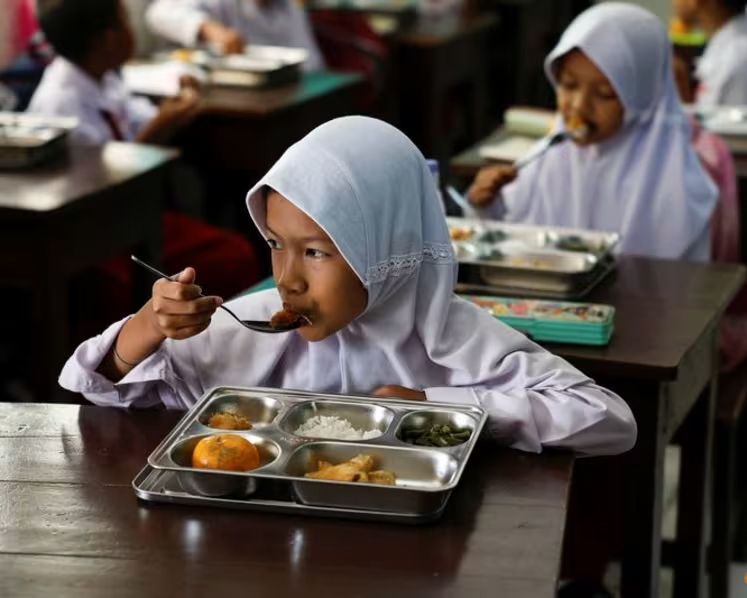
The Indonesian government's signature free meals programme has been thrown into fresh turmoil with the resignation of the National Nutrition Agency's chief, continuing a pattern of instability that threatens to undermine one of President Prabowo Subianto's most visible and costly policy commitments. Nanik Sudaryati Deyang, who assumed leadership of the agency in June following the dismissal of her predecessor, announced her departure on Wednesday, citing serious health concerns that have forced her to seek medical treatment abroad. Her decision represents the second major leadership change at the embattled organisation within just over a month, underscoring the mounting pressures facing an initiative that was meant to deliver nutritional support to some of Indonesia's most vulnerable populations.
The circumstances surrounding both leadership transitions reveal deepening institutional fragility within the programme's administration. Nanik's predecessor was removed by Prabowo and subsequently arrested on corruption charges related to the multibillion-dollar scheme, following a dramatic raid on the agency's Jakarta headquarters. That arrest signalled the president's determination to clean house after mounting criticism, but the rapid succession of departures suggests the underlying problems run deeper than individual misconduct. Nanik's own exit came amid an atmosphere of intense scrutiny, with budget austerity and ongoing criminal investigations creating what she characterised as unbearable stress that damaged her health, prompting her cardiologist to warn that her arteries had become dangerously clogged.
The health crisis affecting the agency's leadership must be understood within the context of the programme's troubled operational record since its launch in January 2025. The initiative has struggled with significant logistical obstacles, persistent quality concerns, and several alarming incidents of mass food poisoning that damaged public confidence in the government's capacity to deliver the promised meals safely and reliably. These failures have not gone unnoticed by Indonesians or regional observers, raising questions about whether adequate oversight mechanisms and quality control systems were in place before the nationwide rollout. The combination of operational mishaps and leadership instability has created a perception problem that extends beyond the technical challenges of feeding millions of people.
Financial pressures are clearly constraining the programme's scope and threatening its long-term viability. The National Nutrition Agency announced a second significant budget reduction just before Nanik's resignation, cutting the 2026 allocation from 268 trillion rupiah to 229 trillion rupiah, equivalent to approximately 12.79 billion US dollars. This adjustment follows an earlier trimming of funds, leaving the current budget more than 100 trillion rupiah below the original allocation of 335 trillion rupiah that was intended to support the programme's ambitious reach. The prospect of further cuts remains real, pending yet another budgetary review, creating an environment of uncertainty that makes it difficult for managers to plan effectively or commit resources with confidence.
The scale of the programme's original ambitions underscores the magnitude of the challenge facing its administrators. The initiative was designed to provide free meals to 83 million Indonesians, including schoolchildren and pregnant women, representing a transformative intervention in public nutrition across the archipelago. Before the latest round of budget reductions, the agency reported that it had already delivered free meals to 62.5 million people, suggesting that despite the operational difficulties, significant numbers of vulnerable populations have received support. However, the gap between the target of 83 million beneficiaries and the current trajectory indicates that the programme will fall substantially short of its original scope, with consequences for the populations that were excluded or reached less frequently.
Nanik's own comments about the nature of the programme reveal something of the political sensitivity surrounding the initiative. She insisted that the free meals scheme should be understood as a public health intervention focused on child nutrition, rather than merely a political campaign promise, pushing back against critics who have characterised it as an expensive electoral gimmick designed to boost Prabowo's popularity. This framing reflects an attempt to defend the programme on merit, but it also inadvertently acknowledges that the public and political commentariat have questioned its underlying rationale and efficacy. The distinction between a serious nutritional intervention and a populist expenditure is not merely semantic—it goes to the heart of questions about whether Indonesia's fiscal resources are being deployed wisely.
The emergence of a potential supervisory board for the agency, which Prabowo is reportedly considering and which Nanik has been asked to lead despite her resignation, suggests that the president recognises the need for stronger external oversight of the programme's management and finances. Such a governance restructuring could signal an effort to introduce professional scrutiny and institutional checks, particularly in light of the corruption investigation that has already claimed one senior official. However, the appointment of the departing agency chief to oversee a new supervisory structure also raises questions about whether meaningful reform is genuinely possible when those responsible for operational failures retain influence over governance.
The succession process itself remains undefined, with the agency providing no immediate clarity on who will assume the chief executive role. Nanik noted that her successor would be someone junior to her within the organisation, suggesting that the next appointment may represent a promotion from within rather than the recruitment of external expertise that the troubled programme might arguably require. The absence of a publicly named successor and timeline for transition adds to the sense of institutional drift that has characterised the recent months, making it difficult for stakeholders—whether international observers, domestic critics, or beneficiary populations—to assess whether the programme has stabilised or faces further disruption.
For Malaysia and the broader Southeast Asian region, the travails of Indonesia's free meals programme carry implications that extend beyond Indonesia's domestic politics. The initiative represents one of the region's largest public nutrition efforts, and its evident operational and financial difficulties offer lessons in the challenges of scaling social programmes rapidly across vast, geographically dispersed populations. The tensions between ambitious policy goals, constrained fiscal resources, and implementation capacity that have emerged in Jakarta are not unique to Indonesia and warrant careful study by other governments contemplating similar interventions. The programme's stumbling also reflects broader questions about institutional governance and anti-corruption frameworks in the region, particularly where large public expenditures are involved.

