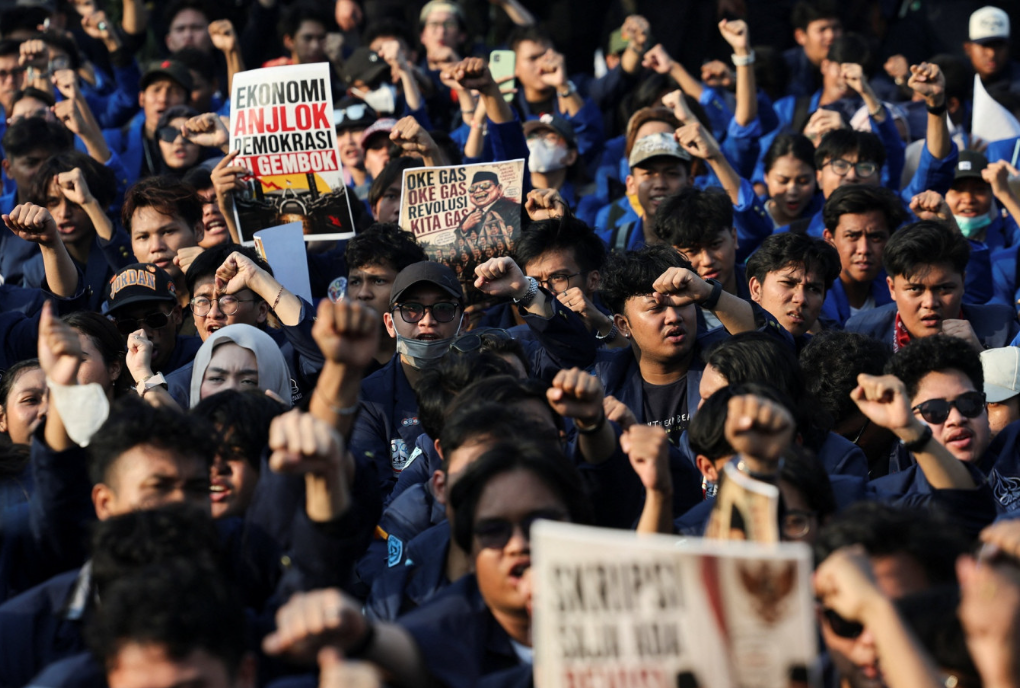
Indonesia's ambitious free nutritious meal programme, a cornerstone initiative of President Prabowo Subianto's administration, has become a focal point of intense public dispute, with demonstrations erupting across multiple regions reflecting sharp divisions over the scheme's value, affordability and management. The programme, launched in January to address malnutrition and stunting among children nationwide, now faces unprecedented pressure from both those questioning its massive budget allocation and those whose livelihoods depend on its continuation, exposing deep fault lines in how Indonesians view government spending priorities during economically constrained times.
Student activism against the scheme has gained considerable momentum, with protests held in Bali, Jakarta, and Batam articulating concerns that resonate among Indonesia's younger generations. In Denpasar, hundreds of university students gathered at the Regional Legislative Council building to demand a comprehensive audit of the programme's finances and implementation practices. Their grievances extended beyond the meal scheme itself, encompassing broader anxieties about fiscal mismanagement, economic stagnation, and the health of Indonesia's democratic institutions. The students specifically urged the Supreme Audit Agency to investigate whether budgetary allocations truly correspond to tangible outcomes or whether funds are being diverted through corruption or inefficiency.
The student movement has seized upon recent scandals to bolster their case for fundamental programme reform. The arrest of three senior officials from the National Nutrition Agency on corruption charges provided a dramatic rallying point for demonstrators who argue that systemic oversight failures have allowed malfeasance to flourish unchecked. These revelations have proven particularly damaging to the programme's credibility, suggesting that even as the state allocates unprecedented resources to combat malnutrition, institutional weaknesses enable theft and misappropriation. The students' call for wholesale leadership changes at the National Nutrition Agency reflects their conviction that incremental adjustments cannot remedy what they characterise as fundamental governance problems.
Food safety concerns compound the legitimacy crisis facing the initiative. Reports of food poisoning incidents tied to meal distribution have alarmed parents and sparked medical investigations into whether contracted food preparation facilities maintain adequate sanitation standards. These incidents strike at the programme's core rationale: if meals intended to nourish children instead cause illness, the scheme undermines the very health outcomes it was designed to achieve. For students concerned about state competence, these failures exemplify the dangers of implementing massive programmes without robust quality controls, particularly when vulnerable populations depend on government-provided nutrition.
The government has responded to criticism by introducing efficiency measures rather than abandoning the programme entirely. The National Nutrition Agency reduced the annual budget from Rp 335 trillion to Rp 228.4 trillion whilst maintaining the scheme's core operations, a compromise that satisfies neither critics nor beneficiaries. Officials have suspended meal distribution during the late June to mid-July school holiday period and have targeted 76 schools in affluent areas for exclusion, arguing that students from higher-income families do not require state nutritional support. These targeted reductions represent an implicit acknowledgment that the original scope may have been overly ambitious, yet they fall short of the sweeping cancellation that critics demand.
Whilst students protest against expenditure levels, a different demographic has mobilised to defend the programme's continuation. Kitchen workers employed under the scheme, numbering around 1,500 in Batam alone, have staged counter-demonstrations outside regional legislative buildings, highlighting how budget cuts threaten their daily earnings. These workers, many of whom depend entirely on daily wages to support their families, face acute hardship if meal distribution is reduced from six to five days weekly or suspended during school holidays. Their protests underscore a crucial reality often absent from abstract fiscal debates: for thousands of workers across Indonesia, the free meal programme represents not wasteful government spending but rather direct employment and economic survival.
Beneficiary communities have similarly mobilised to defend the scheme, recognising its importance beyond schoolchildren. In Bandar Lampung, residents demonstrated in favour of programme continuation, emphasising that pregnant women, nursing mothers, and toddlers require sustained nutritional support regardless of school schedules. This constituency views the suspension logic as fundamentally flawed, arguing that vulnerable groups cannot be asked to wait for meals simply because schools are closed. Their perspective highlights the difficulty of fine-tuning a nationwide programme that serves disparate populations with varying nutritional needs and schedules.
The programme's reach into Indonesia's agricultural economy creates additional stakeholders with vested interests in its preservation. Local farmers and agricultural producers have benefited from robust demand for basic commodities including rice, corn, cassava, fruits, and vegetables supplied through meal procurement channels. In rural and semi-rural areas, the nutritious meal initiative has stabilised commodity prices and provided consistent market outlets for agricultural producers. This agricultural dimension means that suspending or substantially reducing the programme would reverberate through farming communities and agribusiness sectors, affecting not only meal recipients and kitchen workers but entire supply chains dependent on the scheme's purchasing power.
The scale of the programme makes such economic reverberations significant. With allocations exceeding Rp 228 trillion annually and 83 million intended beneficiaries across schoolchildren, pregnant women, and nursing mothers, the scheme represents one of Indonesia's largest social safety net investments. Few governments can implement programmes of this magnitude without encountering coordination challenges, fraud risks, and quality control problems. The corruption cases and food safety incidents are serious but perhaps unsurprising given the programme's vast scope and the institutional capacity constraints that many Indonesian agencies face.
For Malaysian and Southeast Asian observers, Indonesia's experience offers instructive lessons about the complexities of implementing ambitious social welfare expansion during periods of fiscal tightening. The competing protests reflect a broader tension in developing economies: the genuine need for nutrition assistance and targeted welfare support clashes with legitimate concerns about government spending discipline, institutional capacity, and resource allocation efficiency. Neither camp's position lacks merit, yet the polarisation suggests Indonesia's policymakers have struggled to build consensus around programme design before rolling out such a massive initiative.
The controversy also illuminates how social programmes become politically contentious in ways that purely technical discussions about malnutrition often miss. Once millions of workers, farmers, and beneficiary families develop dependence on a programme, reversing course becomes politically difficult regardless of fiscal logic. The government has attempted a middle path through efficiency measures and targeted reductions, but this compromise appears to satisfy few constituencies. Resolving this dispute will likely require not just administrative fixes but a broader national conversation about welfare priorities, institutional governance, and the appropriate balance between social investment and fiscal responsibility.
As protests continue across different regions, the free meal programme has become a referendum on Prabowo's administrative competence and spending priorities. Whether the government can rescue the initiative through reformed management and restored public confidence, or whether the combination of cost concerns and implementation failures forces deeper programme restructuring, remains uncertain. What is clear is that Indonesia's nutritional security challenge cannot be solved through expenditure alone; effective solutions require the institutional capacity, governance discipline, and public trust that the current controversy shows remain elusive.