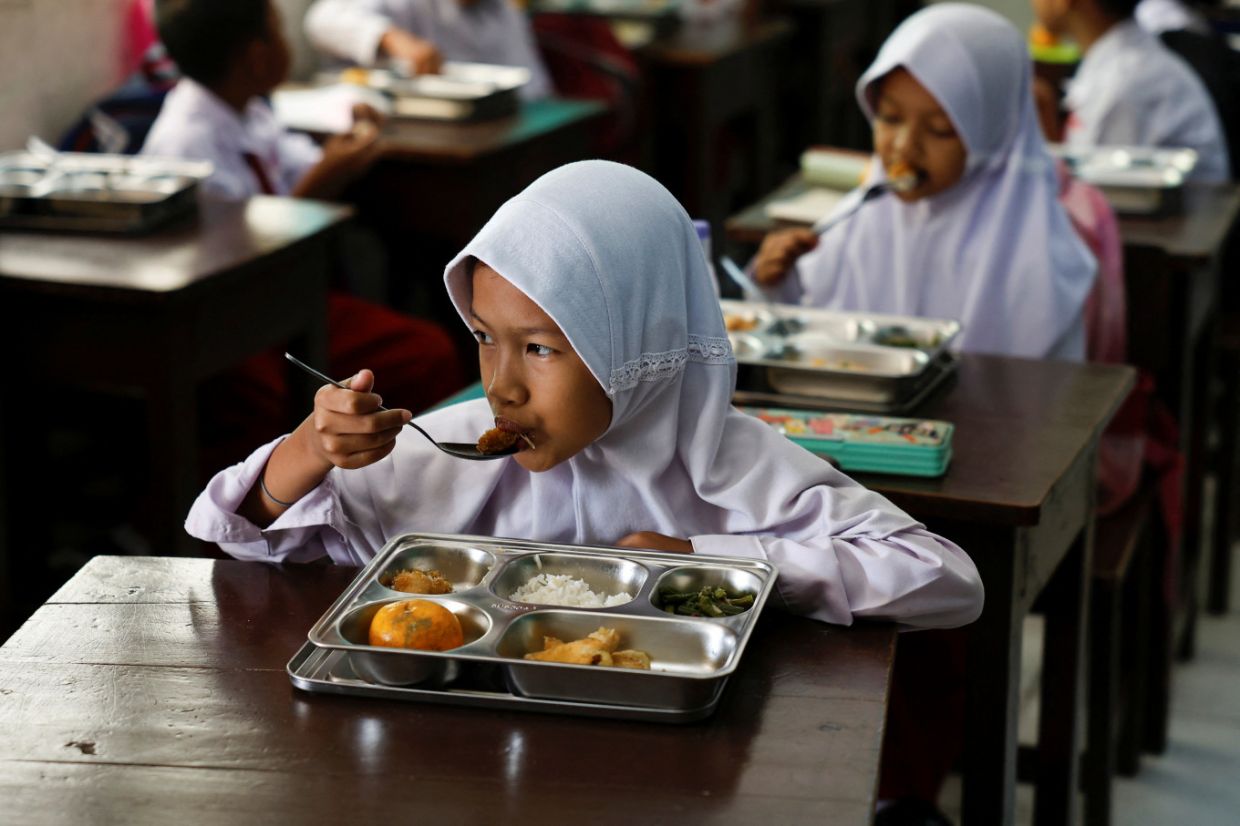
Indonesia's proposed revision to its National Education System Law has triggered heated debate among education stakeholders, with teachers groups warning that the legislation contains ambiguous language that could resurrect funding for President Prabowo Subianto's free nutritious meals program from the education budget—a practice the Constitutional Court explicitly prohibited just months ago. The controversy centers on how policymakers might interpret new provisions regarding health services, and whether such interpretation could create a backdoor to reintegrate meal costs into mandatory education spending.
The Indonesian Teachers Association (P2G) has emerged as a vocal critic of the bill currently under review by the House of Representatives. The revised legislation includes language stating that government and educational institutions should "provide health services, including those concerning mental health, at educational institutions in a manner that is integrated with the national health policies as well as the national education goals." Satriwan Salim, the P2G's national coordinator, expressed deep suspicion that this provision's broad wording could be leveraged to classify the free meals initiative as a health intervention integral to education policy, thereby justifying its continued financing from education funds.
This concern stems directly from a landmark Constitutional Court decision issued on July 30, which determined that the free meals program constitutes a health initiative rather than an educational service and therefore should not draw from the education budget. That ruling came in response to petitions filed by teachers, academics, students, and nonprofit organisations who argued that diverting education funds to meals programmes violated constitutional provisions mandating that at least 20 percent of annual state revenue be dedicated exclusively to education sector development.
The financial stakes are substantial. During the current budget year, approximately 223 trillion rupiah—equivalent to 12.5 billion United States dollars—was allocated to the free meals program from the total 769 trillion rupiah education budget. This figure represents nearly one-third of mandatory education spending, funds that critics argue should be directed toward improving classroom instruction, compensating teachers adequately, and enhancing educational infrastructure across the archipelago.
Constitutional law expert Feri Amsari has cautioned that the court's reasoning extends beyond budget nomenclature and applies to all legislation. According to Amsari, no future law can legitimately restore education budget financing for the meals program under any guise or alternative framing without violating constitutional principles established by the ruling. This position effectively constrains legislators' flexibility in how they structure the program's financing, requiring them to seek alternative funding sources entirely outside the education budget allocation.
Civil society coalitions monitoring the issue have urged lawmakers to respect the court's authority. Agus Sarwono of Transparency International Indonesia, representing the MBG Watch coalition, warned that any attempt to circumvent the ruling through budget restructuring, terminology shifts, or regulatory modifications would amount to judicial defiance. Such moves, he argued, would undermine institutional integrity and the rule of law in Indonesia's governance framework.
The risk of legislative workarounds gaining traction is not merely theoretical. Indonesia has experienced previous instances where government bodies delayed or resisted implementing Constitutional Court orders despite their binding legal status. A December 2025 ruling prohibiting active-duty police officers from holding concurrent government positions provides one recent example where implementation remains contested, raising concerns that education budget decisions could similarly be sidelined if political will deteriorates.
However, Hetifah Sjaifudian, the Golkar Party lawmaker chairing House Commission X on education matters, has signalled willingness to address the concerns. She acknowledged that the bill remains incomplete and has assured stakeholders that every provision will be carefully drafted to eliminate ambiguity and prevent conflict with constitutional principles. Sjaifudian has committed to ensuring that education funds primarily serve their intended purpose: enhancing learning quality, improving teacher compensation packages, and delivering quality educational services rather than financing tangential programs.
The broader context involves fundamental questions about education sector priorities. For Southeast Asia and Malaysia particularly, the Indonesian debate carries instructive value. Nations across the region face similar pressures to balance multiple social agendas—nutrition, health, education—within constrained public budgets. How governments structure these competing demands and whether they subordinate long-term education investment to immediate welfare initiatives will shape educational capacity for decades. Indonesia's Constitutional Court has taken a position that prioritises ring-fencing education funding for core pedagogical purposes, a stance that resonates with regional education policy debates.
The deliberation period offers civil society an opportunity to submit detailed input, and commission leadership has indicated openness to revisions. Education stakeholders, from teachers unions to student representatives, have been encouraged to participate actively in shaping the final legislation. This engagement period will prove critical in determining whether the revised law closes potential loopholes or inadvertently creates new pathways for budget circumvention.
Beyond the immediate free meals controversy, the education law revision addresses other significant issues affecting Indonesian schools. The legislation aims to establish explicit requirements for appropriate teacher salary structures and allowances, recognising that educator compensation remains below levels necessary to attract qualified professionals. Additionally, the revision incorporates enhanced protections for students against violence and harassment, reflecting growing acknowledgement of school safety as foundational to effective learning environments.
The outcome of this legislative process will ultimately reflect whether Indonesia's political institutions can balance fiscal discipline with social welfare ambitions. The Constitutional Court has clearly delineated legal boundaries; the question now centres on whether the legislative branch will construct policy within those boundaries or attempt to stretch their boundaries through interpretive manoeuvring. Stakeholders across the education sector—and observers throughout Southeast Asia—will be watching closely to see whether Indonesia reinforces or undermines its own constitutional constraints.

