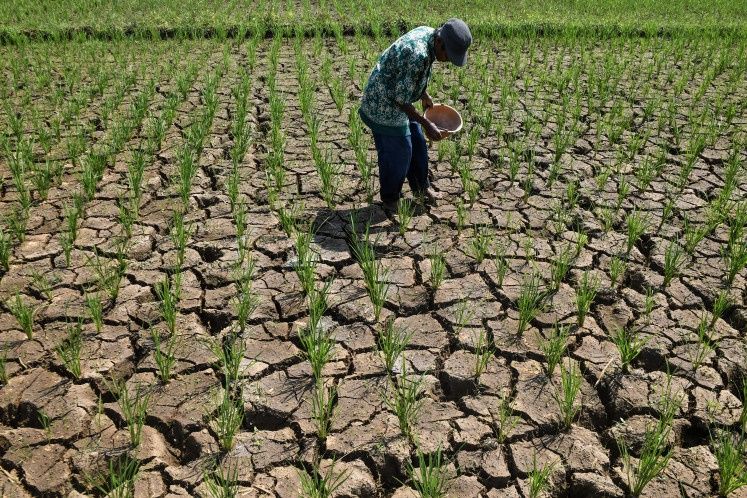
The grip of drought is tightening across Indonesia as the El Niño climate pattern strengthens, pushing the country towards what meteorological authorities are calling an "extreme" dry season. The situation has deteriorated rapidly, with the National Disaster Mitigation Agency (BNPB) now tracking water shortages spanning multiple provinces, signalling a crisis that extends far beyond isolated pockets of hardship. Government officials are bracing for what could become a cascading emergency affecting agriculture, food prices, and the daily lives of millions of Indonesians across the sprawling archipelago.
The scale of the immediate crisis became clearer on Friday, July 3, when BNPB added three new regions to its growing list of areas facing critical water scarcity. Gunungkidul in Yogyakarta, Semarang in Central Java, and Jember in East Java reported 700 newly affected households, pushing the total number of people struggling to access clean water beyond 7,800. These newest additions join already severely impacted areas in Central Java such as Cilacap, Klaten, and Jepara, where emergency water distribution by tanker trucks has become routine. The western provinces are equally stressed, with Karawang, Tasikmalaya, and Sukabumi in West Java reporting persistent shortages, whilst Seram in Maluku faces similar emergencies across the eastern reaches of Indonesia.
Several regional administrations have already escalated their response protocols by declaring 90-day drought alert status, a measure designed to expedite emergency interventions and resource allocation. Gunungkidul initiated its alert in June, establishing a template for rapid action that West Java later adopted this month. West Nusa Tenggara, where roughly 3,600 households in West Lombok were declared affected in mid-June, moved even further by declaring a full drought emergency. Banten, meanwhile, remained in assessment mode as officials deliberated whether to declare a province-wide alert that would unlock swift water distribution networks across the region. BNPB's spokesperson Abdul Muhari appealed broadly for regional administrations and citizens to strengthen preparedness, whilst cautioning the public against activities such as land burning that could ignite forest fires during the vulnerable dry months ahead.
The underlying driver of this escalating emergency is the intensification of El Niño, the Pacific Ocean climate phenomenon characterised by abnormally warm sea surface temperatures that disrupt rainfall patterns globally. Indonesia, positioned directly in the path of El Niño's influence, faces compound vulnerability. The Meteorology, Climatology and Geophysics Agency (BMKG) forecasts that rainfall will remain below normal across more than 80 per cent of the archipelago between July and September, the period when the dry season reaches its annual peak. By mid-June, already 37 per cent of Indonesia's climate zones had formally entered the dry season, with nearly half the nation recording below-normal precipitation. Experts have warned repeatedly that such prolonged moisture deficits threaten not only immediate water availability but also agricultural productivity and national food security.
The agricultural implications are particularly stark, as Indonesia depends heavily on seasonal rainfall to sustain rice cultivation and other staple crops. BMKG's deputy for climatology, Ardhasena Sopaheluwakan, outlined several urgent mitigation strategies that must be implemented immediately to minimise crop failures. These include adjusting planting schedules to align with expected rainfall patterns, prioritising drought-tolerant and early-maturing crop varieties, and diversifying food crops beyond traditional staples. Agriculture Minister Amran Sulaiman indicated that the ministry had proactively anticipated worsening conditions and accelerated mitigation measures, including expanding irrigation pump usage to maintain water availability and preserve food production momentum. The government has sought to calm public anxieties over potential price spikes by repeatedly asserting that national rice reserves remain at what officials describe as a "historically high level", sufficient to meet demand into the following year.
Yet the immediate emergency response has exposed both the strengths and critical weaknesses in Indonesia's drought management infrastructure. Tanker trucks distributing clean water represent a necessary but ultimately temporary solution to the acute crisis unfolding across numerous regencies. The House of Representatives' Commission IV, which oversees agriculture and food production, has pushed the government to accelerate assistance in the most vulnerable regions, including the provision of seeds, fertilisers, farming equipment, and livestock feed. These interventions address the symptoms but not the underlying structural vulnerabilities that leave Indonesia repeatedly exposed to climatic shocks.
Indonesia's path forward requires sustained investment in water infrastructure, particularly in regions historically prone to drought and plagued by inadequate access to piped clean water services. Bagas Yusuf Kausan, a researcher at the water policy think tank Yayasan Amerta Air Indonesia, has called for the expansion of affordable piped water services provided through regional water utilities, with subsidies demonstrating genuine political commitment to drought-vulnerable communities. Such infrastructure investment would reduce dependency on expensive emergency tanker deliveries and provide communities with reliable year-round access to essential water supplies.
However, examining the deeper causes reveals that Indonesia's drought vulnerability extends beyond climate variation. Bagas emphasised that environmental degradation driven by human activities—including widespread land conversion and the depletion of groundwater reserves—has systematically weakened the country's resilience to natural climate cycles. These human-driven changes have left numerous regions increasingly fragile, unable to buffer themselves against even moderate precipitation deficits. The researcher urged the government to view El Niño as a critical juncture for tightening restrictions on land conversion, particularly in water catchment areas that serve as natural reservoirs for regional water security. Such regulatory intervention would address not only the immediate El Niño-driven emergency but also the accumulated environmental damage that has transformed temporary droughts into escalating crises.
For Malaysia and other Southeast Asian nations, Indonesia's unfolding drought carries important strategic implications. As the region's largest economy and a major agricultural producer, disruptions to Indonesian food production could reverberate through regional supply chains and food prices. Any significant crop failures could intensify regional competition for food imports and agricultural products, potentially affecting pricing and availability across the ASEAN bloc. Additionally, Indonesia's experience underscores broader regional vulnerabilities to climate variability and the urgent need for coordinated Southeast Asian approaches to water security, agricultural resilience, and long-term environmental protection. The coming months will test whether Indonesian authorities can balance emergency responses with the systemic reforms necessary to prevent recurring crises as climate patterns continue their trajectory of increased volatility.

