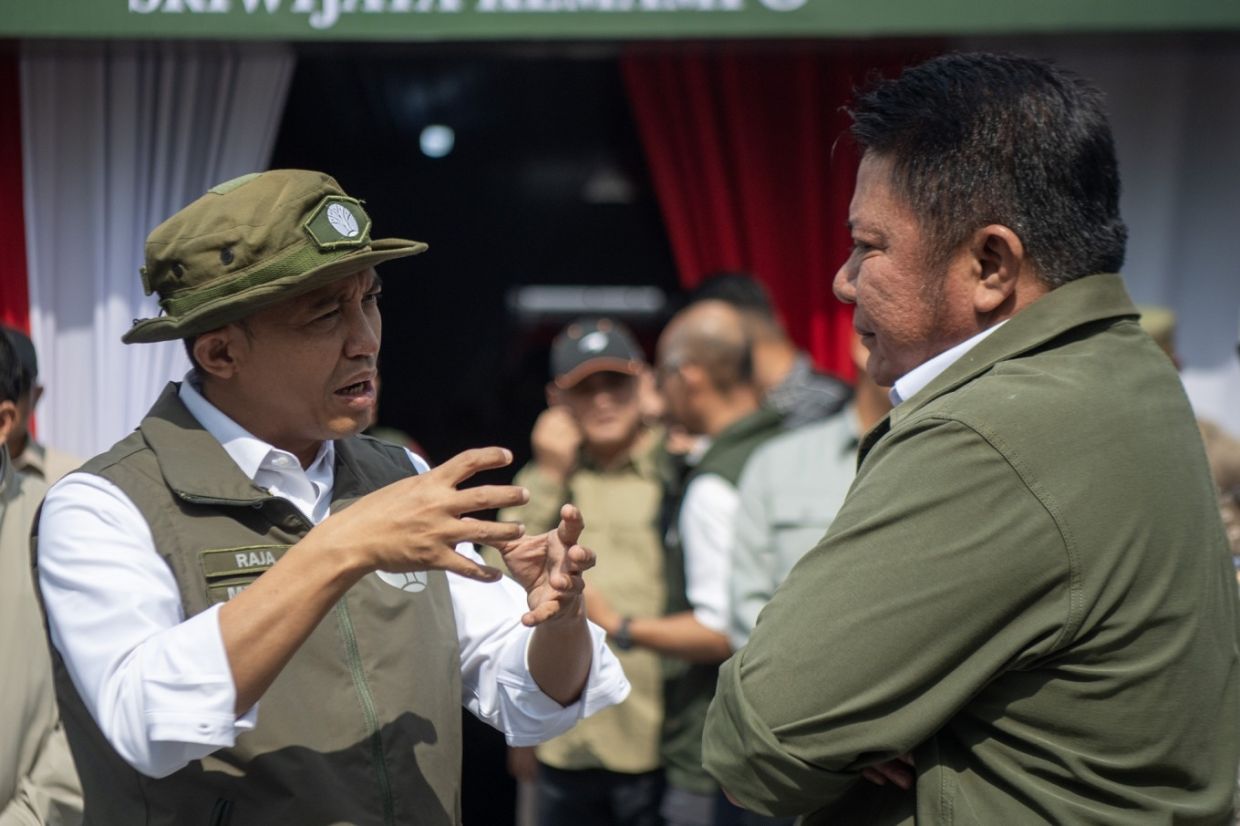
Indonesia's Corruption Eradication Commission has resumed investigating suspicions that Forestry Minister Raja Juli Antoni failed to fully return kickbacks allegedly handed to him by Suhardiman Amby, the regent of Kuantan Singingi in Riau province. The development marks an escalation in a case that has already ensnared the regent himself and threatens to deepen scrutiny of the ministry during a period of heightened public concern over forest governance and environmental integrity in Southeast Asia's largest archipelago.
According to KPK spokesperson Budi Prasetyo, investigators are examining discrepancies between the amount of illicit money the minister previously reported receiving and the total sum he allegedly obtained from the Riau regent. The core allegation centres on a June 2 meeting between ministry and Kuantan Singingi administration officials, where Suhardiman purportedly presented Raja Juli with an envelope containing Singapore dollars—initially valued at S$14,000 (approximately US$10,919). The investigation hinges on whether the minister has accounted for the full amount.
Raja Juli initially reported the incident to the anti-graft body on July 3, claiming he had refused the cash and subsequently returned it on June 12 to Kuantan Singingi Police headquarters, citing his lack of entitlement to accept such a gift. However, the KPK's renewed scrutiny suggests investigators have uncovered inconsistencies in his account. Under Indonesian law, public officials must report improper gifts to the anti-corruption commission within thirty days of receipt, not to local police, to avoid potential criminal liability. The distinction matters considerably: failure to follow proper protocol compounds legal exposure beyond the original acceptance allegation.
The suspected bribery appears intertwined with a substantive governance matter of direct relevance to Malaysia and other regional nations concerned with forest stewardship. Kuantan Singingi's administration had submitted proposals to the ministry seeking reclassification of over 1,800 hectares of limited production forest (HPT) land. The alleged kickbacks may have been intended to facilitate approval of these requests, representing the kind of corruption that undermines environmental management across Southeast Asia. Such schemes effectively privatise public environmental decision-making, weakening forest protection standards and accelerating deforestation through illicit pathways.
The pattern of contact between the two officials extends beyond the single June meeting. Budi disclosed that Raja Juli and Suhardiman met at least three additional times across April, May, and June, though investigators have not yet clarified whether these separate encounters were coordinated elements of a broader scheme or unrelated administrative engagements. This repetition of contact raises questions about the systematic nature of any influence-peddling operation and whether other transactions or understandings occurred alongside the documented envelope transfer.
Suhardiman himself faces serious jeopardy. The regent, who belongs to President Prabowo Subianto's Gerindra Party, was arrested and designated a suspect by the KPK in late June on separate allegations of receiving kickbacks from the regency's secretary Zulkarnain in exchange for facilitating that official's appointment. Investigators subsequently broadened the case to encompass the minister-directed kickbacks pertaining to forest conversion permits. This expansion suggests the KPK views the incidents as part of a wider ecosystem of corrupt transactions within Kuantan Singingi's administration rather than isolated incidents.
Raja Juli's position carries additional political complexity. He simultaneously holds the title of secretary-general of the Indonesian Solidarity Party (PSI), a relatively new political force in Indonesia's landscape. The scandal subjects him to dual institutional pressures: potential criminal prosecution and political damage within his party at a moment when PSI is still consolidating its standing. Members of the House of Representatives Commission IV, responsible for forestry oversight, subsequently demanded his appearance for clarification. His conspicuous absence from a July 14 meeting—attributed by Commission IV deputy chair Alex Indra Lukman to an umrah (Islamic pilgrimage) commitment—fuelled parliamentary frustration and public suspicion.
The legal framework governing such cases establishes formidable consequences for conviction. State officials found guilty of unlawfully accepting gifts connected to their official duties face imprisonment terms reaching twenty years and fines of up to 1 billion rupiah (approximately US$55,867). While these penalties may appear modest by international standards, within Indonesia's administrative context they represent severe professional and personal devastation. Nevertheless, the KPK's investigative pace has drawn criticism from transparency advocates who argue that high-ranking officials sometimes benefit from leisurely probe timelines.
Crucially, the ministry has maintained that it has not yet approved any status reclassifications for Kuantan Singingi. Officials stated that the three most recent proposals from the regency remain either formally rejected or suspended pending verification. This assertion provides some reassurance that the alleged corruption did not succeed in materially altering forest classification decisions—at least not immediately or visibly. However, it raises uncomfortable questions about whether the bribery represented a down payment on future favours or reflected miscalculation by those offering the kickbacks regarding the minister's receptiveness.
For Malaysia and other regional economies, this case illuminates broader vulnerabilities within Indonesia's environmental governance architecture. Forest reclassification decisions carry consequences extending across national boundaries through carbon markets, transnational supply chains, and regional atmospheric composition. Corruption corrupting such decisions weakens the entire region's capacity to manage shared environmental challenges. Malaysian policymakers and business interests have legitimate stakes in ensuring Indonesia's forestry administration maintains institutional integrity and resists the kind of rent-seeking behaviour the KPK is now investigating.
The ministry has issued statements affirming its commitment to full cooperation with the anti-corruption commission and respect for its investigative authority. Such declaratory support, while diplomatically appropriate, does not definitively establish whether institutional cultures within the ministry actively resist corruption or merely react to external pressure when violations surface. The coming weeks will reveal whether the KPK's renewed investigation accelerates toward formal charges or becomes entangled in the procedural complexities and political negotiations that frequently characterise high-profile corruption cases in Indonesia.
Ultimately, this case demonstrates how ostensibly technical administrative decisions regarding forest use categories become venues for corrupt transactions when institutional safeguards weaken. The outcome will signal whether Indonesia's anti-corruption infrastructure can maintain independence and prosecution vigour when investigating officials at the ministerial level, or whether such investigations ultimately dissolve amid political accommodation and procedural delay.

