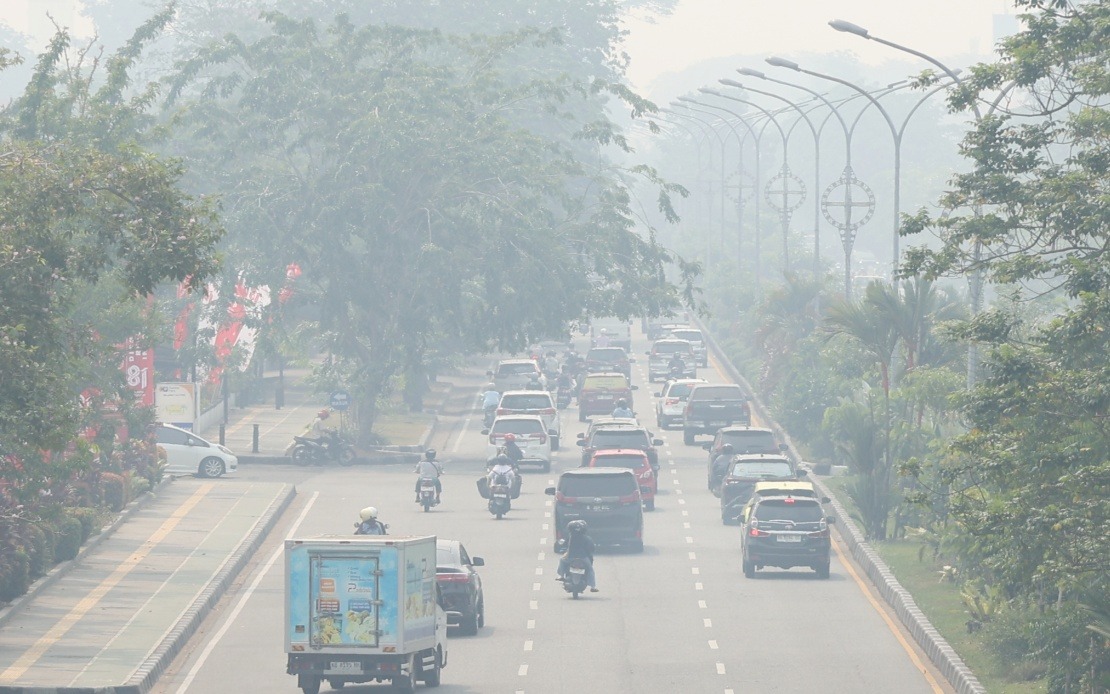
Indonesia is gripped by a deepening air pollution emergency as forest and land fires continue to ravage several provinces, with the Air Pollutant Index in parts of Central Kalimantan surging to a dangerous 573. The reading, recorded in Jekan Raya within Palangka Raya in Central Kalimantan, represents hazardous air quality that poses serious risks to human health. Environmental Health Director Then Suyanti disclosed the figure based on continuous monitoring conducted across 17 air-quality stations, highlighting the severity of the crisis that has unfolded across Indonesia's vast archipelago.
The contamination extends far beyond a single location, with Muaro Jambi Regency in Jambi province also registering a hazardous API reading of 302. These extreme measurements underline the scale of environmental degradation affecting the broader region. Simultaneously, multiple other localities have recorded very unhealthy air quality thresholds ranging between 201 and 300 API points, encompassing Pelalawan in Riau, Penukal Abab Lematang Ilir and Ogan Ilir in South Sumatra, Southeast Pontianak in West Kalimantan, and Gunung Mas and Katingan in Central Kalimantan. This geographic spread reveals how the fires have created a transnational haze problem affecting both Sumatra and Kalimantan simultaneously.
For Malaysian readers accustomed to transboundary haze events, the situation carries particular relevance. Southeast Asia's recurring air quality crises often originate from Indonesian fires and subsequently impact neighbouring countries including Malaysia, Singapore, and Brunei. The current emergency demonstrates how environmental degradation in one nation rapidly becomes a regional concern, affecting respiratory health, visibility, and economic activity across borders. The hazardous category requires complete avoidance of outdoor activities, a restriction that government health authorities have emphasised carries no exceptions for vulnerable populations including children, elderly persons, and those with pre-existing respiratory conditions.
Indonesia's Health Ministry is mobilising comprehensive responses to mitigate the crisis. Then Suyanti cautioned that populations residing in areas with very unhealthy air quality should minimise outdoor exposure, as prolonged environmental contact significantly increases health risks especially among sensitive demographic groups. The ministry is preparing an administrative circular, expected within two days from the secretary-general's office, that will institute emergency protocols to protect public wellbeing. Among proposed measures are provisions enabling schools to transition to distance learning during periods of severe air degradation, a pragmatic response that acknowledges the practical necessity of protecting children's health whilst maintaining educational continuity.
The human impact of the crisis has already become apparent, with 3.4 million people across seven provinces experiencing the consequences of the fires. Affected regions span both Sumatra and Kalimantan, encompassing Riau, Jambi, and South Sumatra on Sumatra island, alongside West, Central, East, and South Kalimantan. These seven provinces have collectively declared emergency alert status rather than the more severe emergency response status, reflecting authorities' assessment that whilst the situation is serious, immediate mass evacuation remains unnecessary. Head of Health Crisis Centre Agus Jamaludin noted that 42 individuals have sustained minor injuries thus far, whilst two persons—both burn victims in South Kalimantan—have suffered serious burns requiring hospitalisation. Notably, no deaths have been recorded and no forced evacuations have occurred, though this situation remains fluid as fire containment efforts continue.
Emergency health operations have shifted into high gear, with the ministry deploying 321 dedicated health personnel distributed across the affected provinces to provide immediate medical response and monitor population health outcomes. These personnel are positioned to identify secondary health complications arising from prolonged air exposure, including respiratory infections, cardiovascular complications, and exacerbations of pre-existing conditions. The Forestry Ministry's latest satellite surveillance reveals the fires remain widespread and concerning, with detection systems identifying 805 high-confidence hotspots and 11,313 medium-confidence hotspots across the entire nation as of Tuesday evening.
Regional distribution of the hotspots demonstrates the concentration of fire activity. Among six priority provinces, South Sumatra carries the highest number of high-confidence hotspots with 239 detected locations, followed by Central Kalimantan with 113, South Kalimantan with 89, and West Kalimantan with 86. Jambi has recorded seven high-confidence hotspots whilst Riau has identified just one, suggesting relative progress in fire containment in that specific province. For medium-confidence hotspots where fire risk remains probable though less certain, West Kalimantan dominates with 2,447 detected locations, indicating substantial latent fire potential that could rapidly escalate.
The medium-confidence hotspot distribution further illustrates the complexity of the crisis management challenge. Central Kalimantan contains 2,168 medium-confidence locations, South Sumatra 1,161, South Kalimantan 710, Riau 199, and Jambi 197. This data suggests that whilst authorities may have achieved temporary success containing certain high-confidence fire clusters, enormous quantities of combustible vegetation and materials remain susceptible to ignition under appropriate atmospheric conditions. The transition of medium-confidence hotspots into active fires would rapidly overwhelm current firefighting capacity and cause API levels to climb even further, multiplying the health crisis across the region.
For Malaysia and the broader Southeast Asian community, Indonesia's fire crisis carries strategic implications beyond immediate health concerns. The recurrence of such phenomena demands coordinated regional responses encompassing fire prevention, early warning systems, and transnational air quality monitoring. Malaysia has historically borne significant economic and health consequences from Indonesian haze events, with past incidents disrupting aviation, reducing visibility for maritime operations, and overwhelming healthcare systems with respiratory cases. The current emergency underscores the necessity for strengthened bilateral environmental cooperation and enforcement of land management practices that reduce fire vulnerability across Indonesia's vast forested territories.
The underlying vulnerability to these recurring crises reflects systemic challenges within Indonesia's resource management framework. Uncontrolled agricultural expansion, illicit logging, and inadequate enforcement of environmental regulations continue to degrade forest cover and increase fire susceptibility during dry seasons. Climate variability, exacerbated by longer and more intense dry periods associated with broader climatic trends, amplifies the risk environment. Without fundamental improvements in land governance, forestry management, and agricultural practice standards, Indonesia faces continued vulnerability to catastrophic fire events that generate hazardous air quality conditions affecting both domestic populations and neighbouring nations throughout Southeast Asia.

