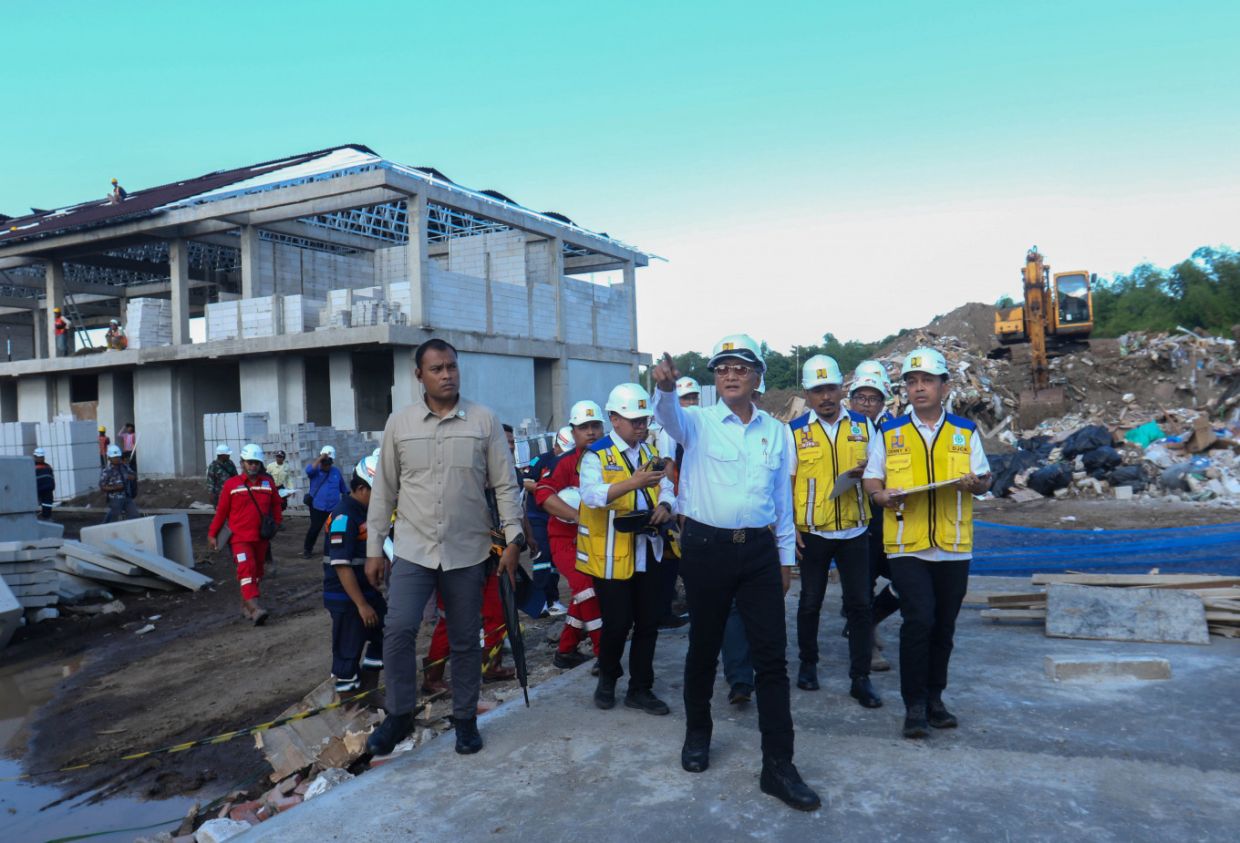
Indonesia's Public Works Minister Dody Hanggodo has drawn significant public scrutiny and official questioning after documents from his ministry listed his wife and daughter as members of a planned delegation travelling to the United States for a United Nations summit. The controversy has reignited debates about ministerial accountability and the appropriate use of government resources, striking a sensitive chord at a time when President Prabowo Subianto's administration has placed considerable emphasis on fiscal discipline and austerity measures across the bureaucracy.
The dispute centres on a formal ministry letter signed by Secretary-General Apri Artoto on June 29, which named eight delegates designated to travel to New York between July 13 and 19. The document explicitly identified Dody's wife, Irma Hermawati, and his daughter, Aurellia Tsabitha Meidirama, as participants. According to the paperwork, Irma was to travel using a diplomatic passport while their daughter would hold an ordinary travel document—a distinction that itself became part of the ensuing public discussion about whether family members should receive such designations.
The delegation's stated purpose was to represent Indonesia at the High-level Meeting on the Midterm Review of the New Urban Agenda, a gathering organised by the United Nations General Assembly and administered through the UN Human Settlements Programme, known as UN-Habitat. The substantive meeting itself was scheduled for July 16 and 17 in the American metropolis, suggesting at least a legitimate governmental objective underpinning the journey.
When the ministry document circulated widely across social media platforms, however, the public reaction became sharply critical. Many Indonesians questioned the necessity of including the minister's family members in an official delegation, particularly given the government's stated commitment to reducing wasteful expenditure and improving fiscal responsibility. The timing proved especially awkward, as Prabowo's administration had been actively promoting its austerity agenda as central to its economic management approach.
In response to the mounting criticism, Apri issued a clarification emphasizing that state budget allocations would not cover expenses for the family members. He stressed that should Irma and Aurellia participate in the journey, all associated costs would be met through their personal resources rather than public funds. Apri further defended the decision to issue a diplomatic passport to the minister's wife, contending that such arrangements adhered to established government regulations. He also explained that the delegation roster had been compiled primarily to streamline visa application procedures through Indonesia's Foreign Ministry apparatus.
Despite these explanations, public confidence remained unrestored. Maneger Nasution, a member of Indonesia's Ombudsman institution, publicly called for the ministry to demonstrate substantially greater transparency concerning the rationale for including Dody's wife and daughter in the official party. Beyond merely questioning costs, Nasution demanded comprehensive assurance that no state-financed facilities or resources would support the family members' participation, and critically, that the entire arrangement remained free from conflicts of interest or abuses of ministerial authority for personal advantage.
The controversy gains additional significance when considering Dody's background prior to his entry into ministerial politics with the Democratic Party. The 60-year-old minister maintained substantial business connections to South Kalimantan entrepreneur Andi "Haji Isam" Syamsuddin Arsyad, whose commercial enterprises hold investments in the expansive food estate initiative that President Prabowo championed in Merauke, South Papua. Such linkages between governmental position and prior business relationships naturally invite heightened scrutiny regarding conflicts of interest and the motivations underlying official decisions.
Dody has previously alleged that shadowy forces within the bureaucratic apparatus—what he characterised as a "deep state"—were actively working to undermine his position and implicate him in corruption allegations. These claims emerged after an internal audit document from his ministry was leaked to the public domain. Such assertions, while potentially reflecting genuine institutional tensions, also complicate public assessment of the legitimacy surrounding decisions bearing his ministerial authority, particularly when family members receive exceptional access or privileges.
For Malaysia and the broader Southeast Asian region, this episode illuminates persistent governance challenges affecting the institution across Indonesia's archipelago. Questions about ministerial accountability, the boundaries between official duties and personal interests, and the transparency of resource allocation remain chronically problematic across multiple countries within the region. The Ombudsman's intervention suggests that institutional checks do exist to challenge potentially improper conduct, yet the reliance on public pressure and media exposure to activate such scrutiny points to systemic vulnerabilities in preventive governance structures.
The incident also underscores the vulnerability of austerity messaging when senior officials appear to operate under different standards than the broader civil service. For a government explicitly committed to fiscal restraint and anti-corruption positioning, such situations erode public credibility and complicate efforts to build citizen confidence in reform initiatives. Whether state resources were actually deployed becomes almost secondary to the perception problem created when ministerial family members feature prominently in official documentation related to international travel.
Moving forward, the outcome of this controversy will likely influence how Indonesian policymakers calibrate future decisions regarding official delegation composition and family member participation in government-sponsored international engagements. The case demonstrates that even when officials frame such arrangements as cost-neutral through personal funding, the legitimacy question extends far beyond financial accountability to encompass broader principles of institutional integrity and appropriate use of governmental authority. For regional observers assessing governance standards across Southeast Asia, the response mechanisms deployed here—media scrutiny, Ombudsman intervention, and public discourse—reveal both the strengths and limitations of institutional accountability mechanisms currently available within Indonesia's democratic framework.

