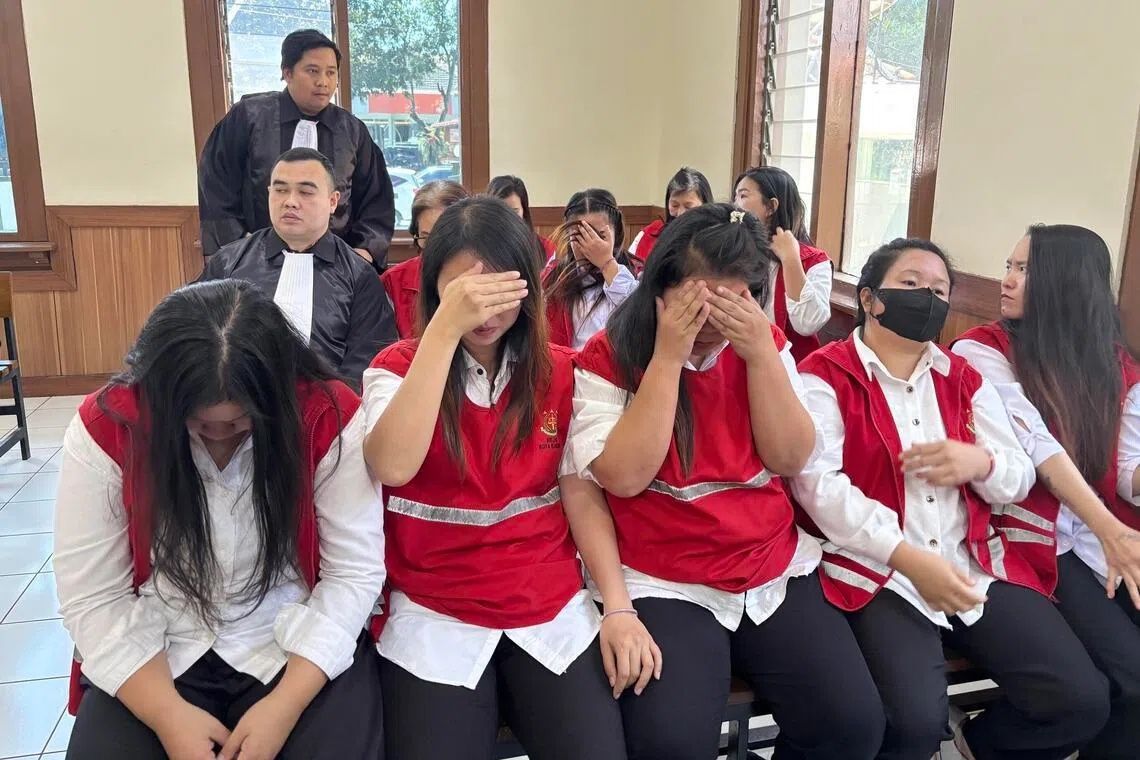
Indonesian prosecutors have sought sentences of up to 10 years imprisonment for the alleged ringleader and three principal recruiters in a major cross-border human trafficking network, with the case touching on both Jakarta's commitment to combating exploitation and heightened scrutiny over adoption practices in the region. The demands came at the Bandung District Court on Tuesday as prosecutors presented their closing arguments against 19 defendants—18 women and one man—who have faced trial since April on allegations of trafficking at least 34 infants for financial gain.
The investigation uncovered a sophisticated operation spanning roughly two years from 2023 through 2025, with at least a dozen babies identified as having been transferred to Singapore, each commanding a price of between 200 to 250 million rupiah (approximately S$18,110). The case has become one of Indonesia's most significant documented instances of organised cross-border infant trafficking, exposing vulnerabilities in adoption systems and the desperation that makes vulnerable families susceptible to exploitation. The scale of the operation and the involvement of intermediaries across multiple countries underscore how networks engaged in this form of human trafficking operate across jurisdictional boundaries with relative sophistication.
At the heart of the investigation stands 70-year-old Lie Siu Luan, known colloquially as Lily or Popo, whom law enforcement has identified as the alleged mastermind who orchestrated recruitment efforts, managed fraudulent documentation, and facilitated the overseas placement of infants. Prosecutors argued that Lie should be convicted under Indonesia's human trafficking statutes for her role in recruiting, harbouring, transporting, and arranging the transfer of persons—in this case, newborns and infants—for the explicit purpose of exploitation. The allegation of orchestration rather than mere participation distinguishes her culpability in the eyes of prosecutors, who have recommended the maximum proposed sentence.
Three other defendants received identical 10-year recommendations from prosecutors: Astri Fitrinika, identified as one of the operation's primary recruiters; Djaka Hamdani, another recruiter; and Elin, also working as a recruiter. Additionally, Lai Su Hua faces a 10-year recommendation for her alleged role in falsifying state documents required for adoption procedures—a critical component that made the trafficking logistics feasible. The remaining 14 defendants, who served primarily as caregivers for the trafficked infants pending their transfer, received recommendations for five-year sentences each. The graduated sentencing structure reflects prosecutors' assessment of hierarchical culpability, with those involved in recruitment and documentation facing substantially heavier penalties than those providing care services.
During proceedings, both Lie and Astri displayed emotional reactions as prosecutors outlined their demands, with tears visible in the courtroom. Lie's defence attorney, Sendi Sanjaya, subsequently argued that while his client respects the prosecutors' position, a fundamental element of the trafficking charges—exploitation—remains unproven. He contended that trial evidence demonstrates the transferred children were maintained in healthy conditions and their locations remained documented, suggesting the welfare dimension required to establish exploitation charges had not been adequately demonstrated. This line of defence reflects a common challenge in infant trafficking cases, where perpetrators frequently frame illegal transfer as arranged adoption while maintaining child welfare standards.
Astri's legal representative, Hendri Samuel Tampubolon, expressed frustration that prosecutors sought identical sentences for both his client and the alleged principal architect of the ring. He emphasised that Astri operated under Lie's direction and control rather than functioning as an autonomous agent, and highlighted her cooperation with law enforcement during the investigation phase. This argument attempts to distinguish between those who initiated the criminal enterprise and those recruited into participation, a distinction that potentially carries weight during sentencing deliberations. The defence teams signal they will mount substantive challenges during the upcoming defence presentation phase scheduled for the following week.
The operation came to light in July 2025 when Indonesian authorities arrested approximately a dozen suspects across West Java following a report filed by Dani Hidayat, a resident who himself became entangled in the network's recruitment machinery. Hidayat had joined a Facebook adoption interest group while his wife was pregnant, subsequently receiving contact from Astri offering 8 million rupiah in exchange for his forthcoming newborn. This revelation highlights how social media platforms inadvertently facilitate recruitment by providing access to targeted demographics—individuals actively seeking children or considering adoption—making such groups vulnerable to infiltration by traffickers.
The investigation expanded considerably as authorities unravelled the full scope of the network's operations. Lie subsequently disclosed during trial that four individuals identified as Singaporean nationals—identified in evidence as "Petter," "John," "Mr Tan," and "Mr Chew"—functioned as adoption agents for the ring within Singapore. This disclosure underscores the transnational nature of the enterprise and the necessity for bilateral enforcement coordination. Singapore and Indonesia formalised their cooperative approach to the case on January 9, signalling both governments' recognition that cross-border human trafficking demands coordinated investigation and prosecution strategies.
The case carries significant implications for how Southeast Asian nations address human trafficking vulnerabilities within adoption frameworks. Organised networks exploit the emotional vulnerability of childless couples seeking to expand their families while simultaneously targeting impoverished birth mothers facing economic desperation. The involvement of document falsification specialists and overseas agents demonstrates how traffickers have developed methodologies that superficially mimic legitimate adoption procedures, complicating detection efforts. Indonesian prosecutors have sought to establish clear accountability across the operational hierarchy, from originators through recruiters to facilitators, demonstrating that the country recognises trafficking requires dismantling entire networks rather than prosecuting isolated actors.
For Malaysia and other regional nations, the case serves as a cautionary indicator regarding the sophistication of modern human trafficking operations and their capacity to operate across borders with relative impunity. The prosecution's strategy—grading sentences according to hierarchical involvement rather than imposing uniform penalties—establishes a framework that may influence future regional trafficking cases. The trial's next phase, wherein the defence will present counterarguments and evidence, may clarify whether courts will accept technical arguments about welfare maintenance as rebuttal to exploitation allegations, potentially setting jurisprudential precedent for how subsequent cases are evaluated and adjudicated across the region.

