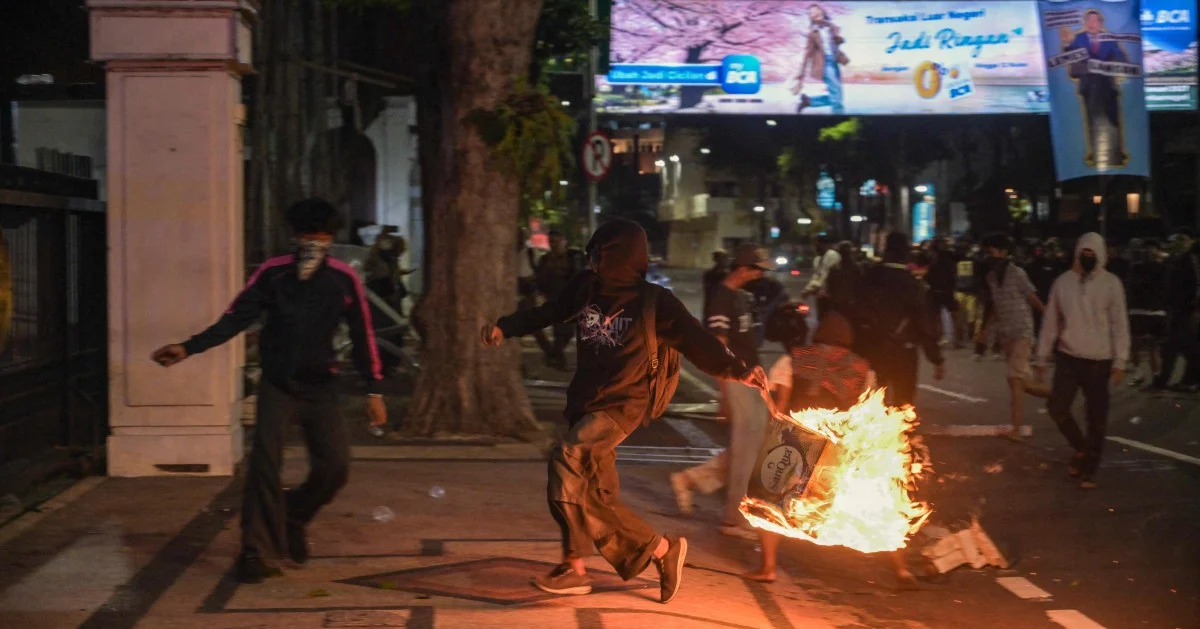
Surabaya, Indonesia's second-largest metropolitan area, became the focal point of escalating tensions between the Prabowo Subianto administration and opposition elements this weekend when police rounded up dozens of protesters who had gathered to voice concerns over presidential policies. The arrests, confirmed by human rights monitors tracking the event, underscore mounting pressure on dissent in the nation as the relatively new government moves to consolidate power.
The scale of detentions signals an increasingly robust law enforcement posture towards public opposition, a development that carries implications for democratic participation across Southeast Asia's largest democracy. Rights advocates have grown increasingly vocal about the crackdown, warning that such actions could set a troubling precedent for how governments in the region respond to legitimate grievance and peaceful assembly. The incident reflects broader concerns about the operating space available to civil society organisations and ordinary citizens wishing to petition their government.
President Prabowo Subianto's administration, which has pursued policies ranging from economic restructuring to security operations, has faced mounting criticism from various constituencies since taking office. The Surabaya demonstration appears to have been organised by coalitions seeking to challenge specific legislative or executive decisions, though the precise policy triggers remain subjects of ongoing debate among observers. What remains clear is that discontent with government direction has crystallised into public action, despite apparent risks of police intervention.
The detention of protesters raises complex questions about Indonesia's commitment to guaranteeing constitutional protections for freedom of assembly and expression, values ostensibly central to the nation's post-authoritarian democratic framework. Legal experts have noted that while Indonesian law permits protest, enforcement often remains discretionary, allowing authorities considerable latitude in determining which gatherings constitute legitimate public discourse and which cross into unlawful conduct. This ambiguity creates chilling effects even when formal arrests prove temporary.
For Malaysian and Southeast Asian observers, the Surabaya incident serves as a reminder of fragile democratic institutions across the region. While Indonesia has progressed substantially since the Suharto era in institutionalising democratic processes and competitive elections, challenges to democratic consolidation persist. Protest movements and their treatment by state apparatus remain sensitive barometers of democratic health, and the willingness of governments to tolerate organised dissent often determines the trajectory of political freedom more than formal constitutional provisions.
The timing of these arrests also warrants scrutiny within Indonesia's broader political calendar. With various constituencies mobilising around competing visions for national development, demonstrations serve as expressions of political franchise beyond formal voting mechanisms. When such expressions encounter police response, particularly large-scale detentions, questions naturally arise about whether governments feel sufficiently confident in their popular support to permit robust debate or whether they view dissent as fundamentally threatening.
Human rights organisations operating in Indonesia have documented patterns suggesting inconsistency in how authorities treat different categories of protest. Demonstrations aligned with government objectives or conducted by favoured constituencies appear to receive markedly different treatment from those expressing critical perspectives. Such selective enforcement undermines rule-of-law principles and creates legitimate concerns about the principled application of ostensibly neutral legal frameworks governing public assembly.
The regional ramifications of Indonesian police conduct extend beyond immediate questions of democratic governance. Southeast Asia's largest economy has long served as a bellwether for democratic trajectories across the region. Should Indonesia experience sustained rollback in protest freedoms or increasing police assertiveness against dissent, smaller or more fragile democracies in the neighbourhood might interpret such trends as validating more restrictive approaches. Conversely, robust protection of democratic space in Indonesia sends powerful signals about the region's commitment to plural governance.
For international observers and regional partners monitoring Indonesia, these developments warrant attention not as isolated incidents but as indicators of institutional health and democratic trajectory. The treatment of the Surabaya demonstrators will likely influence how civil society organisations calculate risks associated with future mobilisation, potentially shaping the landscape of public discourse in coming months. The willingness of independent media and rights groups to publicise such arrests suggests that accountability mechanisms remain partially functional, though their effectiveness remains contested.
Moving forward, attention should focus on how Indonesian judicial systems respond to charges against detained protesters and whether legal proceedings demonstrate commitment to due process. The distinction between detention for processing and extended incarceration carries significant implications for interpretations of government intent. Should courts expeditiously release protesters or dismiss charges related to peaceful assembly, it would signal that police actions represent operational decisions rather than systematic policy. Conversely, sustained prosecutions would suggest ideological resistance to organised dissent itself.

