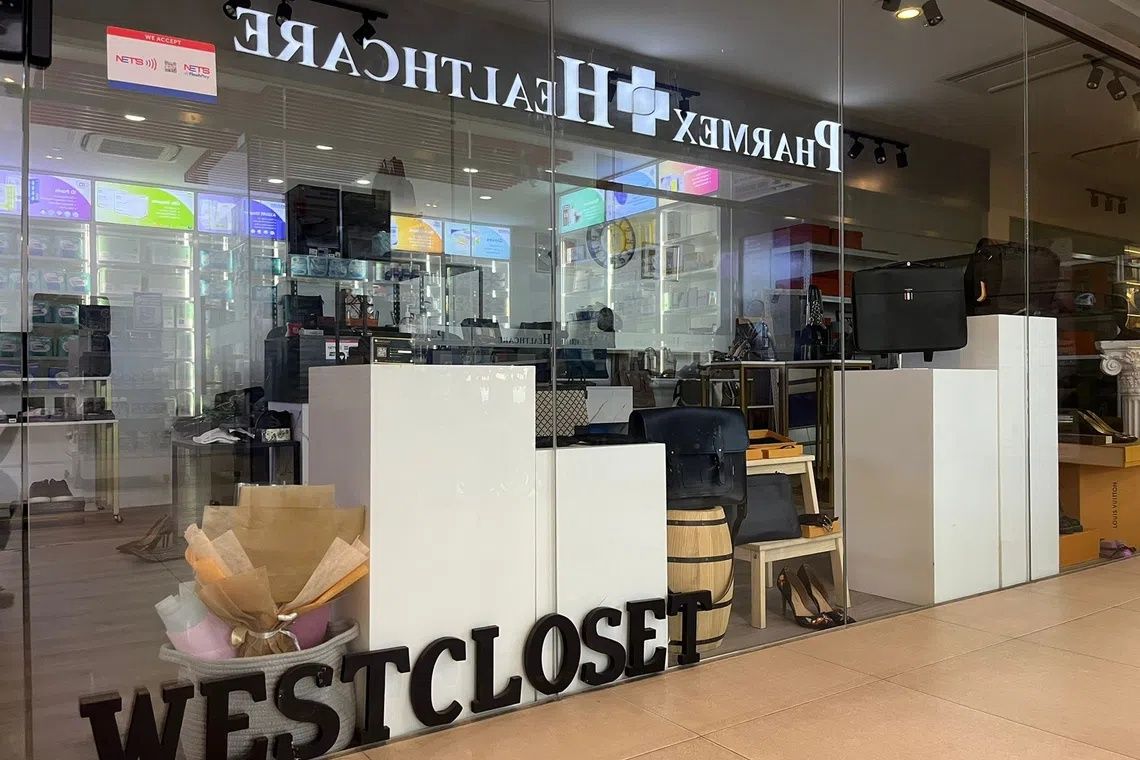
A 36-year-old Indonesian woman has been handed an eight-month prison sentence after admitting to defrauding customers at her upmarket consignment business in Singapore's central business district. Ringga Dwi Rizky Irianto, sole proprietor of West Closet at the OUE Downtown Gallery shopping mall on Shenton Way, pleaded guilty to siphoning nearly S$140,000 from five victims who had placed designer handbags in her care for sale. The sentencing, handed down on Thursday, August 13, represents a cautionary tale for Malaysia's growing luxury resale market, where similar business models have gained traction among affluent consumers seeking to liquidate high-end accessories.
The business model underlying West Closet appeared straightforward and attractive to affluent customers. The store advertised its services through Carousell, an online marketplace popular across Southeast Asia, as well as Instagram and other social media platforms. Customers could deposit their luxury bags for a 60-day consignment period, with penalties of S$60 per day for extended storage. West Closet would retain a commission ranging from S$200 to S$900 after successfully selling the items on behalf of their owners, a standard arrangement in the luxury resale sector. This structure appealed to customers who lacked the time or inclination to manage private sales independently, making the model particularly attractive in affluent urban circles across the region.
Ringga's fraudulent scheme unfolded through a systematic pattern of misappropriation that exploited the trust customers placed in her hands. In July 2022, one customer consigned three bags—two Hermès and one Chanel—with an understood sales value totalling S$51,000. West Closet provided written confirmation that upon sale, payment would be transferred to the customer's bank account within seven days. After Ringga successfully sold all three bags and collected approximately S$51,000, she diverted the entire sum to settle another customer's orders rather than remitting the funds as contractually promised. This diversion strategy, repeated across multiple victims, allowed her to maintain the illusion of operational continuity while essentially operating a Ponzi-like scheme within her customer base.
The fraudulent pattern continued with methodical precision across additional victims. A second customer who had placed a single Hermès bag with West Closet for sale lost S$33,500 when Ringga similarly misappropriated the proceeds following the successful transaction. A third victim suffered comparable losses of S$23,500 when their Hermès consignment was sold but the proceeds were redirected by Ringga to cover obligations to other clients. These three cases alone accounted for S$108,000 in confirmed criminal breach of trust, for which Ringga formally pleaded guilty to three separate charges. Two additional charges involving remaining victims and the balance of the S$140,000 total were considered but not proceeded with separately during sentencing, likely consolidated within the court's final determination.
The investigation revealed the calculated nature of Ringga's deception. Deputy Public Prosecutor Darren Sim's prosecution highlighted how customers received explicit written guarantees of payment timelines and bank transfer procedures, which Ringga systematically violated. The enforcement of payment through the investigative officer handling her case has resulted in partial restitution of S$41,000, with an additional S$91,950 in compensation mandated through court order. Should Ringga fail to settle this outstanding amount, she faces an extra 24 days of incarceration on top of her eight-month sentence, effectively creating financial incentive for compliance with the compensation order.
The timeline of events underscores how consumer vulnerabilities can persist even in seemingly regulated retail environments. Ringga was arrested in September 2022, approximately two months after the first documented fraud, yet charges were not filed until 2024—a two-year gap that likely extended the period during which additional victims went uncompensated. Her bail was set at S$15,000 on the sentencing date, with the commencement of her jail term scheduled for October, allowing her time to settle financial obligations or pursue family arrangements. This processing timeline raises questions about the speed at which authorities can respond to white-collar fraud within Singapore's legal system, particularly when international elements are involved.
For Malaysian consumers and entrepreneurs, this case carries several instructive lessons about the emerging luxury resale sector. The consignment model, while economically sound in principle, requires robust regulatory oversight, transparent financial controls, and verification mechanisms to prevent exactly the type of misappropriation Ringga perpetrated. Malaysian platforms and businesses operating in this space should recognise that written guarantees and payment timelines, while essential for consumer protection, demand equally rigorous internal auditing and fund segregation practices. The incident also highlights risks faced by individual customers who entrust high-value items to relatively small, privately-owned operations without institutional backing or insurance mechanisms.
Under Singapore law, criminal breach of trust carries substantial penalties, with offenders liable to imprisonment for up to seven years, fines, or both. The eight-month sentence imposed on Ringga, while significant, falls substantially below the maximum available to the court, suggesting recognition of her guilty plea and partial restitution efforts as mitigating factors. The decision effectively signals that cooperation with authorities and demonstrated remorse through voluntary payment can reduce sentences, yet fails entirely to restore confidence in the consignment model or compensate the remaining victims for their psychological and financial losses. From a regional perspective, the case demonstrates Singapore's capacity to prosecute financial crime expeditiously, even involving foreign nationals, reinforcing its reputation for legal enforcement.
The broader implications for Southeast Asia's growing digital economy warrant consideration. As platforms like Carousell expand their presence across Malaysia, Singapore, Indonesia, and Thailand, enabling peer-to-peer and business-to-consumer transactions in high-value goods, regulatory frameworks struggle to keep pace with operational realities. Consumer protection mechanisms adequate for routine e-commerce sales prove insufficient when thousands or tens of thousands of dollars in customer funds become temporarily held in operational accounts. The West Closet case suggests that regulatory authorities across the region should urgently develop sectoral guidelines specific to consignment, luxury goods resale, and similar business models where customers transfer both possession and payment responsibility to third-party operators.
Ringga's prosecution should prompt Malaysian regulators to examine whether existing consumer protection frameworks adequately address consignment operations. The absence of specific licensing requirements, segregated trust accounts for customer funds, or mandatory professional indemnity insurance in this sector creates structural vulnerabilities that unscrupulous operators can exploit. Legitimate businesses operating in Malaysia's growing luxury resale market—including digital platforms facilitating these transactions—would benefit from proactive engagement with authorities to establish industry standards that protect consumers while enabling sustainable commercial operations. The case serves simultaneously as a warning to consumers regarding due diligence when selecting consignment partners and as a roadmap for policymakers seeking to regulate emerging business models within the digital economy.

