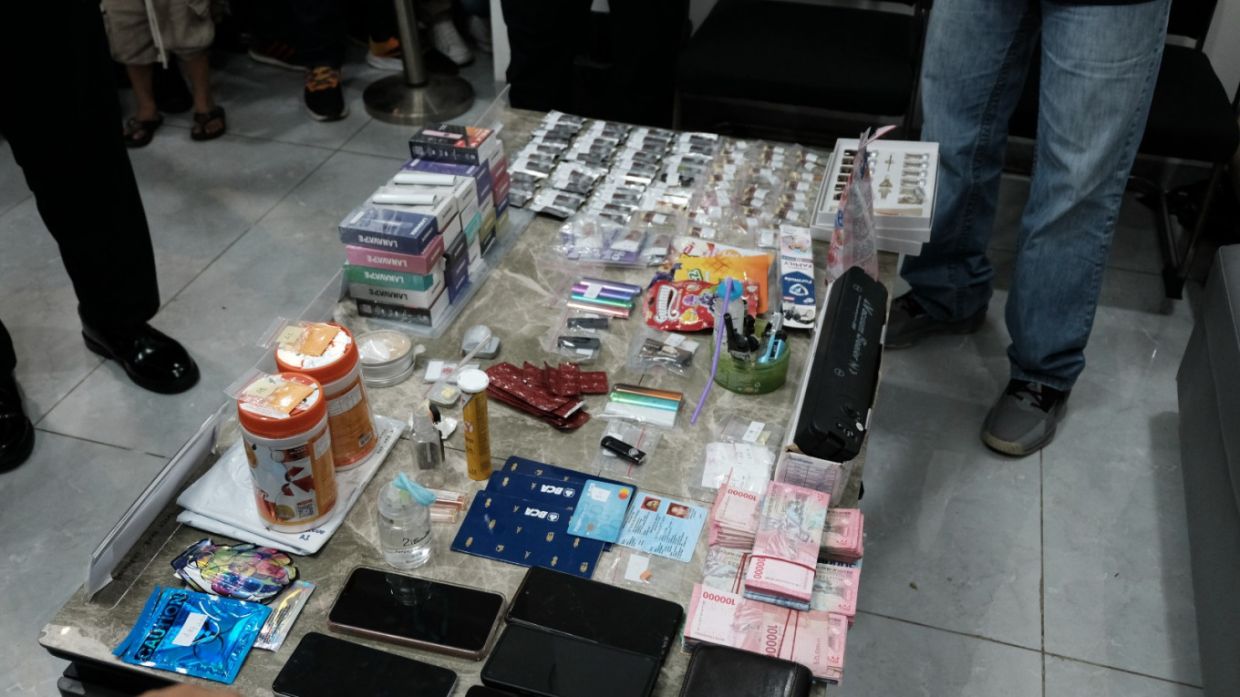
Indonesian law enforcement agencies have successfully disrupted a sophisticated international drug trafficking network centred in Batam, marking another significant blow to organised narcotics operations in the Riau Islands. The National Narcotics Agency (BNN) and the Customs and Excise Directorate General jointly announced the dismantling of the syndicate on Friday, which had been systematically smuggling and distributing dangerous substances across the border from Malaysia. The operation resulted in the arrest of six Indonesian nationals, though investigators are actively pursuing two Malaysian suspects believed to have orchestrated the supply chain at the network's highest levels.
The investigation gained momentum following a routine but critical discovery at Soekarno-Hatta International Airport, where Customs officers intercepted a parcel from Malaysia that appeared innocuous at first glance. The package, deceptively labelled as Orange Fiber Xtra food supplement, aroused suspicion and was subjected to laboratory analysis at the Customs and Excise Laboratory in Jakarta. Testing revealed a dangerous cocktail of controlled substances including MDMA, ketamine, and other hazardous drugs—a finding that triggered an intensive joint investigation between BNN and Customs authorities.
Insp. Gen. Aswin Sipayung, deputy for enforcement at the BNN, revealed the sophisticated operational structure of the syndicate during a press conference held at one of the raid locations. The network functioned with remarkable organisation, spanning the entire supply chain from importation through illegal seaports to repackaging and retail distribution throughout the Riau Islands region. This systematic approach distinguished the operation as more than casual trafficking, indicating substantial financial investment and established criminal infrastructure. The coordinated enforcement action resulted in raids on four separate locations across Batam, reflecting the geographically dispersed nature of the organisation.
The breakthrough moment came when authorities arrested BAP, a key operative, as he attempted to collect the intercepted package in Batam on Wednesday. His cooperation provided crucial intelligence that accelerated the investigation's momentum. Within days, the joint team moved swiftly to apprehend three additional suspects at a hotel in Baloi: ED, who had allegedly placed the original order; and associates NC and TFS. The rapid succession of arrests demonstrated the investigators' ability to exploit the intelligence advantages gained from the initial interception, unravelling the network's operational capabilities layer by layer.
The scope of confiscated materials underscores the magnitude of the operation. Officers recovered more than one kilogramme of MDMA, substantial quantities of methamphetamine and ketamine powder, numerous tablets of various controlled substances, and an alarming number of vape cartridges containing etomidate—a pharmaceutical compound increasingly diverted for recreational misuse. The haul included 170 vape cartridges alone, alongside 12 vials of etomidate weighing 226 grammes, suggesting the syndicate had been operating a significant repackaging and distribution hub. The seizure of equipment used in drug preparation and distribution, including digital scales, bongs, and plastic sealing devices, further illustrated the syndicate's operational sophistication.
The sophisticated concealment methods employed by the network reveal how modern drug trafficking has adapted to modern commerce. The organisation routinely disguised controlled substances within legitimate-appearing food and supplement packaging, utilising advanced plastic sealing technology to render packages indistinguishable from genuine commercial products. This deceptive strategy exploited the volume of legitimate goods crossing borders daily and the difficulty customs officials face in manually inspecting vast cargo quantities. Such techniques highlight the ongoing challenge Southeast Asian enforcement agencies confront in combating transnational narcotics operations that exploit legitimate supply chains.
Simultaneously, Customs officers at Batam Centre International Ferry Terminal intercepted another smuggling attempt, apprehending a Malaysian passenger identified as PS who had arrived from Stulang Laut International Ferry Terminal in Johor Bahru. PS was caught attempting to smuggle 48 etomidate-containing cartridges, suggesting broader distribution networks extending into Malaysia proper. This parallel discovery raises investigative questions about the full extent of the criminal network and whether multiple independent suppliers were feeding the same Batam market, or whether PS represented a downstream distribution node within a larger hierarchical structure.
The investigation has expanded to examine potential connections with a narcotics laboratory previously raided by joint BNN and Customs operations in Batam. This line of inquiry suggests the syndicate may have evolved beyond simple importation and repackaging into localised manufacturing capacity, which would represent a more advanced and concerning operational capability. If confirmed, such connections would indicate the network represented an entrenched criminal enterprise rather than a temporary trafficking operation, requiring sustained enforcement efforts to fully dismantle.
Malaysian nationals SL and WKC remain subjects of an active manhunt, with authorities placing both individuals on the wanted list for their alleged roles as primary suppliers to the Batam distribution network. Their continued freedom represents a significant gap in the enforcement action, as these individuals likely possessed knowledge of the broader supply chain infrastructure, upstream sources, and financial mechanisms underpinning the operation. Their apprehension would provide investigators with critical intelligence regarding the syndicate's connections to larger trafficking organisations operating across Southeast Asia.
Batam Customs and Excise Office head Agung Widodo characterised the enforcement action as a natural outcome of continuous border monitoring operations rather than an isolated incident. His statement suggested that vigilant customs personnel working at international entry points remain the frontline defence against narcotics smuggling. More significantly, Widodo quantified the operation's public health implications: authorities prevented access to sufficient drugs to potentially affect approximately 6,770 individuals, while simultaneously averting an estimated Rp10.8 billion (US$599,000) in prospective state healthcare rehabilitation costs. Such metrics underscore the substantial societal benefits of successful drug interdiction beyond immediate law enforcement objectives.
The suspects face prosecution under Article 114(2) in conjunction with Article 132(1) and Article 112(2) of Indonesia's Law No. 35/2009 on Narcotics, a legal framework imposing severe penalties for serious trafficking offences. Convictions carry sentences ranging from a minimum five-year imprisonment term to capital punishment, alongside potential fines reaching Rp10 billion. The gravity of these penalties reflects Indonesia's firm stance against narcotics trafficking, particularly operations involving large quantities and sophisticated distribution mechanisms.
This enforcement success illustrates the effectiveness of coordinated cross-agency operations between BNN and Customs authorities, representing a model for bilateral cooperation in combating transnational crime. For Malaysian authorities and law enforcement across Southeast Asia, the case underscores the porous nature of regional borders and the necessity for enhanced intelligence-sharing mechanisms and joint operations targeting trafficking networks that exploit the region's maritime geography and developed trade corridors. The involvement of Malaysian nationals both as apprehended distributors and as wanted principal suppliers indicates that Malaysia's role within these criminal networks extends beyond simple transit jurisdiction to active participation in supply chain management and international trafficking coordination.

