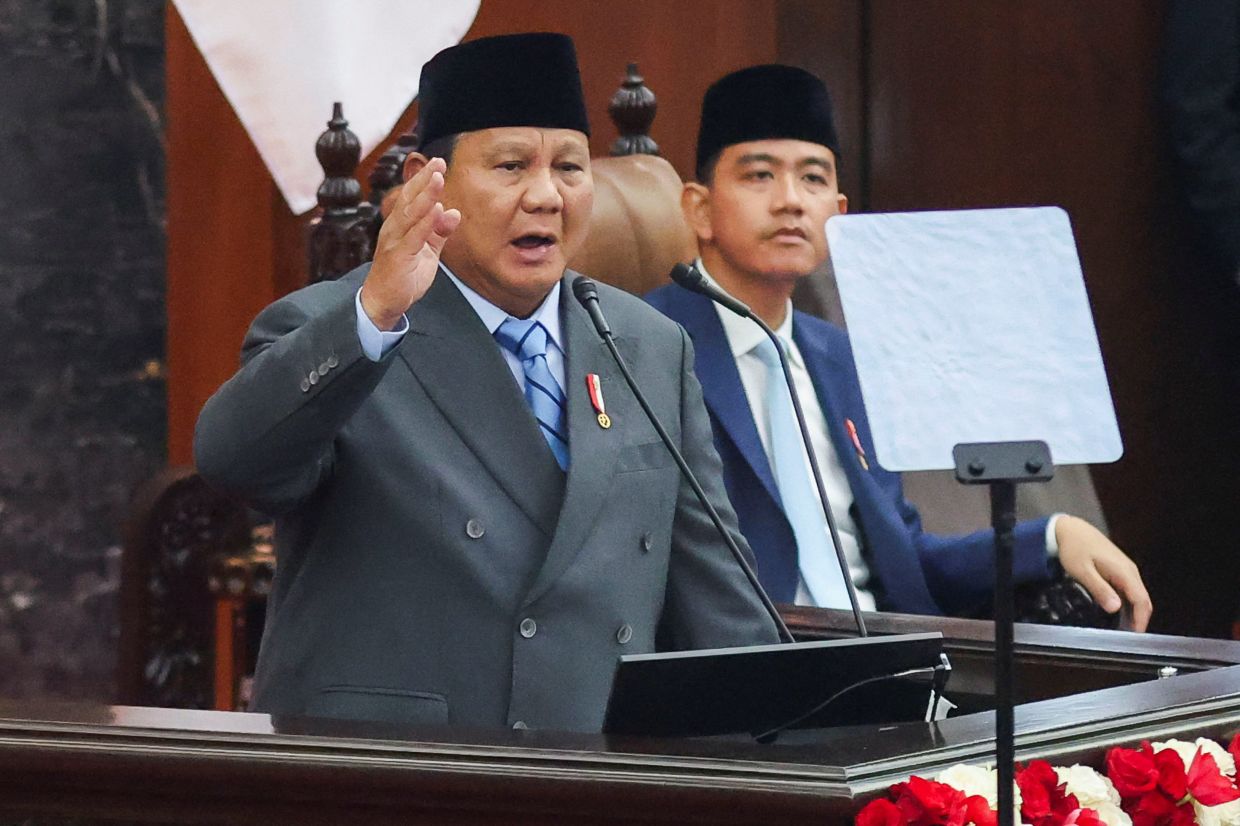
Indonesia's government is embarking on an unprecedented corporate restructuring, with President Prabowo announcing plans to close more than 750 state-owned enterprises by the end of this year in a bid to eliminate widespread inefficiency and combat pervasive corruption. In a parliamentary address on Friday, Prabowo disclosed that the discovery of Indonesia's sovereign wealth fund, the Danantara, had revealed the true scale of state enterprise proliferation — 1,074 entities in total, far exceeding the government's previous estimates of 300 to 400 firms. The revelation has prompted a radical downsizing programme that the president characterised as potentially the largest corporate restructuring globally, with plans to retain only around 300 remaining enterprises by 31 December.
The scope of the administrative bloat underscores systemic problems that have long plagued Southeast Asia's largest economy. Each of these state-owned entities operates with varying degrees of autonomy and accountability, many generating substantial overhead costs through director and commissioner salaries, property rentals, vehicle maintenance, and business travel expenses. The president's frustration was evident as he described how these organisations often function disconnected from any sense of national responsibility or fiscal discipline. The decision to aggressively prune this portfolio reflects a recognition that size alone does not guarantee productive value creation, and that maintaining hundreds of marginal enterprises diverts public resources from areas where they could generate genuine economic benefit.
Progress towards the restructuring goal is already evident. The government has closed 290 enterprises to date, and the initiative has already yielded approximately 50 trillion rupiah — roughly USD 2.8 billion — in savings from eliminating redundant administrative expenses. Officials project that by year's end, additional closures will generate further savings exceeding 70 trillion rupiah. These figures highlight the enormous fiscal inefficiency embedded within the bloated state enterprise sector, suggesting that countless employees, facilities, and operational structures existed primarily to consume budgets rather than contribute meaningfully to economic output.
Concurrently, the government is confronting a more troubling issue: deliberate financial manipulation within state enterprises. Prabowo alleged that many firms regularly report inflated profits whilst simultaneously claiming losses, essentially maintaining fabricated accounting records. To address this apparent epidemic of corporate fraud, the president floated the concept of establishing a special ad hoc court to investigate the management practices and board conduct of state enterprises retrospectively over the past three decades. This proposal underscores how deeply entrenched corruption may be within these organisations, and suggests that the closure programme alone is insufficient to address historical misconduct.
Yet acknowledging past corruption whilst still allowing reform reflects a pragmatic approach. Prabowo suggested that lawmakers might consider offering a form of special amnesty for individuals willing to acknowledge wrongdoing and cooperate with authorities. This carrot-and-stick strategy — combining investigative courts with potential leniency — indicates an attempt to balance accountability with the practical reality that overly punitive measures might prompt resistance or non-cooperation from current and former officials. The approach mirrors strategies deployed elsewhere in Southeast Asia, where transitional justice mechanisms have sometimes prioritised information recovery and institutional cleansing over universal prosecution.
Indonesia's battle against corruption remains formidable despite legislative advances and institutional reforms. The nation recently scored 34 out of 100 on Transparency International's Corruption Perceptions Index for 2025, placing it firmly in the lower tier of global governance performance. This persistent weakness in anti-corruption metrics reflects both the cultural entrenchment of rent-seeking behaviour within state institutions and the limited enforcement capacity of existing agencies. Public frustration with graft has become intertwined with broader grievances over rising living costs, particularly as regional economies grapple with inflationary pressures stemming from Middle East geopolitical tensions and elevated petroleum prices.
Prabowo's corporate restructuring programme must be understood within this wider context of public discontent and fiscal strain. The president's signature free school meals initiative has itself attracted criticism for mismanagement and wasteful implementation, despite its importance in addressing childhood malnutrition — approximately one in four Indonesian children currently suffers from stunting, a critical developmental impediment. Prabowo reiterated his commitment to expanding the programme but signalled that future implementation would emphasise efficiency improvements, suggesting that previous rollout suffered from the same lackadaisical oversight that characterises many state enterprises.
The state enterprise closures coincide with efforts to strengthen Indonesia's macroeconomic fundamentals. Prabowo expressed confidence that annual economic growth would reach 6.0 per cent by the end of 2026, though current performance remains modest. Gross domestic product expanded 5.3 per cent in the second quarter following 5.6 per cent growth in the first quarter, but international analysts have repeatedly questioned the reliability of Indonesia's official growth statistics, suggesting actual economic momentum may be weaker than reported figures indicate. The president appears determined to redirect resource allocation towards genuine productive investment that generates employment and improves living standards for lower-income Indonesians.
With substantially improved management practices, state enterprises reported profits rising more than 75 per cent year-on-year to 326 trillion rupiah, a development that Prabowo attributed to enhanced operational discipline. However, this profit surge requires contextualisation; the spike may reflect accounting corrections from the fraudulent reporting that the government now acknowledges, rather than genuine operational improvement. Nevertheless, the figures suggest potential for enhanced returns once the portfolio is rationalised and properly supervised. The government's assertion that growth and investment alone are insufficient as policy objectives — emphasising instead that prosperity and quality-of-life improvements must be the ultimate measures of success — represents a notable rhetorical pivot towards development outcomes rather than merely aggregate economic expansion.

