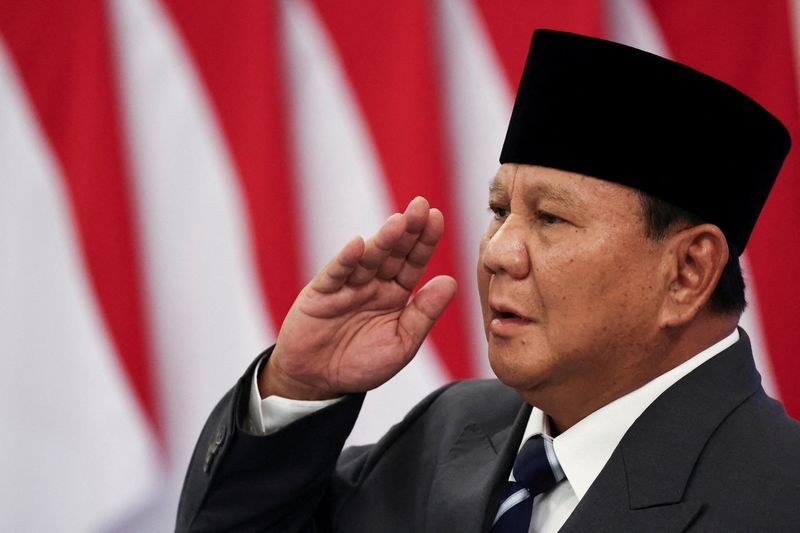
Indonesia is moving to systematically embed artificial intelligence across its government operations, with a presidential regulation draft outlining plans to infuse AI into flagship programmes including the country's $15 billion free-meal initiative. The roadmap, currently awaiting President Prabowo Subianto's signature, represents Jakarta's latest attempt to harness technology for economic transformation and represents a significant shift in how the government intends to deliver public services and manage social programmes.
The regulation envisions a phased rollout from 2026 to 2029, directing ministries and regional authorities to adopt AI technologies in priority government schemes. According to the draft document, the initiative targets what officials describe as "economic growth through development, facilitation and use of AI" across the president's key initiatives. More ambitiously, the government projects that widespread AI adoption could increase Indonesia's gross domestic product by 12 percent—equivalent to $366 billion—by the end of the decade, a claim that underscores the administration's confidence in technology-driven development.
Indonesia's push into AI comes as the country acknowledges its lagging position compared to regional counterparts. Both Singapore and Malaysia have forged ahead in establishing themselves as credible development hubs for artificial intelligence, successfully attracting billions of dollars in investment from major technology corporations seeking to build critical cloud and AI infrastructure. Those nations have benefited from commitments by firms capitalising on the region's growing demand for data services and computing capacity. Indonesia's initiative signals an attempt to close this gap and position itself as more than merely a consumer of foreign technology solutions.
The free-meal programme, which has become synonymous with President Prabowo's policy agenda, stands as perhaps the most emblematic application of the AI strategy. According to the regulation, artificial intelligence would serve multiple functions within the scheme: designing region-specific menus tailored to local nutrition needs, monitoring kitchen hygiene standards in real time, forecasting food demand to minimise waste, detecting operational irregularities, and integrating health data to provide early warnings of potential public health emergencies. These applications aim to address longstanding vulnerabilities that have plagued the programme since its inception.
The free-meal initiative has faced sustained criticism regarding transparency and operational integrity. Earlier this month, the programme's head was dismissed and arrested following investigations into mismanagement. The scheme has also been marked by documented problems including substandard kitchen facilities, inadequate safety protocols, and a particularly troubling incident in which tens of thousands of children suffered food poisoning. These episodes have fuelled concerns about wasteful spending at a time when Indonesia faces genuine fiscal constraints, making the proposed AI safeguards potentially valuable for restoring public confidence.
Beyond the meal programme, AI integration will extend to Indonesia's health sector initiatives. The regulation identifies plans to deploy artificial intelligence in analysing health screening data and supporting tuberculosis testing efforts, suggesting a broader vision of using technology to enhance preventive healthcare delivery and disease surveillance across the archipelago. Such applications could theoretically improve accuracy in identifying at-risk populations and streamline resource allocation in a health system serving more than 270 million people.
Tech giants including Meta Platforms, IBM, and Microsoft have reportedly contributed expertise to the regulation's drafting, according to Wahyudi Djafar, a technology analyst who participated in writing portions of the regulation as a member of the government's AI task force. Microsoft had already signalled its commitment to the Indonesian market in 2024, announcing a $1.7 billion investment over several years to expand cloud computing and AI infrastructure capabilities. Such private-sector involvement raises questions about whose interests ultimately shape digital governance frameworks and whether such partnerships adequately protect national interests.
Yet significant scepticism surrounds Indonesia's capacity to execute this ambitious agenda. Derwin Suhartono, an artificial intelligence professor at Bina Nusantara University in Jakarta, has highlighted fundamental constraints limiting Indonesia's prospects. The country lacks essential foundational infrastructure, particularly in semiconductor manufacturing and chip production, whilst the workforce remains inadequately trained in advanced AI skills and applications. Suhartono cautioned that Indonesia risks remaining primarily a consumer of foreign technology products rather than developing indigenous capabilities, describing the current government strategy as "all rhetoric" absent credible execution mechanisms.
The regulation acknowledges these capacity gaps by proposing interventions including the establishment of a "sovereign AI fund" managed primarily through Danantara Indonesia, the country's newly created wealth management vehicle. The framework also contemplates fiscal incentives for AI researchers and initiatives to attract and retain talent, reflecting recognition that human capital deficiencies represent perhaps the most consequential bottleneck. Whether such measures will prove sufficient to catalyse genuine capability development remains an open question.
Accompanying the AI adoption roadmap is a separate regulatory draft requiring government bodies to identify and report AI-related risks including biometric data misuse, intellectual property violations, and synthetic media deception through deepfakes. This risk management apparatus acknowledges that deploying AI across sensitive government functions—involving health data, nutrition programmes, and potentially surveillance capabilities—introduces novel vulnerabilities requiring governance frameworks that Indonesia has yet to fully develop.
The entire initiative builds upon a white paper released in the previous year, signalling continuity in strategic thinking across administrations. Yet the timeline for President Prabowo's formal signature on the regulation remains uncertain, and his office has not provided clarity on implementation schedules or resource commitments. For Malaysian policymakers and technology companies monitoring regional developments, Indonesia's approach offers both cautionary lessons regarding execution capacity and potential opportunities for partnerships with Southeast Asia's largest economy as it navigates its digital transformation.