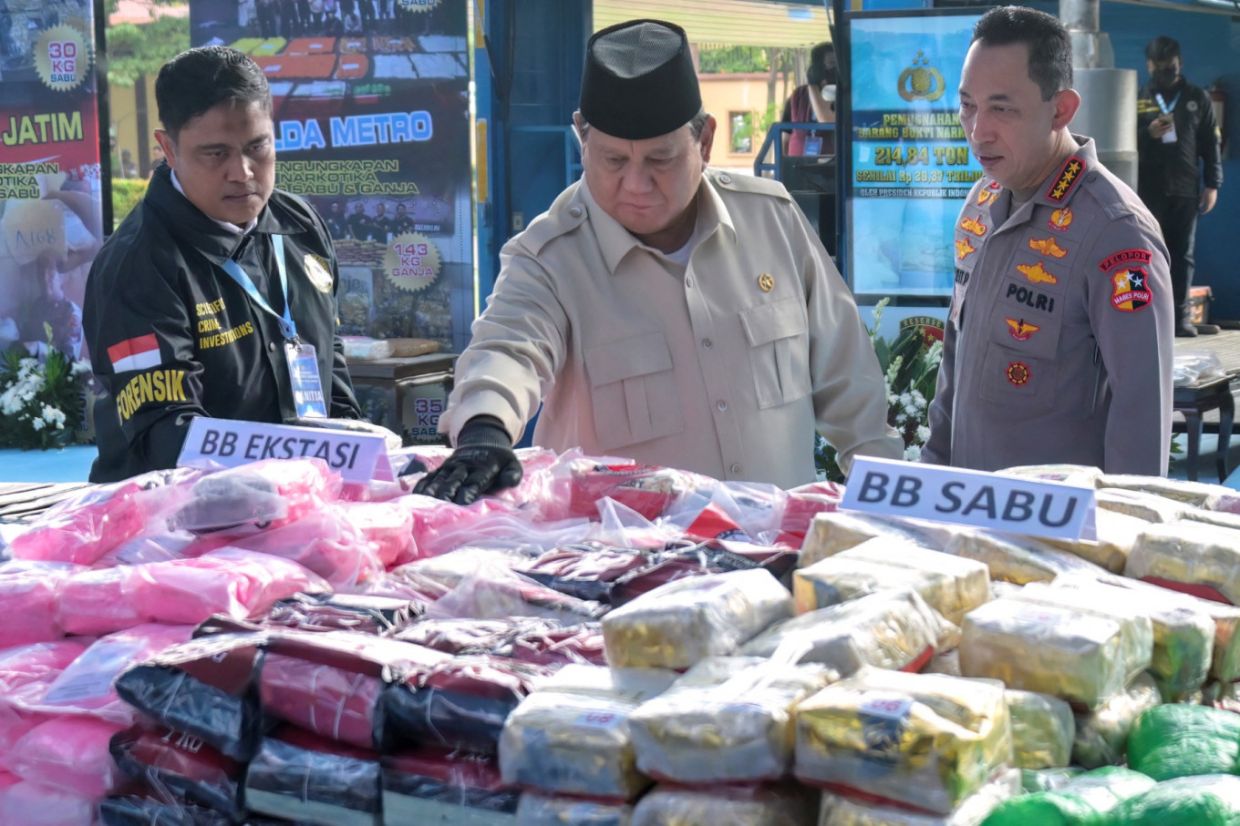
Indonesia's fight against transnational drug trafficking has claimed another significant victory, with authorities seizing 2.6 tonnes of liquid methamphetamine aboard a commercial vessel operating under a false identity in waters near Bengkalis, Riau province. The National Narcotics Agency announced the capture on Tuesday, describing the interdiction as one of the nation's most substantial drug busts on record. The vessel, officially flagged to Tanzania but operating as the MV Rain Maker, was intercepted late Monday following coordinated intelligence-led operations between the narcotics agency and customs enforcement teams.
The discovery underscores the persistent vulnerability of Indonesia's maritime boundaries to organised crime networks exploiting shipping routes through Southeast Asian waters. Acting on credible information suggesting the ship had departed Sarawak, Malaysia, and traversed the Andaman Sea with contraband destined for Indonesian distribution networks, authorities initiated the interception and comprehensive search operations. Roy Hardi Siahaan, a senior official within the National Narcotics Agency, revealed that inspectors methodically located the drug cache concealed across eight water barrels and an additional water tank, demonstrating the sophisticated concealment techniques employed by traffickers operating in the region.
Beyond the headline methamphetamine seizure, the operation uncovered a secondary cache of contraband that illustrated the multipurpose nature of drug-trafficking operations. Sniffer dogs deployed during the vessel inspection detected over 1.5 million illicit cigarettes stashed aboard, indicating that criminal syndicates frequently diversify their cargo to maximise profit potential across multiple smuggling channels. The presence of such ancillary contraband suggests these transnational operations command substantial logistical infrastructure capable of managing diverse prohibited goods simultaneously.
All ten crew members apprehended during the interdiction were identified as Myanmar nationals, a pattern consistent with regional trafficking network structures where crews from source countries operate vessels on behalf of international criminal organisations. Their arrest marks another chapter in Indonesia's escalating enforcement campaign against maritime drug trafficking, which has increasingly shifted to deployment of advanced intelligence capabilities and inter-agency coordination mechanisms.
The August operation represents merely the latest in an intensifying sequence of major seizures throughout Indonesia's maritime domain. Contextually, authorities had announced the previous year's most significant methamphetamine capture involving two tonnes of crystalline meth discovered aboard a fishing vessel transiting from the Andaman Sea toward Batam Island, setting a benchmark against which enforcement achievements are measured. The current seizure approaches that historic figure, reflecting the massive volumes of synthetic drugs continuously attempting passage through Indonesian waters.
This particular bust constitutes the second major interception of a Tanzanian-flagged vessel within a single month, raising questions about whether flag states of convenience are exploited disproportionately for narcotics transport or whether enforcement patterns simply reflect increased vigilance along established trafficking corridors. Just ten days prior on August 8, Indonesian authorities had apprehended another ship in Riau Island waters, extracting 1.3 tonnes of ketamine from its hold. That vessel's crew comprised seven Myanmar nationals and one individual from Taiwan, suggesting diverse but overlapping trafficking networks operating through comparable routes and utilising similar deployment strategies.
The implications for Malaysia and broader Southeast Asia extend beyond individual seizure statistics. These consecutive captures demonstrate that trafficking organisations continue routing drugs through waters adjacent to Malaysia—particularly the Andaman Sea and Malacca Strait approaches—requiring coordinated regional responses and heightened maritime surveillance. Sarawak's appearance as a departure point in the latest case underscores the porous nature of maritime borders throughout the region and the necessity for enhanced collaboration between Malaysian and Indonesian authorities in monitoring vessel movements and intelligence sharing.
Indonesia's sustained enforcement achievements occur despite operating within an international legal framework that permits but has not implemented capital punishment for major traffickers. The nation maintains some of the planet's most stringent anti-narcotics legislation, yet has observed an extended moratorium on executions for drug-related offences spanning several years. This enforcement approach through interception, prosecution, and incarceration appears increasingly effective, particularly when combined with sophisticated intelligence gathering and coordinated multi-agency operations that prioritise prevention over retrospective punishment.
The broader significance of these busts relates to evolving trafficking patterns across Southeast Asia. Syndicate operations have adapted to enforcement pressures by fragmenting shipments, diversifying routes, and employing increasingly sophisticated concealment methodology. The shift toward liquid methamphetamine rather than exclusively crystalline forms reflects chemists' responses to detection technologies, presenting law enforcement with novel analytical and interdiction challenges. Indonesian authorities' capacity to identify and recover such shipments indicates advancing technical capability and intelligence sophistication.
Regional observers note that seizures at Indonesia's maritime perimeter represent enforcement successes that simultaneously illustrate the massive underlying trafficking volumes attempting passage through regional waters. Each tonne intercepted likely represents multiple additional tonnes successfully reaching destination markets, suggesting that even major busts constitute a fractional response to the supply problem. Nonetheless, disrupting logistics networks, arresting operational personnel, and degrading trafficking infrastructure remain valuable components of comprehensive counter-narcotics strategy.
The apparent clustering of major seizures during specific periods may reflect seasonal factors affecting maritime operations, enhanced enforcement campaigns, or improved intelligence collection capabilities. The sequential nature of August interceptions suggests either intensified enforcement activity or network vulnerability following earlier enforcement actions that may have caused logistical disruptions requiring compensatory shipment attempts.
Moving forward, sustaining these enforcement achievements requires continued investment in maritime surveillance infrastructure, inter-agency coordination protocols, and regional intelligence-sharing mechanisms. For Malaysian stakeholders, the patterns evident in these Indonesian interdictions reinforce the necessity for vigilance throughout the Strait of Malacca and surrounding waters, where transnational trafficking networks maintain established operating corridors. Coordinated responses across Southeast Asia remain essential for disrupting the supply chains that feed destructive methamphetamine epidemics throughout the region.

