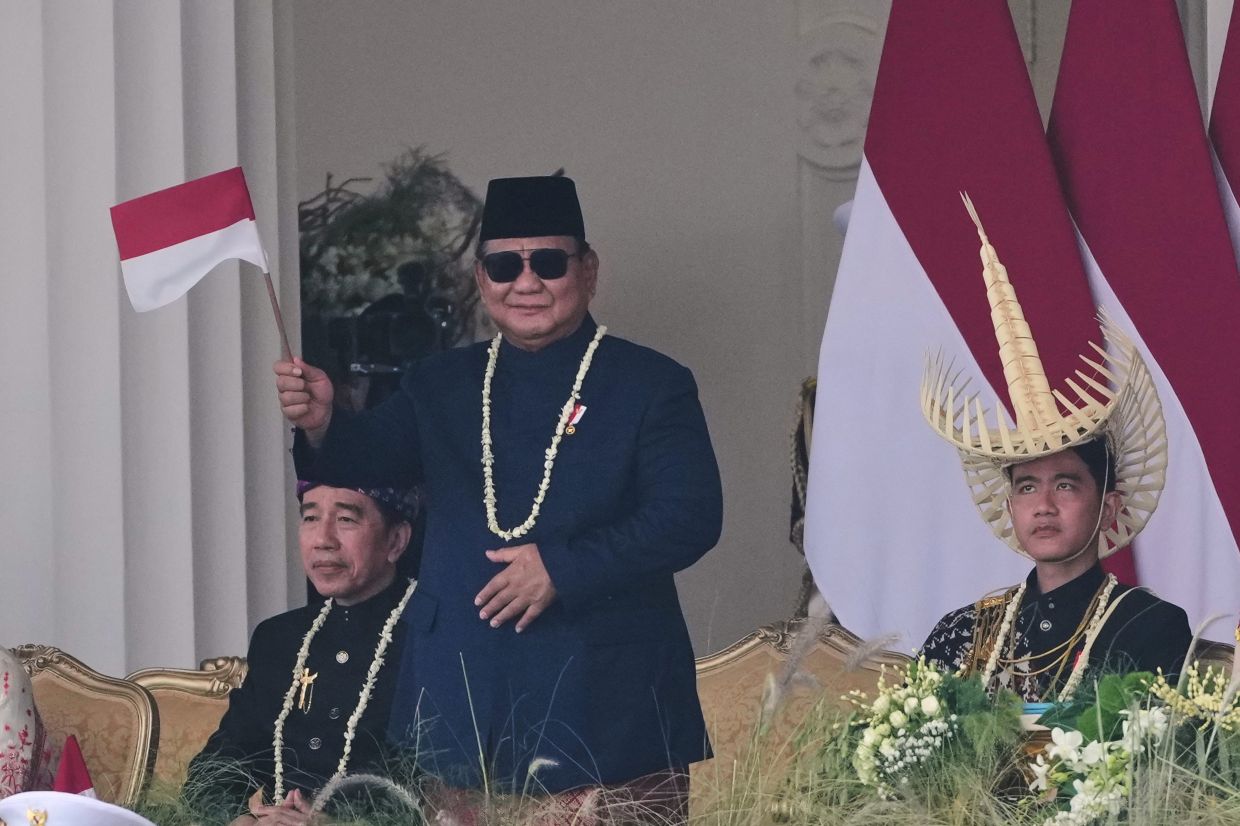
President Prabowo Subianto presided over Indonesia's 81st Independence Day commemoration in Jakarta on Monday, August 17, in a ceremony that reflected the nation's dual focus on patriotic celebration and humanitarian crisis management. The event took place as the country grappled with the aftermath of a catastrophic earthquake that struck Flores Island in East Nusa Tenggara on Saturday, underscoring how natural disasters continue to test the resilience and responsiveness of Southeast Asia's largest archipelago.
The President dressed in traditional regalia—a navy beskap paired with a black peci and adorned with a jasmine garland—took his place as inspector of the commemorations at Merdeka Palace in Central Jakarta. The ceremony itself followed a carefully choreographed programme that blended pageantry with reflection, beginning with cultural performances and a formal parade. A gilded carriage bearing replicas of the national flag and the original Proclamation document travelled from the National Monument to the Palace, flanked by 114 cavalry troops and 45 military police officers in an elaborate security formation that underscored the symbolic importance of the occasion.
Yet the festivities carried an unmistakable solemnity. President Prabowo led attendees in a moment of silence dedicated to honouring the nation's independence heroes and extended prayers for Indonesians affected by the weekend's calamity. This balance between national pride and collective grief reflected the complex reality facing Indonesia as it celebrated freedom while mourning those caught in nature's fury. The gesture signalled that despite the momentous historical achievement being commemorated, the government remained acutely aware of its immediate obligations to disaster victims.
The earthquake that overshadowed the celebrations struck Flores Island early on Saturday with a magnitude of 7.7, unleashing destruction across densely populated communities. According to the National Disaster Mitigation Agency, the initial quake claimed 53 lives, while injuring more than 130 others, many suffering fractures and critical injuries requiring emergency medical intervention. The seismic event triggered nearly 1,000 aftershocks of varying intensities, creating an atmosphere of continued anxiety among residents and complicating rescue and recovery operations. Approximately 5,400 people abandoned their homes seeking safety, overwhelming local shelters and relief distribution networks already stretched thin by the scale of destruction.
The damage to physical infrastructure proved equally alarming. Hundreds of residential buildings, public facilities, and commercial structures sustained severe damage or complete destruction, rendering entire neighbourhoods uninhabitable and disrupting essential services. The Flores earthquake represents the latest in a recurring pattern of seismic activity across Indonesia's tectonically volatile region, a reality that continues to shape disaster preparedness and emergency response protocols throughout the nation.
The seismic activity persisted even during Monday's Independence Day ceremonies. At approximately 10 o'clock in the morning local time, a 5.8-magnitude earthquake struck the waters off the island, originating from a depth of 10 kilometres with its epicentre positioned approximately 39 kilometres north of East Nusa Tenggara, according to readings from the Meteorology, Climatology and Geophysics Agency. While smaller than Saturday's initial shock, the continued tremors underscored the unstable geological conditions affecting the region and the unpredictability facing both survivors and rescue personnel.
The earthquake's impact rippled through Indonesia's governmental apparatus itself, with several senior ministers absent from Jakarta's Independence Day ceremony. State Secretary Prasetyo Hadi disclosed that coordinating human development minister Pratikno, Home Minister Tito Karnavian, Public Works Minister Dody Hanggodo, and Deputy Health Minister Benjamin Paulus Octavianus had all travelled to East Nusa Tenggara to oversee disaster response implementation. This administrative delegation reflected the government's immediate prioritization of on-ground relief coordination over ceremonial attendance, a pragmatic decision emphasizing operational response over protocol.
When questioned about the government's resource allocation during such a national emergency, Prasetyo articulated the administration's position that Independence Day observance and disaster relief represented complementary rather than competing priorities. "As we celebrate Independence Day, we also need to ensure that our fellow citizens who are affected by the disaster are being cared for," he stated, framing the dual challenges as inseparable elements of governmental responsibility. This formulation acknowledged that Indonesia's independence held meaning only insofar as the state could effectively protect and support its population during times of crisis.
Reporting on whether President Prabowo might personally visit Flores to assess conditions and console victims, Prasetyo adopted a cautious stance, stating that no definitive plans had been finalized. Instead, the government would monitor the developing situation and base any presidential visit decision on evolving circumstances. "The ministers are already there. We will see what the situation is like and then decide," he explained, indicating that immediate strategic priorities centred on coordinating relief distribution and damage assessment rather than high-profile presidential visitations that might divert security resources.
The Flores earthquake underscores persistent vulnerabilities across Indonesia's disaster management infrastructure. Despite technological advances in early warning systems and institutional frameworks like the National Disaster Mitigation Agency, the archipelago's geographical exposure to seismic activity, tropical storms, and volcanic hazards ensures that natural disasters will continue defining much of the government's operational agenda. For Malaysia and other Southeast Asian nations, Indonesia's ongoing experience with large-scale disasters provides instructive examples regarding preparedness investments and cross-border humanitarian coordination mechanisms.
Furthermore, the earthquake's timing during a symbolic national commemoration highlights how natural phenomena operate independent of political calendars. As Indonesia celebrated its independence—a milestone representing decades of nation-building and institutional development—the Flores disaster reminded citizens that vulnerability to nature's forces transcends political boundaries and economic development levels. The challenge facing President Prabowo's administration involves maintaining momentum on development priorities while simultaneously managing the immediate humanitarian consequences of geological hazards that will inevitably recur across the archipelago's tectonically unstable terrain.
For the international community and regional observers, Indonesia's response to the Flores earthquake offers insights into how large, complex developing nations manage simultaneous ceremonial obligations and crisis response demands. The government's decision to mobilize ministerial resources toward disaster zones while maintaining national commemorative events demonstrates an attempt to balance symbolic continuity with operational effectiveness—a delicate equilibrium that Indonesia, given its history of natural disasters, has learned through difficult experience to navigate with increasing sophistication.

