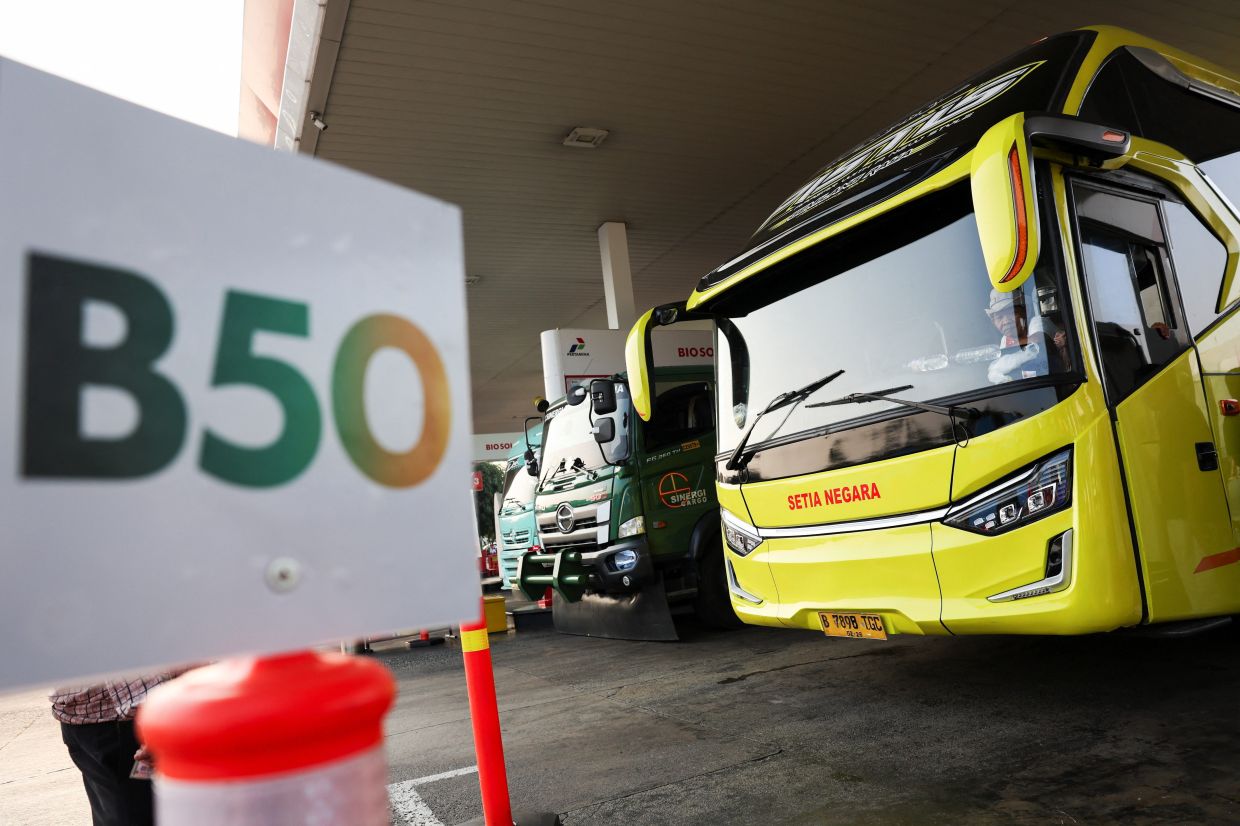
Indonesia, the world's dominant producer of palm oil, has formally initiated its B50 biodiesel programme, a significant escalation in the country's strategy to substitute imported diesel with domestically produced biodiesel. Energy Minister Bahlil Lahadalia announced on Thursday at a ceremony in Karawang, West Java—where President Prabowo Subianto was also present—that the new mandate to blend 50 percent palm oil-based fuel into diesel supplies will necessitate substantially higher volumes of crude palm oil feedstock. The initiative represents a decisive pivot toward leveraging Indonesia's agricultural dominance to solve a chronic energy trade deficit.
The transition from the existing B40 programme to B50 carries significant implications for Indonesia's palm oil sector and its broader economic strategy. According to Lahadalia's statement, crude palm oil consumption under the new regime will climb to between 16.3 million and 17 million metric tons annually, compared to the current 15.2 million tons. This expansion underscores Jakarta's commitment to deploying its vast palm oil reserves—which account for roughly 60 percent of global production—as a strategic commodity to reduce reliance on imported diesel. The programme sits among the world's largest compulsory biodiesel blending schemes, reflecting the scale of Indonesia's ambition to reshape its fuel economy.
The financial rationale driving the B50 agenda appears particularly compelling given Indonesia's persistent import burden. Energy ministry calculations indicate that the higher biodiesel blend will trim this year's fuel import bill by 170 trillion rupiah—equivalent to approximately 9.41 billion US dollars—compared with projected savings of about 133 trillion rupiah in 2025. These figures demonstrate why policymakers in Jakarta view the programme as integral to stabilizing the nation's external accounts and preserving foreign exchange reserves. For a country struggling with widening current account deficits, every billion dollars in import savings carries material weight for macroeconomic stability.
President Prabowo's participation in the Karawang launch signals the highest-level political backing for the initiative. During the ceremony, Prabowo framed biodiesel expansion within a broader environmental narrative, asserting that Indonesia was spearheading global efforts to combat carbon emissions. However, the president revealed that his personal preference extended even further: he had advocated internally for a B100 mandate requiring pure biodiesel use. Government ministers counselled against such an aggressive target, advising instead that a 50 percent blend was adequate to eliminate diesel imports altogether. Notably, Prabowo indicated that authorities should remain focused on progressively raising the threshold toward a 60 percent blend, suggesting the B50 framework may represent an intermediate step rather than a final destination.
The technical scope of the B50 transition underscores the logistical complexity embedded in scaling biodiesel production. Under the previous B40 programme, Indonesia allocated 15.64 million kilolitres of biodiesel this year, representing a 4.68 percent increase from the prior year's consumption of 14.94 million kilolitres. The new B50 mandate will demand between 16.7 million and 18 million kilolitres of fatty acid methyl ester (FAME)—the chemical compound that comprises biodiesel—annually. This dramatic expansion requires corresponding increases in processing infrastructure, feedstock supply chains, and blending capacity across Indonesia's fuel distribution networks. The energy ministry has signalled it will commence research into a potential 60 percent blend, keeping the door open for yet another escalation.
A critical administrative detail affects the programme's near-term implementation. The energy ministry has not yet issued the supplementary quotas necessary for the B50 programme to commence full operations. This regulatory gap has created uncertainty among industry participants who are awaiting formal allocation directives. Businesses managing existing B40 stocks have been granted a transitional window: they must deplete remaining B40 inventory by the end of September, after which the new blend standard takes effect. This phased approach allows the fuel distribution network to adapt without disruptive supply disruptions, though it also compresses the timeline for blending facilities to recalibrate their operations.
The broader implications for Southeast Asia merit consideration. Indonesia's escalating biodiesel mandates reflect a regional pattern whereby agricultural exporters are attempting to add value and create domestic industrial capacity around primary commodities. Similar dynamics are emerging across the region as countries seek to move up value chains and reduce energy import dependence. However, the palm oil industry's environmental footprint remains contentious globally, with conservation advocates raising concerns about deforestation and habitat loss. Indonesia's enhanced biodiesel commitments may intensify these tensions, particularly as the B50 programme drives increased crude palm oil demand and incentivizes expanded plantations.
For Malaysia, Indonesia's closest competitor in global palm oil markets, the B50 initiative carries both challenges and opportunities. The programme will absorb more Indonesian palm oil domestically, potentially tightening global palm oil supplies and supporting prices—a dynamic that benefits Malaysian producers. Simultaneously, it may constrain Indonesia's palm oil export volumes, granting Malaysian exporters greater market access. However, if other regional producers adopt similar biodiesel mandates, the cumulative effect could reshape global vegetable oil trade patterns and redirect previously exported volumes into domestic fuel production across Southeast Asia.
The financial projections underpinning the B50 programme require scrutiny regarding their realism and sustainability. The claimed import savings assume that biodiesel production costs remain competitive relative to imported diesel prices. Should crude oil prices fall sharply, this cost advantage could evaporate, potentially forcing Indonesian policymakers to contemplate subsidy mechanisms to maintain the blending mandate. Additionally, the calculations do not fully account for the environmental externalities—deforestation, biodiversity loss, and carbon emissions from land-use change—associated with expanded palm oil cultivation. A comprehensive cost-benefit analysis incorporating these external costs would likely alter the programme's economic calculus, though such considerations rarely dominate near-term policy decisions focused on balance-of-payments relief.
Indonesia's B50 biodiesel strategy reflects a pragmatic but potentially problematic approach to energy security. By mobilizing its abundant palm oil resources to substitute for imported diesel, Jakarta addresses a genuine macroeconomic vulnerability while deploying existing productive capacity. The programme's ambition—framed in terms of environmental stewardship—aligns with global climate narratives, even as it risks intensifying agricultural expansion with substantial ecological consequences. For the Southeast Asian region, Indonesia's initiative may catalyze parallel policies that reshape commodity markets, deepen agricultural-industrial integration, and force a reckoning between energy security, economic efficiency, and environmental sustainability.

