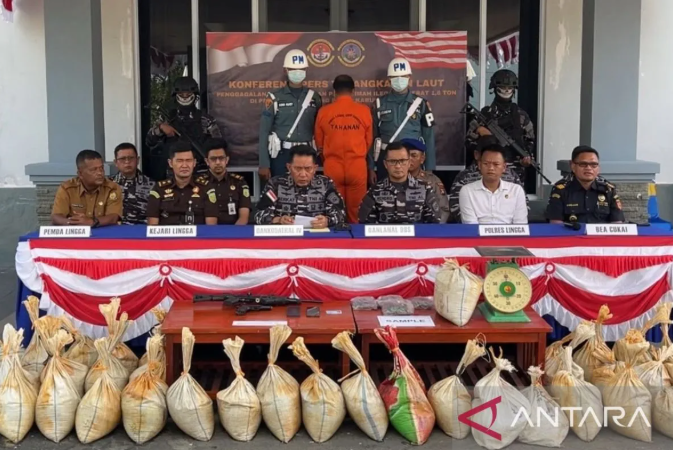
Indonesia's naval forces have successfully interrupted what appears to be an organized smuggling operation attempting to transport approximately 75.7 tonnes of unlawfully extracted tin sand across maritime borders to Malaysia. The discovery, made across the Bangka Belitung Islands region located off eastern Sumatra's coastline, represents a substantial seizure of mineral contraband estimated at Rp76.04 billion in value. The interception has triggered a broader investigation into what authorities suspect is a coordinated network facilitating illegal resource extraction and cross-border trafficking in Southeast Asia's tin-producing regions.
According to Vice Admiral Denih Hendrata, commander of the Indonesian Fleet Command, the operation commenced when naval personnel detected a truck transporting roughly eight tonnes of tin sand at a jetty facility in East Belitung on August 2. This initial apprehension proved to be merely the surface of a larger smuggling apparatus, prompting coordinated follow-up raids that would ultimately uncover the full scope of the operation. The subsequent investigations demonstrated the systematic nature of the suspected trafficking network, with discoveries occurring at multiple locations over the course of a week, each revealing additional stockpiles of contraband mineral material.
The sequential raids paint a picture of organized resource smuggling infrastructure. On August 3, authorities located approximately 50 tonnes of tin sand in Lenggang village, a significant cache suggesting substantial storage capacity within the network. The following day brought the discovery of another 10 tonnes carefully packed within 200 sacks, indicating careful preparation for transport. A final seizure of five tonnes occurred on August 8, bringing the total intercepted quantity to the substantial 75.7 tonne figure. Each discovery pointed toward a more extensive operation than initially apparent, prompting the naval command to expand investigative efforts systematically rather than treating the initial seizure as an isolated incident.
Vice Admiral Hendrata emphasized during a livestreamed press briefing in Tanjungpandan, Belitung on Wednesday that the naval response extended far beyond the immediate seizures themselves. He explicitly stated that the operation was deliberately expanded to map out the broader smuggling network and identify all parties implicated in the trafficking arrangement. This investigative approach reflects growing concern among Indonesian authorities about organized mineral smuggling operations, which drain national resources and undermine legitimate mining sectors. The emphasis on uncovering the network structure suggests authorities believe multiple individuals and potentially organizations are involved in coordinating extraction, storage, and transport operations.
At present, no individuals have been formally charged or publicly identified as suspects in connection with the smuggling operation. However, the investigation has already expanded to encompass five separate locations, indicating the geographic dispersal of the suspected smuggling network. This geographical spread suggests the operation likely involved multiple stages of coordination, potentially requiring different individuals to manage extraction sites, storage facilities, and transport logistics. The involvement of multiple locations creates investigative complexity but also provides authorities with numerous points of evidence gathering.
Technical analysis is currently underway to determine the precise mineral composition and quality of the seized material. Laboratory testing will establish the exact tin content of the sand and potentially provide forensic evidence linking specific batches to particular extraction sites. Such mineral analysis can serve as crucial evidence in prosecution cases and may help authorities trace the material back to its original mining locations. The geological fingerprinting of mineral samples represents an increasingly important tool in combating illegal extraction and smuggling operations.
The destination of this contraband material highlights the regional nature of Southeast Asian mineral trafficking. That the tin sand was apparently bound for Malaysia indicates the existence of established smuggling routes and likely demand networks across maritime borders. Malaysia, itself a significant tin producer and processor, possesses refining and smelting facilities that could process illegally extracted material into higher-value products. The cross-border aspect of this operation raises questions about the sophistication and organization of the smuggling network, suggesting it operates with knowledge of maritime routes, border enforcement patterns, and market demand.
When questioned about the possibility of extending investigations into Malaysian territory, Vice Admiral Hendrata acknowledged that international cooperation would be essential to fully dismantle the smuggling network. Tracing the intended recipients and understanding the demand mechanisms that drive illegal extraction requires coordination between Indonesian and Malaysian authorities. Such transnational investigations are increasingly common as Southeast Asian nations recognize that mineral smuggling and illegal resource extraction represent shared security and economic concerns. The willingness to pursue cross-border investigations reflects growing regional consensus on tackling organized trafficking in natural resources.
The seizure underscores persistent challenges in regulating tin extraction across Indonesia's eastern regions. The Bangka Belitung Islands have long been associated with both legitimate and illicit mining operations, driven by the global demand for tin and the economic incentives for unauthorized extraction. The existence of organized networks suggests that current enforcement mechanisms, while occasionally successful, have not completely deterred smuggling operations. The scale of this particular operation—involving tens of tonnes of material and multiple storage locations—indicates that significant quantities of illegally extracted mineral material are circulating through regional trade networks despite official efforts to control extraction and cross-border movement.
For Malaysian readers, this seizure carries implications for both trade security and the sourcing of mineral commodities. The revelation that organized smuggling networks are actively attempting to supply Malaysian facilities with illegally extracted tin raises questions about due diligence in the Malaysian mining and processing sector. International tin markets operate on the assumption that material comes from legitimate sources, but clandestine supply chains can undermine the integrity of global commodity trading. Malaysia's position as a major tin processor and exporter means that ensuring clean sourcing becomes increasingly important for maintaining market credibility and meeting international standards for responsible resource trading.
The investigation also reflects broader Southeast Asian governance challenges regarding natural resource management and transnational crime. Illegal mining operations not only deprive national governments of tax revenue and resource control but also generate environmental damage and frequently operate through networks linked to organized crime. The successful interception demonstrates that authorities possess operational capabilities to detect and intercept smuggling operations, yet the continued existence of such networks suggests that detection and enforcement remain ongoing challenges. Future efforts may require enhanced regional coordination, improved intelligence sharing, and stricter regulation of maritime commerce in mineral products.

