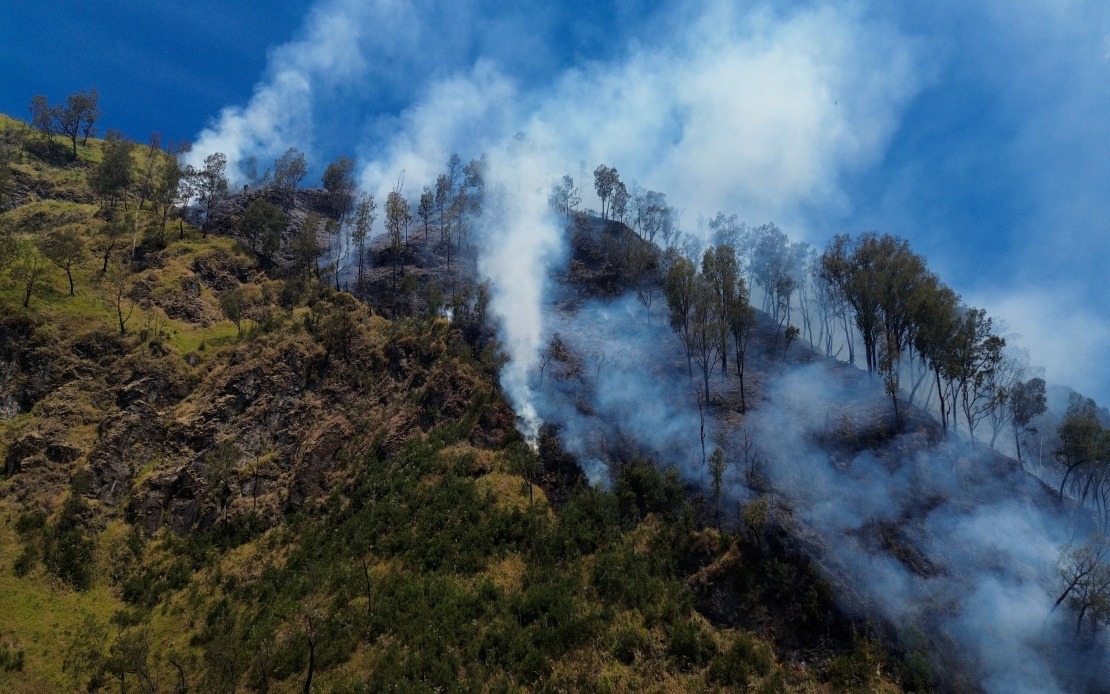
Indonesia's tourism authorities have imposed an immediate and indefinite closure of Mount Bromo, one of the nation's most visited natural attractions, as a persistent wildfire continues to consume forest across the Bromo Caldera region in East Java. The Bromo Tengger Semeru National Park management implemented the sweeping access restrictions from 10pm on Saturday to prioritize the safety of visitors and clear space for active firefighting operations now underway across multiple jurisdictions.
The closure, affecting all five principal entry points to the volcano and its surrounding protected area, represents a significant disruption to tourism in one of Indonesia's flagship destinations. Tourists normally flock to Mount Bromo to witness its dramatic sunrise views and otherworldly volcanic landscape, making the temporary shutdown a considerable blow to regional tourism revenue at a critical time when the sector is recovering from pandemic-related losses. The affected entry gates span four regencies—Probolinggo, Pasuruan, Malang, and Lumajang—each serving different visitor routes and accommodation clusters around the 2,392-metre active volcano.
Accommodating the sudden disruption, park authorities have created provisions for affected visitors. Those who purchased online tickets for dates falling within the closure period can either reschedule their visits to a later date or apply for full refunds through the park's ticketing system. This arrangement, while helpful, will likely generate administrative complications for tour operators and hospitality businesses dependent on visitor throughput during what is typically a peak season for domestic and international tourism.
The wildfire ignited on Monday and has proven stubborn to control despite intensive suppression efforts. According to Abdul Muhari, head of the Disaster Data, Information, and Communication Centre at Indonesia's National Disaster Management Agency (BNPB), the flames have consumed an estimated 176.20 hectares of forest across Probolinggo and Malang regencies alone. As of Saturday evening, active hotspots continued releasing thick smoke plumes visible across the region, while meteorological conditions—characterized by moderate wind patterns—have complicated firefighting strategy by potentially spreading embers and flames across still-unburned vegetation.
To combat the advancing fire, Indonesian authorities have mobilized aerial resources including two water-dropping helicopters, each capable of carrying 1,000 litres per load. These aircraft represent crucial force multiplication in terrain where ground access is limited by steep slopes and dense forest. Despite these measures, the persistence of hotspots indicates the fire's deep penetration into organic matter and peat layers, which can smoulder for extended periods and reignite when conditions favour combustion. The continued monitoring by ground teams reflects recognition that aerial suppression alone cannot guarantee containment without sustained ground-based efforts.
This incident at Mount Bromo occurred during a broader pattern of forest and land fires affecting Indonesia's volcanic regions. A separate but contemporaneous fire in the Sembalun Resort area of Mount Rinjani National Park in East Lombok Regency, approximately 400 kilometres to the east, required similar emergency response measures. That blaze, which ignited at approximately 8pm on Friday, consumed roughly 30 hectares before firefighting teams managed to bring it under control by 1:30am on Saturday morning. The near-simultaneous emergence of fires across two major national parks in Indonesia's volcanic belt raises questions about underlying environmental conditions and fire risk assessments across the region.
The root causes of both conflagrations remain unresolved, with investigators still examining evidence at both sites. Initial hypotheses typically centre on human-caused ignition through unattended campfires, discarded cigarettes, or agricultural burning that escaped control—common triggers for wildfire incidents in Indonesia's national parks where visitor access and local land-use practices intersect with sensitive ecosystems. However, the possibility of natural ignition through lightning strikes during the dry season cannot be entirely excluded without thorough forensic analysis. Understanding causation will inform future prevention strategies and potentially shape management policies regarding visitor access and land use in sensitive areas.
The Mount Bromo closure carries implications extending beyond immediate tourism disruption. The volcano sits within a culturally significant landscape for the Tenggerese people, an ethnic group inhabiting the caldera region for generations. Annual religious ceremonies and cultural practices tied to the mountain may face disruption depending on the closure's duration. Additionally, the incident underscores Indonesia's vulnerability to wildfire events during dry seasons, a vulnerability that climate change may intensify through altered precipitation patterns and extended drought periods.
For Malaysian and Southeast Asian visitors, the closure represents a sobering reminder of environmental risks in the region during certain seasons. Mount Bromo attracts thousands of international tourists annually, including significant numbers from Malaysia, Singapore, and Brunei. The incident may prompt travel agencies and tourism platforms to revise safety protocols and pre-trip advisories, particularly regarding visits during peak wildfire seasons spanning June through September. Travelers planning visits to Indonesia's volcano destinations would be prudent to monitor official park advisories and maintain flexibility in itineraries during these high-risk periods.
The fire also highlights the operational challenges facing Indonesia's park management authorities in protecting vast wilderness areas with limited resources. BNPB's deployment of helicopters demonstrates capacity but also reveals constraints—only two aircraft available for a fire spanning 176 hectares indicates the scale often exceeds available suppression assets. This resource limitation is characteristic across Southeast Asian nations, where competing budgetary priorities often leave forestry agencies underfunded relative to the scale of wildfire threats, particularly as climate variability increases fire risk across the region.
As firefighting operations continue, park authorities have not specified a timeline for reopening. The decision will depend on multiple factors: achievement of complete fire suppression, clearance assessments by park management to ensure infrastructure safety, and meteorological conditions that reduce reignition risk. Stakeholders—tourism operators, accommodation providers, local guides, and transportation services dependent on park access—now face an extended period of uncertainty regarding revenue recovery and business operations. The broader lesson for the region involves the necessity of comprehensive fire prevention planning, early detection systems, and adequate resource allocation to minimize the duration and extent of such disruptions to both natural ecosystems and economic activity.

