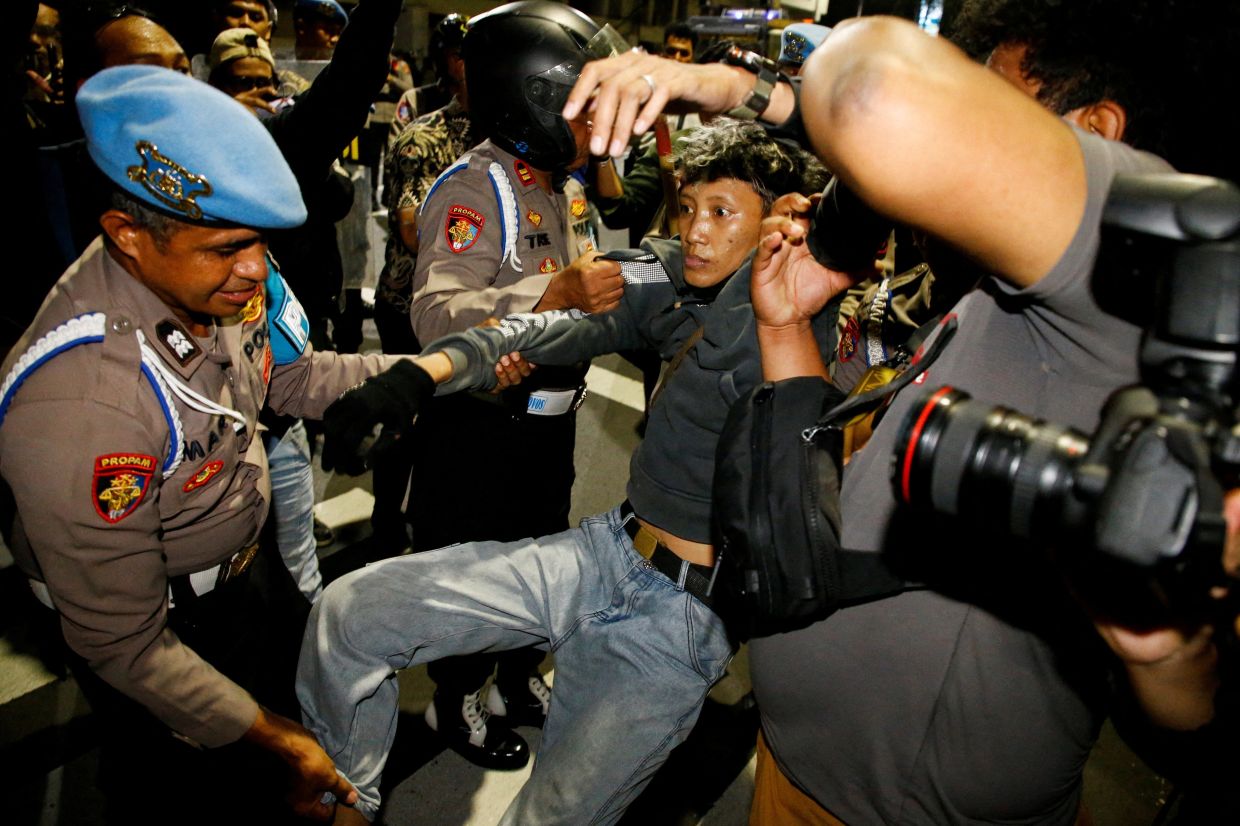
Indonesian police have pressed charges against four individuals arrested during an anti-government protest in Surabaya on Friday, marking an escalation in official response to mounting public dissatisfaction with recent economic policy decisions. The charges emerged from a demonstration that drew approximately 100 participants to the vicinity of a government building in the country's second-largest city, according to estimates made by international news correspondents who witnessed the gathering.
The rally centered on two contentious government initiatives that have sparked widespread anger across Indonesia's urban centres. Demonstrators voiced opposition to a sharp increase in fuel prices implemented earlier this month, which saw non-subsidised petrol costs climb by roughly 30 per cent overnight. Simultaneously, protesters directed criticism at the government's free school meals programme, a flagship initiative designed to address childhood malnutrition but increasingly mired in troubling allegations of administrative failure and criminal misconduct.
Surabaya police chief Luthfie Sulistiawan disclosed that some demonstrators engaged in destructive behaviour during the Friday gathering, throwing objects including firecrackers and rocks at or near the government premises. He characterised the police response as necessary and proportionate, describing the deployment of officers to clear the area as "firm actions" taken to restore order and protect public safety. The four individuals facing charges have been accused of property destruction and physical assault against law enforcement personnel, charges that could result in significant penalties under Indonesian law.
The broader context reveals a government grappling with severe fiscal constraints exacerbated by regional geopolitical turmoil. The fuel price hike represents Jakarta's attempt to manage mounting budget deficits as the conflict in the Middle East disrupts global energy markets and drives crude costs higher. This calculus has forced Indonesia, despite being an oil-producing nation, to acknowledge its dependency on petroleum imports and face the political consequences of reducing long-standing fuel subsidies that have cushioned consumers from global price volatility.
The initial police operation resulted in 24 arrests on Friday, yet authorities adopted a cautious approach in determining who would face formal prosecution. The majority of those detained were released without charges, suggesting police officers recognised the broader sympathies many Indonesian citizens harbour toward the underlying grievances. The decision to press charges against only four individuals may reflect both the severity of those particular suspects' conduct and law enforcement's desire to avoid further inflaming public sentiment through mass prosecutions.
Investigations remain ongoing into six other detainees whose cases have taken a different trajectory. Police personnel detected controlled substances in the systems of these six individuals, shifting the nature of potential charges from protest-related offences to drug possession matters. This distinction carries particular significance in Indonesia, where narcotics laws carry severe penalties and where allegations of drug involvement can serve to discredit protesters in the eyes of the broader public and political establishment.
The Surabaya demonstration represents merely one flashpoint in a larger groundswell of public discontent that has manifested across multiple Indonesian cities. Jakarta, the capital and political heart of the nation, has witnessed particularly vociferous student-led protests drawing thousands of participants. These demonstrations have evolved beyond single-issue activism, with younger Indonesians increasingly linking the fuel price increases to the government's struggling school meals initiative, viewing both as evidence of governance failures and misplaced economic priorities.
The free meal scheme epitomises the tensions between ambitious social policy and administrative reality in Indonesia's sprawling bureaucracy. Launched with substantial public expenditure and international attention as a solution to childhood nutritional deficiencies, the programme has instead become synonymous with systemic dysfunction. Tens of thousands of people have fallen ill from contaminated food distributed under the scheme, creating a public health crisis that has overshadowed the initiative's developmental intentions. Simultaneously, investigative reports have documented widespread corruption, with officials and contractors accused of embezzling funds meant for meal provision.
Government officials have responded by implementing partial suspension of the meals programme, an acknowledgment that its current form cannot continue unchanged. However, this retreat has failed to satisfy critics who question the fundamental viability of delivering such an ambitious intervention through existing institutional channels. The controversy has deepened public scepticism regarding official competence and raised questions about whether similar large-scale social programmes can succeed in an environment marked by administrative challenges and weak oversight mechanisms.
For Southeast Asia's largest economy, these developments signal mounting pressure on the government's capacity to manage the political fallout from necessary but painful economic adjustments. Indonesia's trajectory in coming months will likely depend on whether authorities can address underlying grievances through reformed implementation of social programmes and clearer communication about fiscal constraints, or whether continued reliance on police action will further alienate younger and urban constituencies. The charges against the four Surabaya protesters reflect a government stance that prioritises order over dialogue, a choice that carries significant implications for social stability and political legitimacy across the region.

