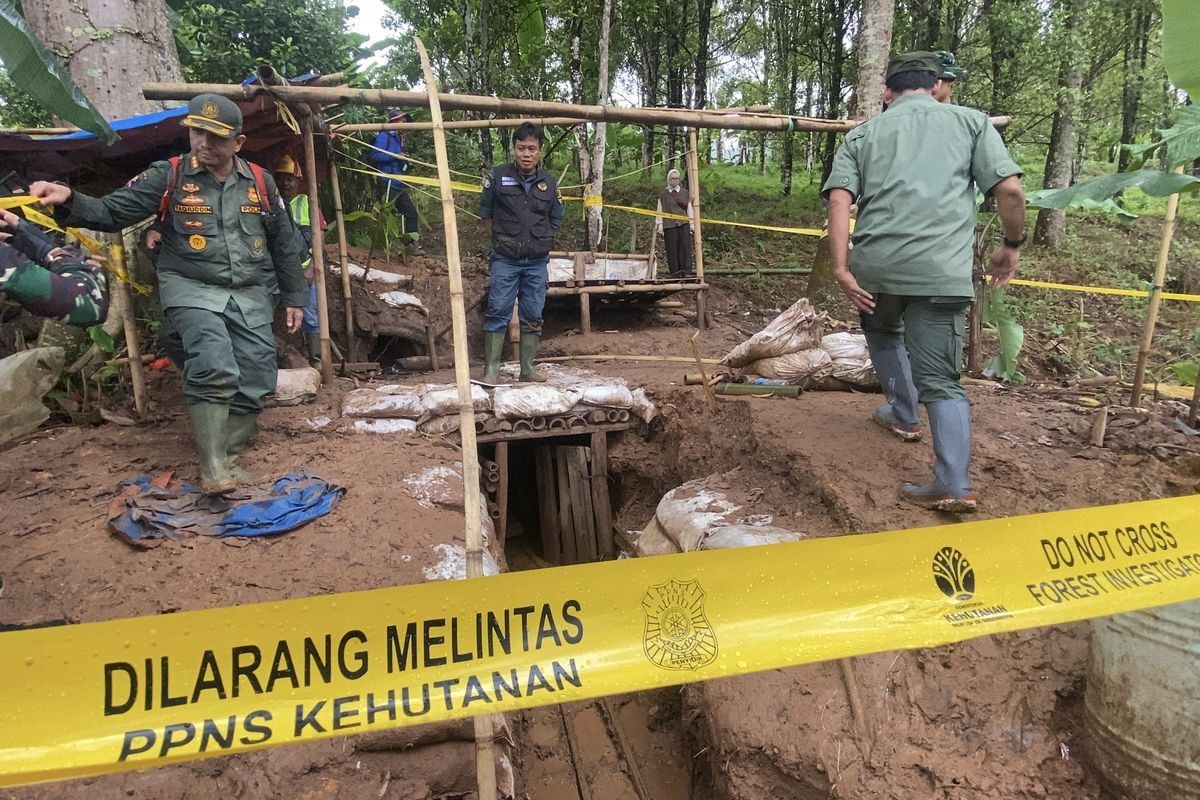
Indonesia's energy ministry has formally charged 24 foreign nationals as criminal suspects in connection with an extensive illegal gold mining operation uncovered in the Maluku region, marking another significant crackdown on unauthorised extractive activities that continue to plague the archipelago's resource-rich territories. The announcement came through an official statement from energy ministry spokesman Jeffri Huwae on Thursday, June 25, detailing what investigators describe as a sophisticated infrastructure development scheme designed to support clandestine mining activities in the Gunung Botak area.
The investigation reveals that the foreign nationals allegedly engaged in far more than simple ore extraction. According to authorities, the suspects directed substantial investments into constructing roads, processing facilities, and supporting infrastructure throughout the Gunung Botak district, indicating a coordinated and well-resourced operation rather than opportunistic prospecting. This systematic approach to establishing mining capability suggests careful planning and considerable financial backing, raising questions about the networks and capital sources that enabled such expansion in a remote region.
Under Indonesian law, individuals convicted of illegal mining face severe consequences. The energy ministry emphasised that violators may receive prison sentences stretching up to five years, a deterrent mechanism designed to discourage both foreign and domestic participation in unauthorised extraction. The specific charges and evidence underpinning the prosecution remain partially undisclosed, as the ministry declined to release information regarding suspect nationalities or the quantities of gold allegedly extracted during the operation's tenure.
Reports from state news agency Antara, published the previous month, identified the detained individuals as 24 Chinese nationals operating under the sponsorship of local company PT Harmoni Alam Manise. This detail suggests involvement of domestic commercial entities in facilitating foreign mining operations, potentially indicating a pattern where Indonesian companies provide legal cover and operational infrastructure for foreign-controlled extraction activities. Such arrangements have become increasingly common across Southeast Asia, where local proxies shield international players from regulatory scrutiny.
The enforcement action faces a significant jurisdictional obstacle. The ministry disclosed that exactly half of the accused remain at large and have departed Indonesian territory, placing them beyond the direct reach of domestic law enforcement. The other 12 suspects have been successfully apprehended and are presently in detention, though their prosecution will likely depend on cooperation from foreign governments and international legal frameworks. This split custody situation highlights ongoing challenges in pursuing transnational mining crimes where perpetrators can flee across borders.
Beyond the 24 foreign nationals, Indonesian authorities have also named two local citizens as criminal suspects in the operation. Their involvement suggests complicity within domestic structures—whether as employees, facilitators, or equity holders in the enterprise. The prosecution of Indonesian co-conspirators alongside foreigners indicates that investigators recognise this was not simply a case of external actors operating independently, but rather a collaborative scheme requiring local knowledge, connections, and operational support.
Illegal mining involving foreign nationals has emerged as a recurring enforcement challenge across Indonesia's resource-abundant regions. The archipelago's geological wealth and remote geography have made it attractive to international extraction networks seeking to circumvent regulatory frameworks and taxation requirements. Previously, authorities in Papua, Indonesia's easternmost province, arrested four Chinese nationals operating in Senggi district during the preceding year, demonstrating that similar operations have recurred across multiple locations and timeframes.
The Maluku operation's discovery and prosecution carry implications extending beyond immediate criminal justice considerations. Illegal mining destabilises legitimate industry, depletes national resources without compensating state treasuries, and frequently causes environmental degradation affecting local communities. For Malaysia and other Southeast Asian nations, the case underscores how transnational extraction networks exploit regulatory gaps and jurisdictional boundaries to operate across the region. Understanding these patterns remains critical for policymakers seeking to strengthen enforcement cooperation.
The infrastructure development aspect disclosed in this case distinguishes it from smaller-scale illicit operations. By constructing roads and processing facilities, the network was effectively establishing permanent extractive capacity rather than engaging in temporary salvage operations. This suggests ambitions for sustained, long-term mining activities that would require ongoing concealment and protection from authorities, likely necessitating corruption or bribery of officials at various administrative levels.
For Malaysia, observing Indonesia's enforcement actions provides valuable perspective on vulnerabilities that mining networks exploit. Maluku's geographic remoteness and limited enforcement presence created conditions enabling such operations to flourish until discovery. Similar circumstances exist in certain Malaysian jurisdictions, particularly in Sabah and Sarawak, where vast forested regions remain difficult to monitor comprehensively. The case reinforces the necessity for regional intelligence sharing and coordinated border management to prevent suspects from evading justice by moving between countries.
The half-measure success in this prosecution—apprehending and charging 12 suspects while 12 others escape jurisdiction—illustrates enforcement realities across Southeast Asia. Even when authorities successfully identify and prosecute foreign mining operations, securing extradition or cooperation from suspects' home countries presents formidable obstacles. Without international coordination and mutually enforceable agreements, perpetrators retain considerable practical immunity by simply remaining beyond borders where charges were filed.
Moving forward, the Maluku case demonstrates that Indonesia's energy ministry and law enforcement agencies recognise illegal mining as a priority concern warranting investigative resources and prosecutorial energy. However, the operation's apparent longevity before detection—and the substantial infrastructure erected without triggering earlier intervention—suggests enforcement gaps remain. Whether infrastructure development permits, employment documentation, or equipment importation processes contained warnings that detection mechanisms failed to act upon remains unclear and warrants examination.
Regionally, this prosecution serves as a reminder that illegal mining represents a complex transnational crime requiring sustained attention beyond individual prosecutions. The involvement of domestic company PT Harmoni Alam Manise, the deployment of 24 workers, the construction of permanent infrastructure, and the escape of half the accused underscore how such operations interweave local and international elements. For Malaysia and Southeast Asia broadly, strengthening capacities to detect, investigate, and dismantle these networks before they establish sophisticated operations represents a critical governance challenge demanding enhanced cooperation and resource allocation.

