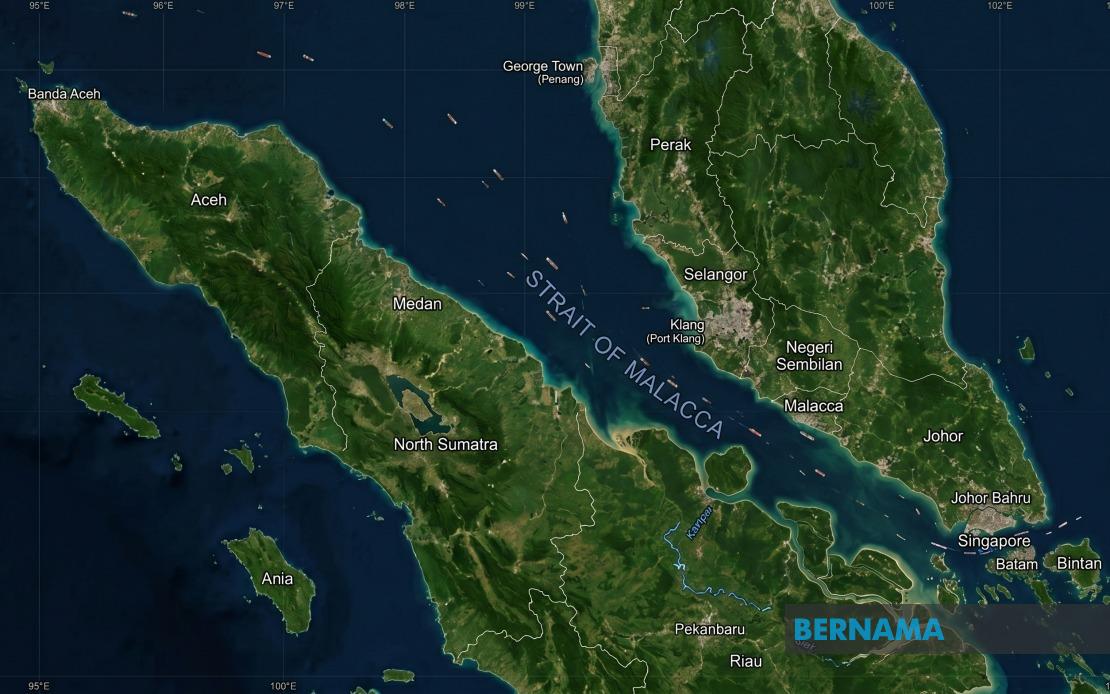
President Prabowo Subianto and Singapore Prime Minister Lawrence Wong have jointly declared their nations' shared dedication to protecting the Strait of Malacca, underscoring a commitment that extends beyond bilateral interests to encompass the broader security architecture of Southeast Asia. The two leaders made their positions clear during Wong's visit to Jakarta for the annual Indonesia-Singapore Leaders' Retreat, emphasizing that both countries recognize their strategic position as direct bordering nations of one of the world's most consequential maritime passages. Their pledge carries particular weight given the waterway's role in global trade, with millions of barrels of oil and trillions of dollars worth of goods transiting through its narrow channels annually.
Both nations anchored their commitment to the 1982 United Nations Convention on the Law of the Sea, which provides the legal framework governing maritime conduct worldwide. President Prabowo articulated a straightforward principle that underpins the partnership: maintaining the Strait of Malacca as an open passage accessible to all nations without restriction. This position reflects Indonesia and Singapore's economic interests as major trading nations, but it also addresses broader regional stability concerns. The framing around UNCLOS demonstrates how major Southeast Asian powers seek to leverage international maritime law to navigate geopolitical complexities in an increasingly contested region, where competing claims and strategic tensions periodically surface.
The commitment extends well beyond simply ensuring ships can pass freely through the waterway. President Prabowo identified three critical dimensions of the protection mandate: guarding against marine pollution, preventing maritime accidents, and combating piracy. Each concern carries distinct implications for the region. Pollution risks threaten marine ecosystems and coastal communities across Indonesia, Malaysia, Singapore, and Thailand, potentially affecting fisheries and tourism industries. Maritime accidents in the narrow and congested strait pose risks not only to shipping interests but also to coastal populations vulnerable to environmental disasters. Piracy, though significantly reduced from its peak in the early 2000s, remains a latent concern that requires constant vigilance and coordinated maritime patrols.
The discussions between Prabowo and Wong extended beyond the immediate maritime security agenda to encompass regional and global issues that could influence both countries' interests. This broader scope reflects how smaller nations in Southeast Asia must situate their bilateral partnerships within the context of wider geopolitical currents. The two leaders reaffirmed ASEAN's foundational principle that disputes ought to be resolved through peaceful dialogue and diplomacy rather than coercion or military action. This stance carries significance particularly given recent tensions in the South China Sea and potential disputes involving various maritime claims in Southeast Asian waters.
The emphasis on resolving misunderstandings through open dialogue as friends suggests an implicit awareness of potential friction points between Indonesia and Singapore or within the broader region. The characterization of their relationship as one capable of weathering disagreements through honest conversation signals confidence in the bilateral relationship's resilience. For Malaysian and Thai readers, this messaging carries importance because both nations play crucial roles in the collective security and governance of the Strait of Malacca. Any deterioration in Indonesia-Singapore relations could potentially affect coordinated management of the waterway, making the explicit reaffirmation of their partnership commitment reassuring to the broader regional community.
Wong's visit to Jakarta for the Leaders' Retreat marked the second such annual meeting between the two leaders, indicating an institutional rhythm in their relationship. Prabowo described these gatherings as reflecting the special relationship between Indonesia and Singapore, a characterization that acknowledges the unique position of the two nations as the most developed maritime powers in Southeast Asia with substantial economic and security interests aligned with regional stability. The annual format suggests both countries view their relationship as sufficiently important to warrant sustained high-level engagement, despite occasional points of contention.
The timing of this reaffirmation carries significance given the approach of a major diplomatic milestone: Indonesia and Singapore will commemorate the sixtieth anniversary of their diplomatic relations next year. This milestone provides an occasion for both nations to reflect on decades of cooperation while signaling continuity and forward momentum in their partnership. Prabowo expressed confidence that sustained cooperation between the two countries would generate positive outcomes for regional stability, economic growth, and prosperity throughout Southeast Asia. This expansive framing positions the bilateral relationship as a foundation for broader regional well-being rather than as a narrow pursuit of national interest.
From a Malaysian perspective, the reaffirmation by Indonesia and Singapore of their commitment to coordinated management of the Strait of Malacca alongside Thailand and Malaysia underscores the importance of multilateral cooperation in protecting shared maritime interests. Malaysia, as both a bordering nation and a major shipping hub with the Port of Klang ranking among the world's busiest container ports, has substantial interests in maintaining stability and free navigation in the strait. The explicit mention of continued coordination with Malaysia indicates that the Indonesia-Singapore partnership does not exclude Malaysian participation but rather situates bilateral ties within a framework of broader regional cooperation.
The discussion of regional and global issues affecting both countries suggests that Indonesia and Singapore view their partnership as addressing challenges extending beyond traditional maritime security. These could encompass economic interdependence in supply chains, counterterrorism cooperation, climate change impacts on vulnerable coastal populations, and the management of great power competition in Southeast Asian waters. The partnership between these two sophisticated maritime economies provides a model for how smaller nations can leverage strategic partnerships to advance their interests while remaining committed to the peaceful resolution of disputes.
Looking forward, the Indonesia-Singapore partnership on Strait of Malacca security demonstrates how bilateral relationships can serve broader regional stability objectives. As the global economy becomes increasingly dependent on maintaining open maritime corridors and as climate change and environmental pressures mount, the commitment to protecting this vital waterway takes on enhanced significance. The consistent messaging from Prabowo and Wong about their shared interest in preserving the strait as an open passage for all nations, coupled with their attention to pollution, accidents, and piracy, suggests a holistic approach to maritime stewardship that transcends narrow national interests.

