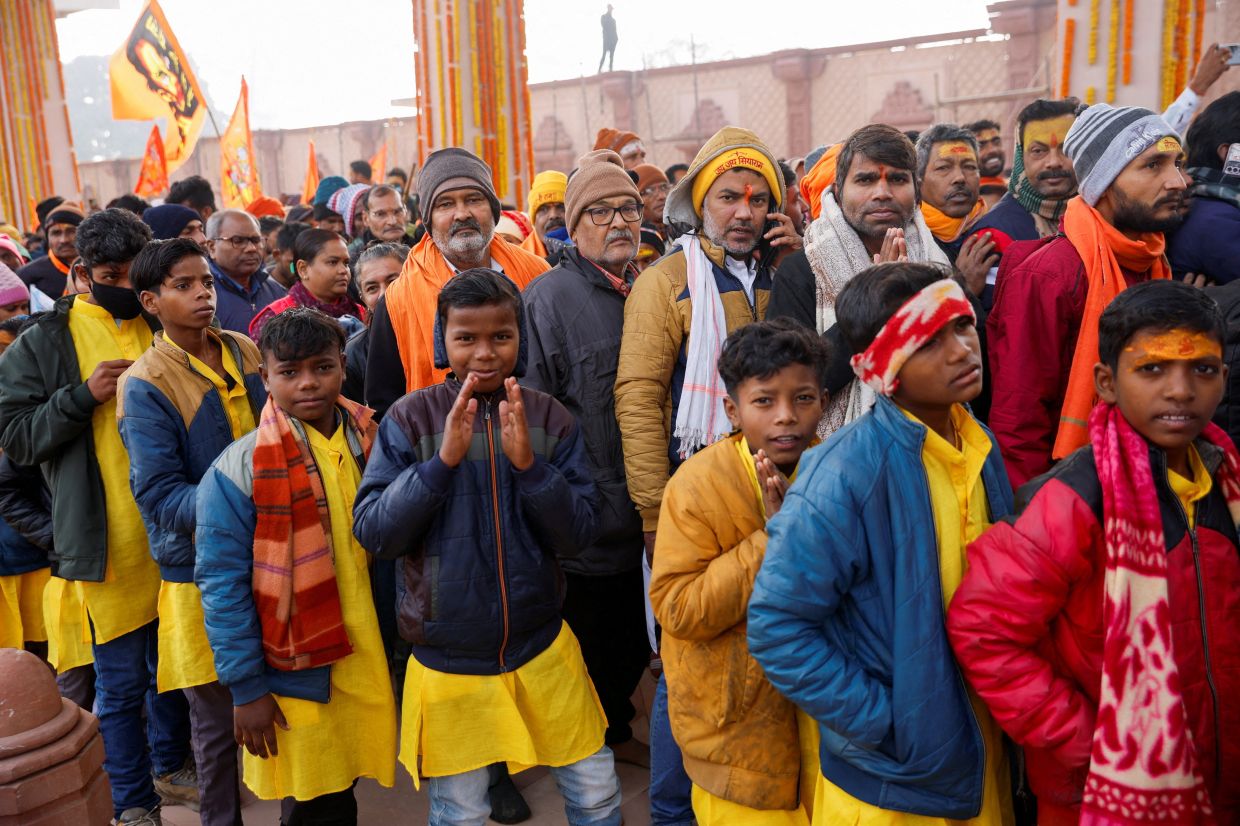
A criminal investigation into missing donations at India's prominent Ram temple has intensified concerns about how the country's major religious institutions manage the enormous sums entrusted to them by worshippers. Authorities launched their probe in June, apprehending eight individuals involved in handling donations at the revered Hindu shrine located in Ayodhya in India's north. While officials have remained tight-lipped about the precise amount involved, news organisations report the alleged theft may reach approximately 30 million rupees, equivalent to around US$314,000. The incident underscores a troubling pattern of financial irregularities at temples across the subcontinent and raises fundamental questions about trust, transparency, and institutional governance at religious sites that function increasingly like large corporations.
The emotional dimension of this breach resonates deeply with India's devout population. Many worshippers, regardless of their economic circumstances, view temple donations as expressions of spiritual commitment and acts of faith. Ashok Prasad Kushwaha, an auto-rickshaw operator from New Delhi who has made three pilgrimages to the Ram temple within the past two years, articulates the sense of personal betrayal that such thefts provoke. He explains that devotees believe their contributions directly support religious purposes and divine work. When these carefully saved rupees disappear through misappropriation, the violation cuts beyond mere financial loss to touch the very heart of the sacred relationship between devotee and deity. For ordinary Indians who scrimp and save to make offerings, discovering their generosity has been stolen represents a profound loss of faith in institutional integrity.
This latest controversy represents merely the most recent chapter in a troubling sequence of financial scandals involving donations at major pilgrimage destinations. The Badrinath shrine and the mammoth Tirumala Tirupati Devasthanams trust, which oversees one of the world's wealthiest temple organisations with estimated assets surpassing US$31 billion, have both encountered similar controversies. These incidents reveal that the problem is neither isolated nor confined to smaller institutions, but rather represents a systemic weakness affecting India's entire religious institution landscape. The scale of operations at major temples now rivals substantial business enterprises, yet many continue functioning with outdated governance structures and inadequate financial controls designed for organisations of vastly different magnitude.
The Ram temple case particularly illustrates how vulnerabilities in basic operational procedures can be exploited. Investigations have revealed that those accused took advantage of deficiencies in the donation counting process and failures in surveillance systems. Such operational lapses suggest that despite the temple's status as one of India's most significant religious sites, fundamental safeguards against malfeasance remain inadequate. Experts point out that large religious institutions must adopt robust mechanisms comparable to those employed by major corporations and public institutions. This includes implementing mandatory receipt systems for all donations, transitioning to digital accounting platforms that create permanent audit trails, installing comprehensive closed-circuit television monitoring throughout donation collection and processing areas, and establishing independent oversight bodies with genuine authority to investigate irregularities.
The Ram temple's particular prominence makes this scandal especially consequential. Inaugurated in 2024 by Prime Minister Narendra Modi, it has rapidly emerged as one of India's most visited religious destinations, attracting approximately 90,000 devotees daily. Visitors arrive bearing contributions ranging from modest cash donations to precious metals including gold and silver ornaments. This constant flow of offerings generates substantial revenue streams essential for the temple's maintenance and operations. However, the allegations carry heightened sensitivity given the temple's extraordinary historical and political significance. The site stands at the centre of one of independent India's most contentious religious disputes, reflecting deep communal tensions that have shaped the nation's social fabric for decades.
That historical context proves essential to understanding why this financial scandal matters beyond typical concerns about institutional accountability. Hindu devotees maintain a faith tradition holding that Lord Ram was born at this precise location over seven millennia ago, while the same ground was occupied by the Babri mosque, built during the sixteenth-century Mughal era by an Islamic emperor. This religious and historical collision point catalysed devastating communal violence in 1992 when Hindu activists demolished the mosque, unleashing nationwide riots that claimed more than two thousand lives. The subsequent decades witnessed intense legal struggles before the Indian Supreme Court's 2019 decision awarded the disputed site to Hindu interests and cleared the path for temple construction. A massive nationwide fundraising campaign raised approximately US$341 million to finance the temple's construction, with millions of Indians contributing to what many perceived as a sacred national project.
The breach of that trust through donor theft assumes particular significance within this context. Citizens who contributed their resources to construct this temple as an expression of faith and national identity now discover that even their generosity cannot be safeguarded against institutional corruption. This revelation proves especially damaging given the temple's symbolic status and the extraordinary collective effort that preceded its inauguration. The scandal demonstrates that even major temples positioned at the intersection of religious significance and national importance lack adequate systems to protect their holdings.
India's religious and spiritual sector represents an enormous economic force within the national economy. Market analysts valued this sector at US$70.14 billion during 2025, with projections suggesting growth to US$135.41 billion by 2034. These figures illustrate the financial magnitude of religious institutions and underscore why governance matters increasingly. Yet India's regulatory framework remains fragmented and inadequate. Legal scholars point out that religious institutions operate under multiple overlapping laws and diverse tax regimes, with no unified national governance structure establishing consistent financial transparency standards across all religious organisations. This regulatory patchwork creates opportunities for mismanagement and malfeasance.
Experts emphasise that the governance challenge intensifies during mass pilgrimage events such as the Kumbh Mela, where millions of devotees congregate and institutions collect enormous quantities of donations within compressed timeframes. Managing such vast sums across large, transient populations, with temporary infrastructure and provisional staffing, presents genuine operational difficulties that standard procedures often fail to address adequately. The sheer logistics of processing millions of rupees daily from hundreds of thousands of worshippers can overwhelm conventional accounting systems. These conditions create environments where weaknesses in internal controls become unavoidable, providing opportunities for unscrupulous individuals to redirect institutional funds.
Broad institutional reform represents the only viable path forward for protecting both pilgrims' donations and temples' financial integrity. Rahul Easwar, a Hindu activist and descendant of a former high priest at Kerala's prominent Sabarimala temple, articulates the essential requirement clearly: these religious organisations require substantially strengthened financial governance mechanisms, mandatory receipt documentation for all donations, transition to digital accounting systems providing transparent records, comprehensive CCTV surveillance of donation handling operations, and independent external oversight bodies with genuine investigative authority. Such measures represent standard practice in secular corporations and government institutions but remain conspicuously absent from many major temples.
Political analyst Anurag Naidu underscores an important reality: temples have evolved dramatically beyond their traditional functions as places of worship. Contemporary major temples operate with budgets, staffing levels, and organisational complexity rivalling substantial public institutions. Yet many continue employing governance structures designed for smaller, pre-modern religious organisations. This anachronism creates dangerous misalignment between the scale of institutional activity and the adequacy of oversight mechanisms. As religious institutions continue accumulating greater resources and managing populations numbering in millions annually, these systems must modernise substantially. Without comprehensive reform establishing uniform national standards for religious institution financial transparency, combined with independent oversight and modern technological safeguards, future scandals appear virtually inevitable, further eroding the faith that worshippers place in institutional stewardship.

