Across Indian tech hubs, a new generation of young workers is finding employment in an unexpected corner of the artificial intelligence economy: data annotation. These roles—examining video footage frame by frame, labelling images, and testing robotic systems—represent a significant shift in how India's massive youth population is being absorbed into the digital economy. Unlike the well-paid software engineering positions that once defined India's tech sector, data annotation work is often simpler, requiring focus and attention to detail rather than years of specialised training. Yet for hundreds of thousands of Indians entering the workforce each month, these positions offer a concrete opportunity in a landscape where traditional graduate jobs are becoming scarce.
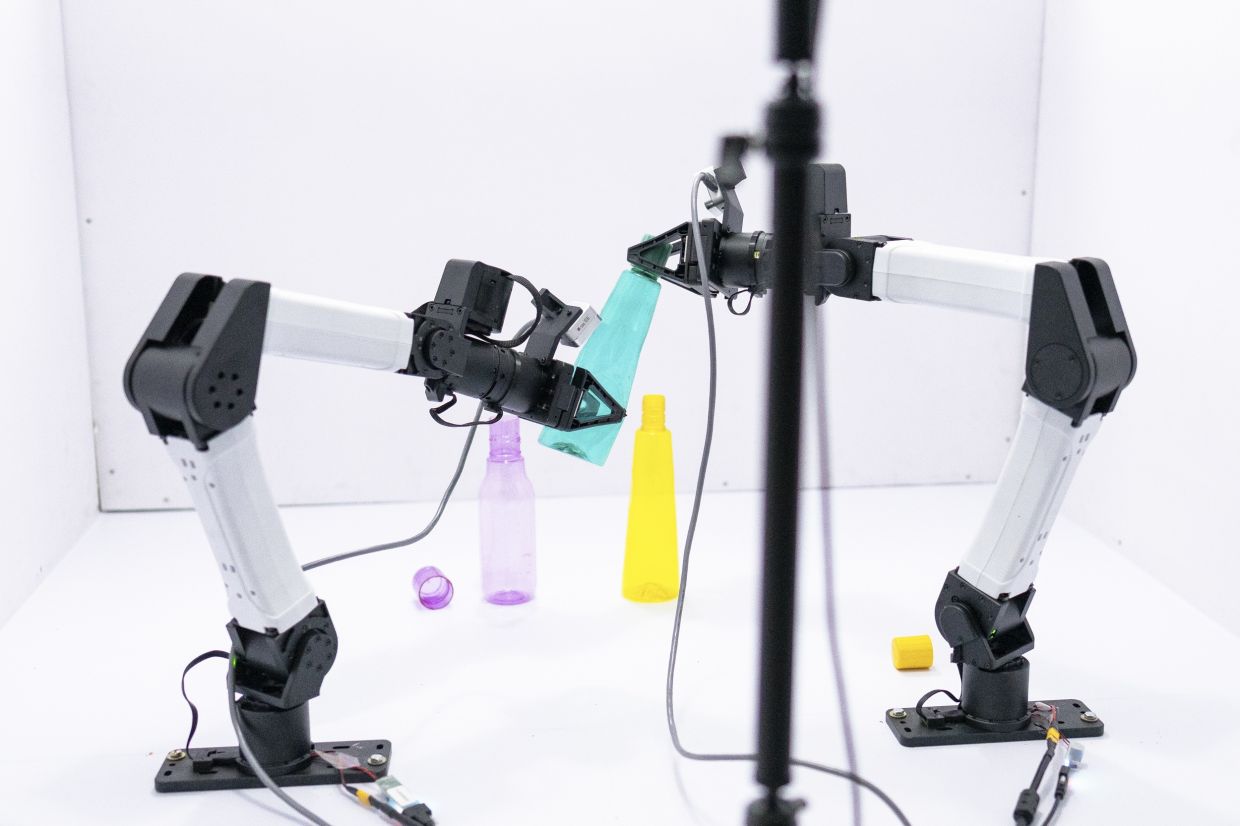
Objectways Technologies, based in the southern city of Karur, exemplifies this phenomenon. The company employed 2,600 workers as of late 2025, with recruitment accelerating dramatically—300 new hires in a single month. The firm operates test kitchens, bathrooms, and bedrooms where employees train robotic systems for clients primarily based in the United States. Workers repeat mundane household tasks—picking up plates, unscrewing bottle caps, arranging food—while cameras record their movements. These recordings become the training data that teaches robots and autonomous vehicles to navigate the physical world. What distinguishes this work from traditional factory jobs is its proximity to cutting-edge technology; employees are not merely assembling products but actively shaping how artificial intelligence learns to operate in human environments.
The economics of data annotation work in India reflects the country's vast regional disparities. Skilled entry-level positions at firms like Objectways pay between US$210 and US$260 monthly—roughly RM846 to RM1,047—a respectable income in smaller cities like Karur, which has a population of around 440,000. Freelancers working from home, recording themselves performing daily tasks on smartphones, earn approximately US$2.50 per hour for usable footage. These wage levels, modest by Western standards, make India an attractive destination for companies seeking to scale data annotation operations globally. For young Indians lacking connections to prestigious tech companies or lacking the credentials for higher-paying roles, these positions represent a foothold in the technology sector.
For Prime Minister Narendra Modi's government, data annotation employment addresses an urgent demographic challenge. Approximately 2 million Indians turn eighteen each month, creating relentless pressure to generate employment opportunities. This youth employment crisis manifested dramatically in recent months through the "cockroach" protests, demonstrations focused on education and job prospects that prompted Modi to replace his education minister—a rare concession. The underlying frustration reflects a fundamental mismatch between the number of graduates entering the labour force and the availability of meaningful positions. Data annotation jobs, while not glamorous, at least absorb some of this surplus labour and provide income to workers who might otherwise remain unemployed or underemployed.
However, Indian policymakers are acutely aware that data annotation may represent only a temporary reprieve. S. Krishnan, who leads India's information and technology ministry, has articulated this tension in recent interviews. He acknowledges that India possesses a unique advantage in certain segments of the AI economy—the country's linguistic diversity, for instance, enables data annotation work in dozens of languages that would be difficult to source elsewhere. Similarly, Indian companies are employing workers to annotate medical imagery and monitor intensive care patients, applications that require local knowledge and judgment. Yet Krishnan and other officials worry that as artificial intelligence systems become more sophisticated, many of these roles will disappear, repeating the pattern that befell India's business process outsourcing sector decades earlier.
This fear is grounded in concrete projections. A 2025 report from an Indian government think tank estimates that artificial intelligence could displace as many as 1.5 million information technology workers. That figure represents not merely job losses but a potential reversal of India's position in the global technology economy. The country built its modern prosperity partly on back-office work, where Indian companies processed payroll, managed data entry, and handled customer service for multinational corporations. As automation eliminated these positions, India's economy was sufficiently diversified that new sectors emerged. But the speed and scope of AI disruption may outpace the economy's ability to adapt. Data annotation, in this context, is a temporary employment bridge—useful now, but potentially obsolete within a decade.
Ravi Rajalingam, founder and chief executive of Objectways, frames his company's mission differently. Having previously worked in fintech, optimising loan applications through artificial intelligence, Rajalingam established Objectways in 2019 with the explicit goal of employing recent graduates in his hometown. He and his wife began by hiring twenty people; the company has since grown to 2,600 employees, with operations expanding to larger cities like Coimbatore, located about two hours west of Karur. Rajalingam resists the characterisation that data annotation represents low-skill work. "India is the back office for the world no longer," he stated, emphasising that although positions do not uniformly require engineering degrees, the work is "technical, and they can learn about models of AI." Many employees have advanced within the company, developing expertise in AI systems and management.
Mohamed Afsar, now twenty-nine, exemplifies this potential for career progression. Afsar grew up near Karur and was the first person in his family to attend university. Within Objectways, he has risen to oversee 600 employees across multiple projects. Under his supervision, teams process approximately 70 hours of video footage daily—recordings of robots performing tasks or footage from autonomous vehicles navigating roads. Yet even this scale falls short of demand; Afsar's clients deliver roughly 1,000 hours of video daily, creating a bottleneck. This gap between supply and demand for annotated data suggests the sector could continue expanding for several years, absorbing significant numbers of young workers. Yet it also highlights a critical constraint: human capacity cannot indefinitely match the volume of data generated by AI systems operating globally.
Young workers entering data annotation positions often express surprise at the trajectory of their careers. Hari Prasad, twenty-five, graduated with an engineering degree expecting to work in traditional software development. Instead, he finds himself labelling video frames to train robots. "If someone had told me that ten years down the road, a robot would be bringing you coffee, I wouldn't have believed them," he reflected. Yet he also articulates the paradox of his role: "We need a man to train the robot." This formulation captures both the novelty of the work and its fundamentally transitional nature. Prasad and his contemporaries are not building the AI systems themselves; they are preparing the training data that allows others to do so. It is necessary work, but work that may become unnecessary as machine learning algorithms grow more capable of extracting patterns from raw data without human guidance.
For Malaysia and other Southeast Asian economies, India's data annotation boom offers both opportunities and cautionary lessons. The region's own young populations face similar employment pressures, and countries like the Philippines and Vietnam have begun developing data annotation sectors. However, the Indian example suggests that such employment is best understood as a transitional phenomenon rather than a permanent economic sector. Companies considering whether to establish data annotation operations in Southeast Asia should anticipate that labour costs will likely rise as automation reduces demand for human annotators. Malaysian policymakers observing India's experience might prioritise investment in higher-value segments of the AI economy—developing indigenous AI applications, training researchers, and building infrastructure—rather than competing primarily on low-cost labour.
Analysts project that data annotation could contribute as much as US$10 billion (RM40.30 billion) to India's economy by 2030. That represents meaningful economic activity, yet most economists acknowledge it remains insufficient to substantially alter India's position in the global AI race. The sector will likely continue expanding for five to ten years, absorbing millions of workers and generating hundreds of millions of dollars in annual revenue. However, without parallel investment in AI research, product development, and technological innovation, India risks repeating a familiar pattern: reliance on labour-intensive services that eventually become automated or outsourced to lower-cost competitors. The current data annotation boom, then, should be understood as both an opportunity and a countdown—a window during which India can employ its youth while simultaneously building the technological foundations for more sustainable, higher-value economic activity.

