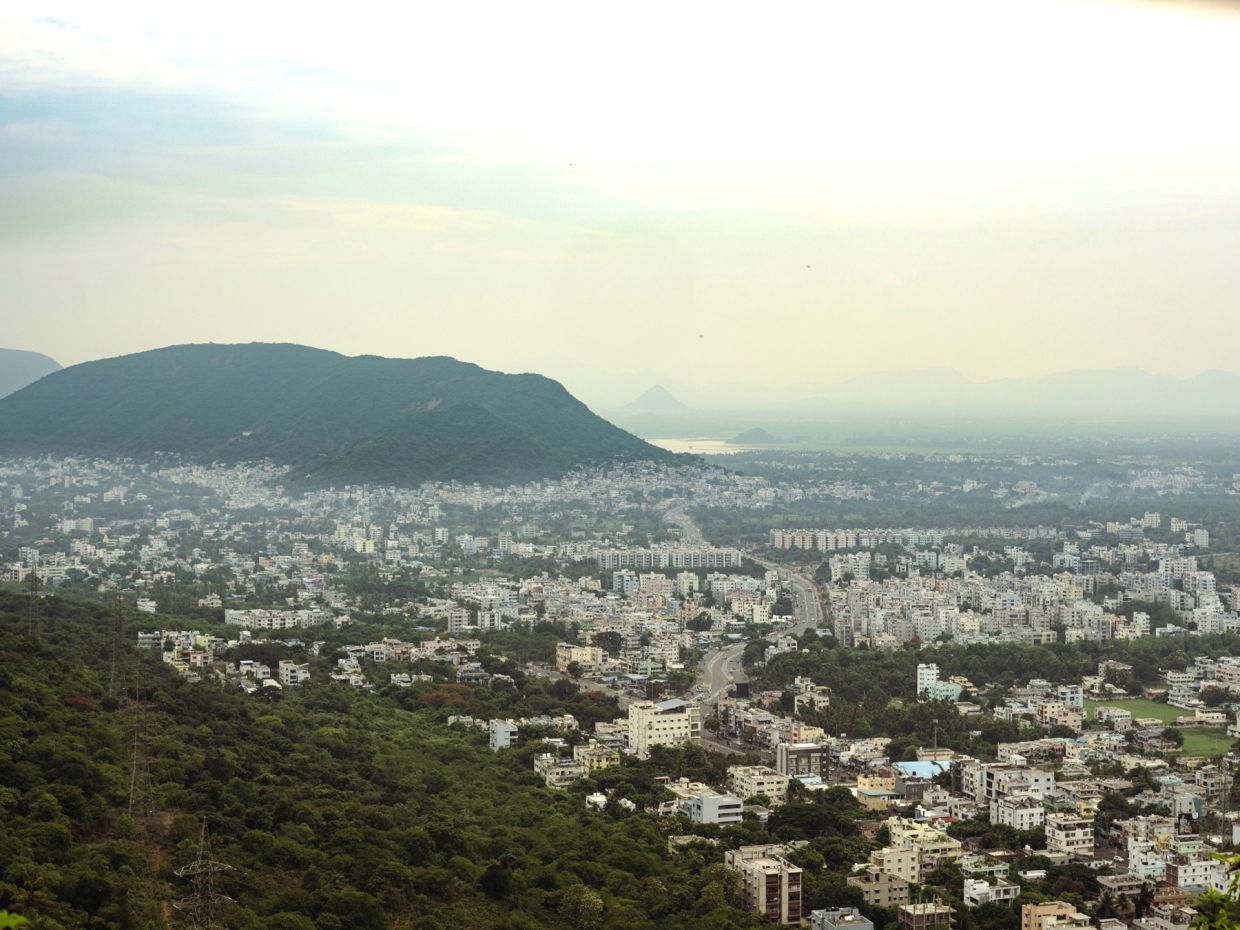
India's bid to establish itself as a credible player in the global artificial intelligence race has taken physical form in the coastal state of Andhra Pradesh, where a sprawling infrastructure project is reshaping the economic landscape. On the edges of Visakhapatnam, the village of Tarluvada now displays welcome billboards featuring the faces of senior politicians, including Prime Minister Narendra Modi and state IT minister Nara Lokesh, celebrating Google's arrival with a US$15 billion investment that represents one of the country's most ambitious technology ventures. Excavation has begun on a one-gigawatt data centre that signals India's determination to close a critical gap in its technological infrastructure—one that has constrained its ability to compete with more established AI powers.
The project represents far more than a single corporate facility. Google's investment encompasses new undersea cable networks, advanced computing infrastructure, and a parallel data centre development by a consortium including Canada's Brookfield Asset Management and India's Reliance Industries. Together, these two initiatives will more than double India's existing data centre capacity by the time they reach full operation. For India's political and business leadership, the stakes feel existential. A recent Morgan Stanley analysis ranked India as a "laggard" in developing artificial intelligence capabilities, despite possessing both a massive consumer market and a globally recognised technology workforce. The country has witnessed billions of dollars in investment capital flowing toward Taiwan, South Korea, and other competitors that have positioned themselves as early innovation hubs rather than mere technology consumers.
What makes India's data centre deficit particularly stark is the paradox of production versus capacity. India currently generates approximately one-fifth of the world's data, yet its data centre infrastructure represents only a fraction of global capacity. This mismatch has forced Indian technology companies and international firms operating in the country to route critical operations through facilities in other nations, creating delays, inefficiencies, and strategic vulnerabilities. India's government sees correcting this imbalance as essential to building domestic artificial intelligence competence and maintaining competitiveness in an era when computational power and data processing have become geopolitical assets. The subsidies being offered to Google and its partner, the Adani Group, reflect the urgency of this mission: discounted land access, subsidised energy and water supplies, and extensive tax concessions form the financial foundation of the deal.
Yet this narrative of national progress masks deepening anxieties among Visakhapatnam's residents and civil society organisations. Hyperscale data centres consume enormous quantities of electricity and water—resources that are particularly scarce in a region already classified as water-stressed, where summer supply disruptions are routine. Unlike manufacturing facilities or technology parks, these installations generate relatively few permanent jobs despite their massive capital requirements. The construction phase may employ thousands, but operational needs are minimal, as automation handles most functions. These characteristics have already prompted fierce resistance in the United States, where proposed data centre projects worth tens of billions of dollars have been delayed or shelved after local communities mobilised opposition. That such resistance is far less visible in India has prompted critics to suggest that the government is exploiting a more permissive regulatory environment.
Transparency around the project has become a flashpoint for concern. Environmental clearance procedures have been streamlined in ways that alarm activists and former officials who fear corners have been cut rather than genuinely rationalised. Information about where water and electricity will originate, which agencies will shoulder infrastructure costs, and how environmental risks will be managed remains opaque. VS Krishna, a campaigner with the Human Rights Forum, has articulated a fundamental democratic complaint: the lack of public debate around a project that will impose significant infrastructure costs and environmental hazards on the surrounding population. The speed of decision-making—far more rapid than comparable projects in developed democracies—has reinforced impressions that local interests are subordinate to national technological ambitions and corporate profit motives.
The choice of Visakhapatnam as the investment destination itself reflects India's internal competitive dynamics. Southern states, particularly Andhra Pradesh, have cultivated reputations as more business-friendly and administratively efficient than their northern counterparts. Minister Lokesh explicitly frames the data centre as the foundation for broader industrial ecosystem development, envisioning ancillary manufacturing in power electronics, cooling systems, and construction materials. This vision extends beyond the data centre itself: it represents an attempt to position the state as a diversified technology hub. Yet this ambition depends on accepting the premise that the foundational infrastructure will deliver benefits rather than simply transferring costs to local populations.
The relationship between Google and the Adani Group warrants closer scrutiny. Billionaire Gautam Adani has accumulated substantial wealth during Modi's twelve years in office and has earned a reputation for successfully navigating government approval processes for large projects. Critics have suggested that Adani's participation ensures smooth project advancement because of his alignment with the ruling administration. This dynamic raises questions about the genuineness of stakeholder consultation and the independence of regulatory oversight. Project representatives, meanwhile, have maintained that concerns about water and energy burdens have been thoroughly addressed through cooling technologies that minimise water consumption and by investing in independent renewable energy generation. They insist that no costs will ultimately be transferred to local households or state budgets.
Local scepticism about these assurances runs deep. EAS Sarma, a retired senior official with expertise in energy planning, has articulated the economic arithmetic that troubles many observers. Even if the data centre itself avoids drawing from local water supplies or becoming a direct drain on the electricity grid, the surrounding infrastructure investments required to support it will inevitably carry costs. New transmission lines, upgraded electrical distribution networks, and associated infrastructure improvements will ultimately appear on residents' electricity bills and in state budgets. Every subsidy offered to the corporate developer, by Sarma's logic, represents a cost borne collectively by society. The promised construction employment of 120,000 workers and permanent employment of 60,000 has been questioned by critics who note these figures exceed what comparable data centre operations elsewhere have historically required, suggesting either inflated projections or a misunderstanding of how automated infrastructure operates.
Beyond the Visakhapatnam case lies a broader concern about India's approach to artificial intelligence development. While the nation desperately needs advanced infrastructure to participate credibly in the AI era, its structural limitations in capital availability, manufacturing capacity, and technological innovation mean it risks becoming primarily a deployer of imported technologies rather than an originator of breakthroughs. The International Monetary Fund has warned that artificial intelligence may create a "tsunami hitting the labour market," and India's technology sector—which currently provides employment for millions and contributes substantially to exports—could be particularly vulnerable. Building expensive data centres while the workforce faces potential displacement from automation represents a troubling policy incoherence.
The tension between India's national technological ambitions and the lived experiences of communities asked to absorb environmental and economic risks reflects a broader governance challenge. Lokesh and his advisers insist the project has followed "all due process" and involved necessary streamlining rather than regulatory shortcuts. Yet the gap between official reassurances and community confidence suggests that procedural compliance alone cannot substitute for genuine consultation, transparent communication, and credible mechanisms for ensuring that promised benefits materialise. As India pursues its place in the global artificial intelligence order, the question of whose interests are served by these transformations—and who bears the costs—remains inadequately resolved.

