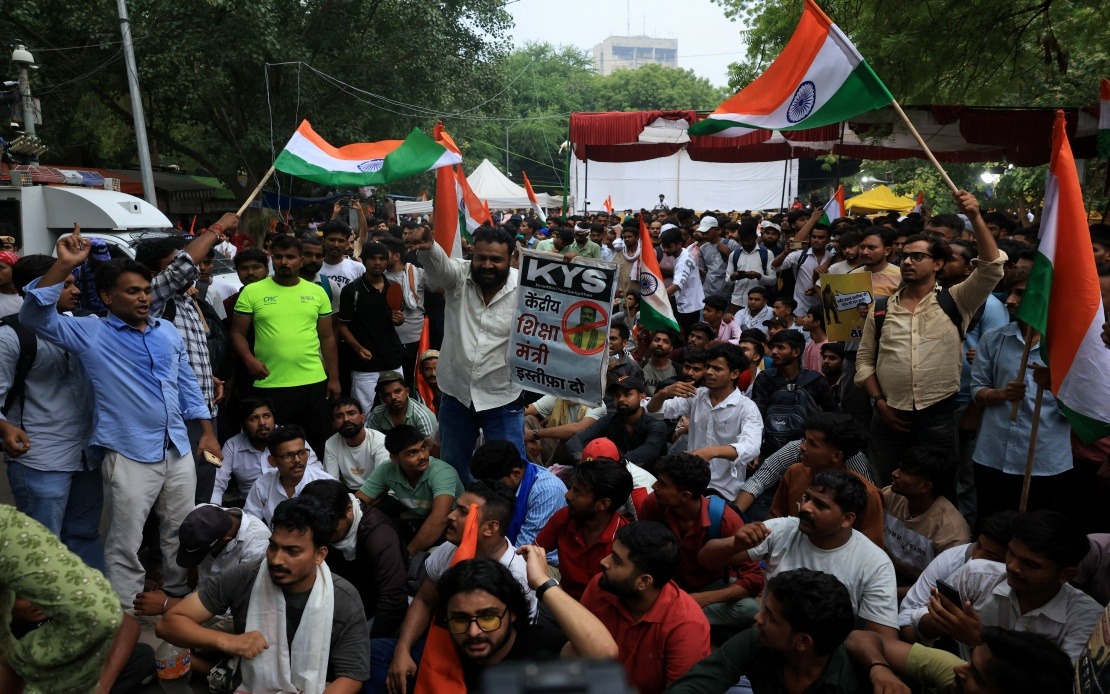
Thousands of demonstrators descended on New Delhi on Monday in a coordinated push to reach the Indian Parliament building, triggering a significant security response from law enforcement. The "Sansad Chalo" rally, which translates as a march to parliament, saw police implement crowd-control measures to prevent the protesters from breaching barricades erected around the legislative complex. The confrontation underscored growing tensions between newly mobilized youth activists and authorities operating under restrictions on public gatherings imposed by police across the capital.
The demonstration emerged from a freshly established movement that has cultivated a substantial online presence, claiming millions of digital followers across social media platforms. This youth-led formation reflects a broader pattern in contemporary Indian activism, where traditional grassroots organizing has merged with digital mobilization to amplify messages and coordinate large-scale participation. The movement's rapid growth and ability to mobilize thousands on short notice suggests that education policy has become a rallying point for younger Indians seeking systemic change.
Education sector reforms form the centerpiece of the protesters' demands, indicating dissatisfaction with the country's current academic structure and delivery mechanisms. The nature of their grievances—though not exhaustively detailed in initial reports—likely encompasses quality of instruction, curriculum relevance, examination pressures, and accessibility of educational opportunities across India's diverse socioeconomic landscape. Such demands resonate particularly in India's urban centers, where educated youth increasingly question whether existing educational institutions adequately prepare them for employment or foster critical thinking.
The timing of the protest coincided precisely with the commencement of India's Monsoon Session of Parliament on July 20, suggesting calculated activism aimed at capturing legislative attention during a session when education matters might be debated. Prime Minister Narendra Modi's departure from the parliament complex in a secure convoy underscored the security situation, with police actively managing crowds in surrounding areas to prevent disruption of parliamentary proceedings. The coordination between security forces and parliamentary operations reflected official determination to maintain institutional functioning despite the external pressure.
For Malaysian observers, India's education protest movement carries instructive lessons about youth activism and system accountability. Southeast Asian democracies, including Malaysia, have witnessed similar education-focused demonstrations in recent years, driven by concerns about curriculum quality, examination systems, and graduate employability. India's experience demonstrates how quickly online platforms can mobilize large numbers of young people around shared grievances, a pattern increasingly evident across the region. The capacity of movements to organize substantial marches targeting legislative institutions suggests that education has become a politically salient issue transcending national boundaries.
Police response mechanisms employed in New Delhi—crowd-control measures and movement restrictions—represent standard operational procedures in managing large public gatherings in contested political spaces. However, the deployment reflects broader questions about balancing public expression rights with institutional security and public order maintenance. Indian authorities face persistent challenges managing frequent demonstrations in the capital, where various movements compete for attention and legitimacy. The escalation of tensions at parliament barricades illustrates the friction points where street activism encounters state authority.
Security arrangements tightened throughout key areas of the national capital in response to the protest, a measure indicating official assessment of potential risks associated with large, unplanned gatherings near sensitive government installations. Such precautions have become routine in major democracies managing multiple competing demonstrations, though they also raise concerns among civil liberties advocates regarding restrictions on assembly rights. For India's security establishment, balancing preventative measures against legitimate protest participation remains an ongoing operational challenge.
The emergence of this newly formed youth movement suggests evolving patterns in Indian political mobilization, where single-issue campaigns organized primarily through digital networks can rapidly achieve considerable size and visibility. Traditional political parties and established civil society organizations increasingly compete with these fluid, online-first movements for influence over public discourse and policy agendas. The education reform movement's ability to generate thousands of participants indicates that young Indians perceive existing institutions as unresponsive to their concerns, driving them toward alternative organizing platforms.
Education policy discourse in India intersects with broader developmental challenges, including employment generation, skill acquisition, and social mobility. The protesters' focus on academic system reforms suggests growing recognition that India's educational infrastructure requires substantial modernization to meet contemporary workforce demands and support equitable opportunity distribution. Their activism reflects the aspirations of a demographic cohort acutely aware of global employment competition and seeking educational systems that enhance their international competitiveness.
The incident also highlights the ongoing tension in Indian democracy between the right to public protest and the state's prerogative to manage security around legislative institutions. As India enters an era where digital platforms enable rapid, large-scale mobilization, authorities and activists alike must navigate evolving expectations regarding the parameters of acceptable dissent. The Monsoon Session parliament march represents one manifestation of this broader reckoning, where youthful constituencies increasingly assert claims on policy-making processes through direct action and legislative pressure.

