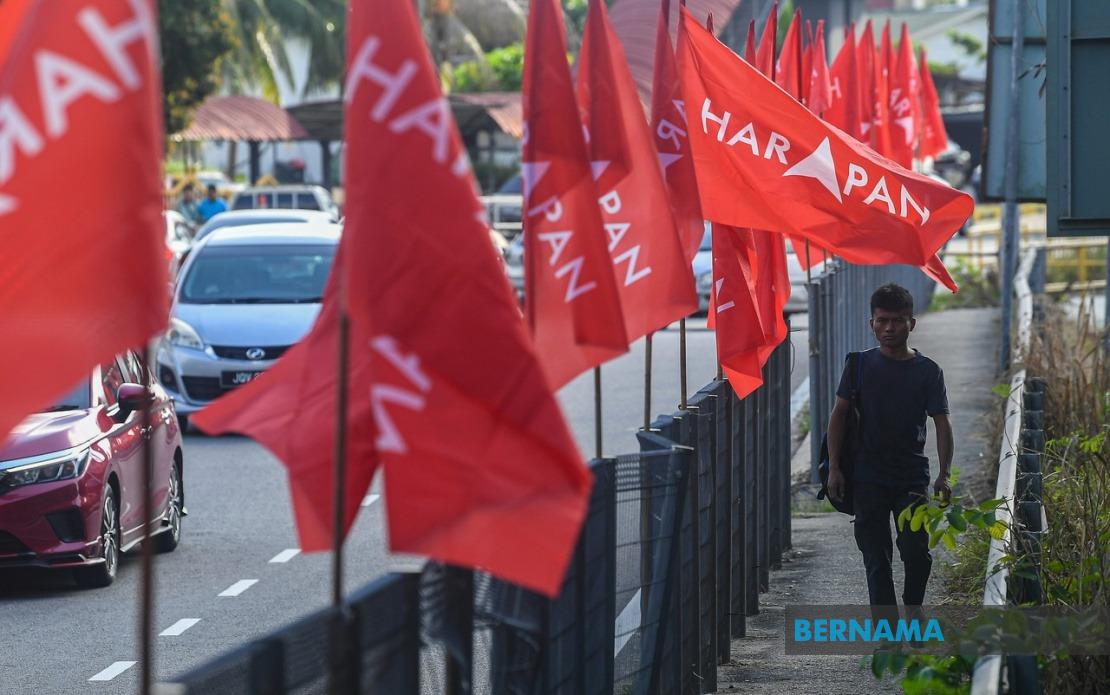
As Johor heads toward a critical state election on July 11, the Indian community—though numerically smaller than other ethnic groups in the state—has emerged as a potentially decisive voting bloc in what political observers view as a referendum on continued stability under Pakatan Harapan. Dr Gunaraj George, a Parti Keadilan Rakyat Central Leadership Council member and Sentosa Assemblyman, argues that Indian voters could sway outcomes across nearly 25 mixed and marginal State Legislative Assembly seats, a concentration significant enough to reshape the political landscape if mobilised decisively in one direction.
The framing of this election by PH operatives reflects a broader strategic calculation: that in an era of global economic turbulence and rising domestic costs, the electorate is fatigued by political instability and receptive to messages about continuity. Dr Gunaraj's statement positions the election not as a straightforward contest between candidates but as a choice between two visions—one of institutional reform and development momentum versus one of political uncertainty that could destabilise investor confidence and economic growth. This narrative seeks to transcend narrow communal interests and appeal to pocketbook concerns that affect all Malaysians, regardless of background.
The government's relationship with Malaysia's Indian community has historically been complicated, marked by periodic grievances over development priorities, educational opportunities, and economic inclusion. The MADANI administration has made specific overtures designed to address these longstanding concerns. Most prominently, the allocation to the Malaysian Indian Transformation Unit (MITRA) has been increased from RM100 million to RM150 million—a significant jump after a decade of stagnation under previous governments—with Prime Minister Datuk Seri Anwar Ibrahim having committed to further progressive increases. For a community that has often felt sidelined by majoritarian politics, such concrete financial commitments carry measurable weight.
Beyond MITRA, the administration has expanded funding for Tamil National-Type Schools, a key infrastructure for cultural and linguistic preservation among Indian Malaysians. Coupled with maintenance aid for Hindu temples and other places of worship, these initiatives address both material and cultural dimensions of community welfare. The government has additionally broadened Technical and Vocational Education and Training (TVET) programmes, crucial pathways for upward mobility among lower-income families disproportionately represented in the Indian Malaysian demographic. When combined with targeted cash assistance schemes such as Sumbangan Tunai Rahmah (STR) and Sumbangan Asas Rahmah (SARA), the portfolio of welfare measures becomes difficult for opposition parties to dismiss entirely.
Yet beneath these policy narratives lies a more structural question about Indian voter cohesion and turnout. The Indian community in Johor represents roughly five to six percent of the state's population, dispersed across urban, semi-urban, and rural constituencies. Their ability to function as a swing bloc depends not only on political messaging but on whether community leaders can mobilise grassroots participation at levels significantly higher than historical baselines. In past elections, communal voting blocs have been fragmented by intra-community divisions, generational differences, and competing priorities between rural and urban voters. Whether Dr Gunaraj's appeal to political stability and economic development will overcome these fault lines remains uncertain.
The MADANI Government's institutional reform agenda—including intensified anti-corruption efforts and improved governance frameworks—represents a secondary appeal to Indian voters who, like other Malaysians, have expressed frustration with endemic corruption and feudalistic power structures. The emphasis on transparency and parliamentary accountability in MITRA management specifically signals an attempt to rebuild trust in how state resources are allocated and monitored. For a community that has historically encountered opacity and discretionary administration in social programmes, this commitment to institutional visibility carries symbolic and practical importance.
From a regional perspective, the Johor election carries implications beyond state boundaries. As Malaysia's most economically developed state and a critical node in regional commerce and investment, political stability in Johor directly influences investor perception across Southeast Asia. A PH victory would reinforce the administration's mandate to continue structural economic reforms and institutional modernisation. Conversely, a setback would embolden critics of the MADANI agenda and create openings for opposition narratives about governance fatigue and reform overreach. For international investors and regional policymakers monitoring Malaysia's trajectory, the Johor result functions as a barometer of political consensus.
The election also tests whether Malaysia's polarised political environment permits cross-communal coalition-building around economic performance and governance quality, or whether ethnically and religiously inflected divisions remain the primary drivers of electoral behaviour. Dr Gunaraj's strategy—appealing to Indian voters on the grounds that MADANI reforms and political stability benefit all communities—assumes that voters can be persuaded by narratives that transcend communal identity. This assumption faces considerable headwinds in a political culture historically organised around intercommunal bargaining and explicitly community-based welfare allocation.
From a practical standpoint, the Indian community's strategic positioning in marginal seats creates asymmetric leverage. Small shifts in voting patterns—perhaps a swing from 40 percent to 50 percent of Indian voters backing PH—could determine seat outcomes in constituencies where the majority community vote is split relatively evenly. This dynamic incentivises all major political parties to direct disproportionate resources and attention to Indian community mobilisation, even though the absolute numerical impact remains modest compared to majority communities. It exemplifies how electoral mathematics in a diverse polity can create outsized influence for smaller groups positioned at critical political margins.
Pakatan Harapan will contest all 56 state seats in the election, signalling institutional confidence despite the acknowledged importance of minority community votes. The party's strategy explicitly banks on cumulative support from multiple demographic segments rather than on any single community delivering a decisive majority. Yet the particular emphasis on Indian voter engagement suggests that party strategists view this constituency as unusually persuadable and as embodying swing tendencies that could compound across multiple marginal seats simultaneously. Whether this calculation translates into electoral success will become clear on July 11.
For Malaysian Indian voters in Johor, the election presents a genuine choice between competing visions of governance and development, though one framed in terms that emphasise political and economic continuity over disruptive change. The community's electoral behaviour in this contest will establish a precedent for how Indian Malaysian political preferences evolve as the MADANI Government matures and as cumulative policy implementation becomes more visible. In a state election ostensibly about local governance, the deeper stakes involve questions about the resilience and adaptability of Malaysia's multiethnic political settlement.

