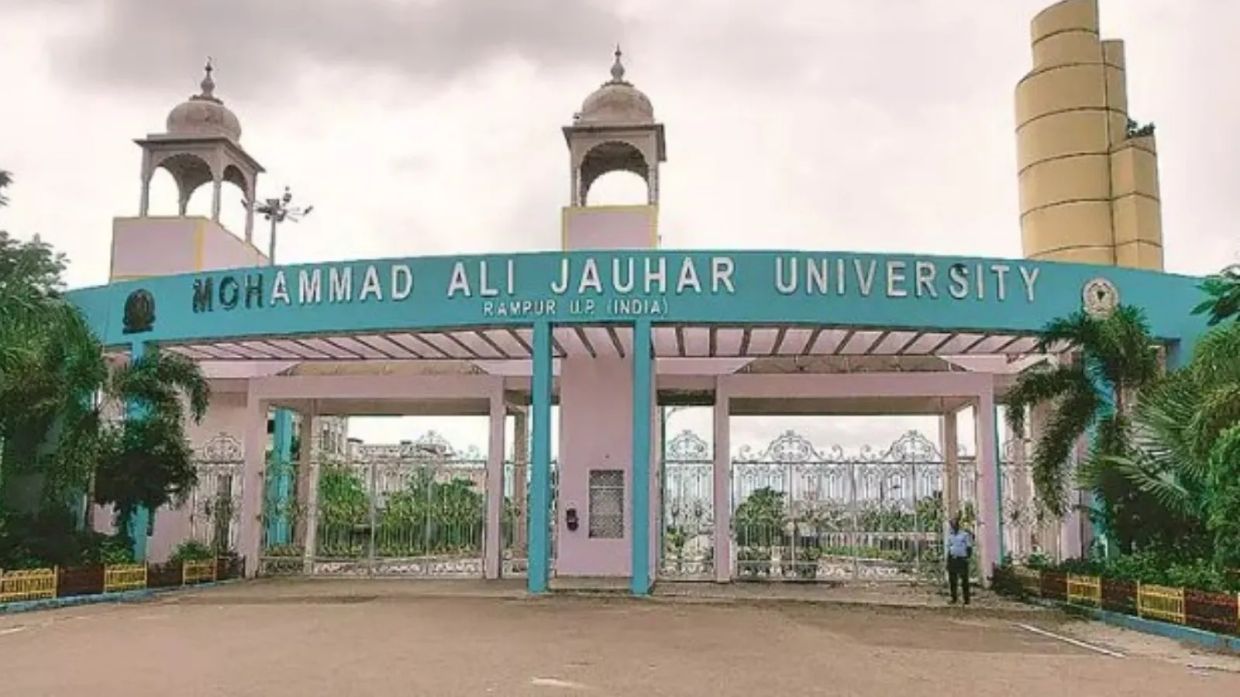
The Rampur Development Authority in Uttar Pradesh has moved to demolish nearly all structures across Mohammad Ali Jauhar University's sprawling 250-acre campus, citing violations of construction regulations. The demolition directive, issued on Wednesday last week, targets 38 of the 40 buildings on the grounds, marking a dramatic intervention by local administrative authorities against one of the region's educational institutions.
The university, established in 2006, carries the name of Mohammad Ali Jauhar, a towering figure in India's freedom struggle. Its founder is Azam Khan, a politician who held ministerial positions during the Samajwadi Party's tenure governing Uttar Pradesh between 2012 and 2017. The Samajwadi Party's decade-long rule came to an abrupt end when the Bharatiya Janata Party swept to power in the state, fundamentally shifting the political landscape of one of India's most populous regions.
Azam Khan, renowned throughout northern India for his oratorical abilities and deep community connections, now finds himself at the centre of mounting legal troubles. He and his son Abdullah are currently incarcerated following a court conviction related to forged documents, a development that has intensified scrutiny of the family's operations and interests. His wife, Tazeen Fatima, experienced similar legal difficulties in a separate birth certificate case, though she has since secured bail pending further proceedings.
The family characterises the succession of court cases as a coordinated campaign of political persecution rather than genuine violations warranting legal action. This framing reflects broader anxieties within opposition circles about the use of judicial mechanisms to neutralise political opponents, a concern that resonates across India's competitive political environment. The educational institution appears caught in this larger struggle, with authorities citing construction irregularities whilst critics view the demolition order as an extension of political antagonism.
The timing of the demolition order assumes significance given the backdrop of political transition in Uttar Pradesh. Educational institutions, particularly those established by prominent figures, frequently become flashpoints when governing power shifts dramatically. The university's namesake and founding philosophy tied to independence movement ideals create additional symbolic weight, as authorities target what was envisioned as a legacy institution.
For Malaysian observers of South Asian politics, the Mohammad Ali Jauhar University situation illustrates the vulnerability of institutional independence when political fortunes shift abruptly. The case demonstrates how educational establishments can become entangled in partisan disputes, potentially compromising their academic mission and long-term stability. Universities across the region, regardless of political affiliation or founder prominence, must navigate complex relationships with successive administrations.
The alleged unauthorised construction violations form the ostensible legal basis for the demolition order, yet the convergence of timing with the family's legal troubles raises questions about administrative motivation and selectivity in enforcement. Construction irregularities on university campuses exist throughout India, yet not all attract such aggressive intervention from development authorities. The disproportionate response here suggests layers of political calculation beneath the surface regulatory action.
The 250-acre campus represents substantial infrastructure investment and educational capacity. Demolishing 38 structures would disrupt academic operations significantly, from classroom facilities to research laboratories to student accommodation. The practical consequences for enrolled students and faculty members extend beyond political implications, raising genuine concerns about educational continuity and institutional viability during such upheaval.
The Samajwadi Party's loss of power in 2017 marked a watershed moment for Uttar Pradesh governance, with implications extending to party loyalists and their institutions. The BJP's consolidation of state authority has facilitated investigations and legal proceedings against opposition figures previously insulated by political power. This pattern of accountability only in one direction fuels opposition contentions about selective justice and political instrumentalisation of legal mechanisms.
Azam Khan's imprisonment on document forgery charges, whilst Abdullah shares detention, removes the family's direct ability to mount institutional defence or political resistance. The absence of a powerful founding figure with political leverage fundamentally alters the university's capacity to negotiate with or challenge governmental decisions. This dynamic illustrates how personalised power structures, common in South Asian education and politics, create institutional vulnerability when individual fortunes collapse.
The demolition order decision reflects broader patterns in Indian governance where regulatory agencies exercise substantial discretion, sometimes influenced by political considerations. The RDA's action raises important questions about checks on administrative power and procedural protections for institutional defendants, matters increasingly debated across India's civil society and legal community.
Regionally, the Mohammad Ali Jauhar University case demonstrates risks that educational institutions face when founders occupy prominent political positions. Southeast Asian nations watching India's political developments may draw lessons about maintaining institutional autonomy from partisan politics and ensuring stable regulatory frameworks that operate consistently regardless of political leadership changes.

