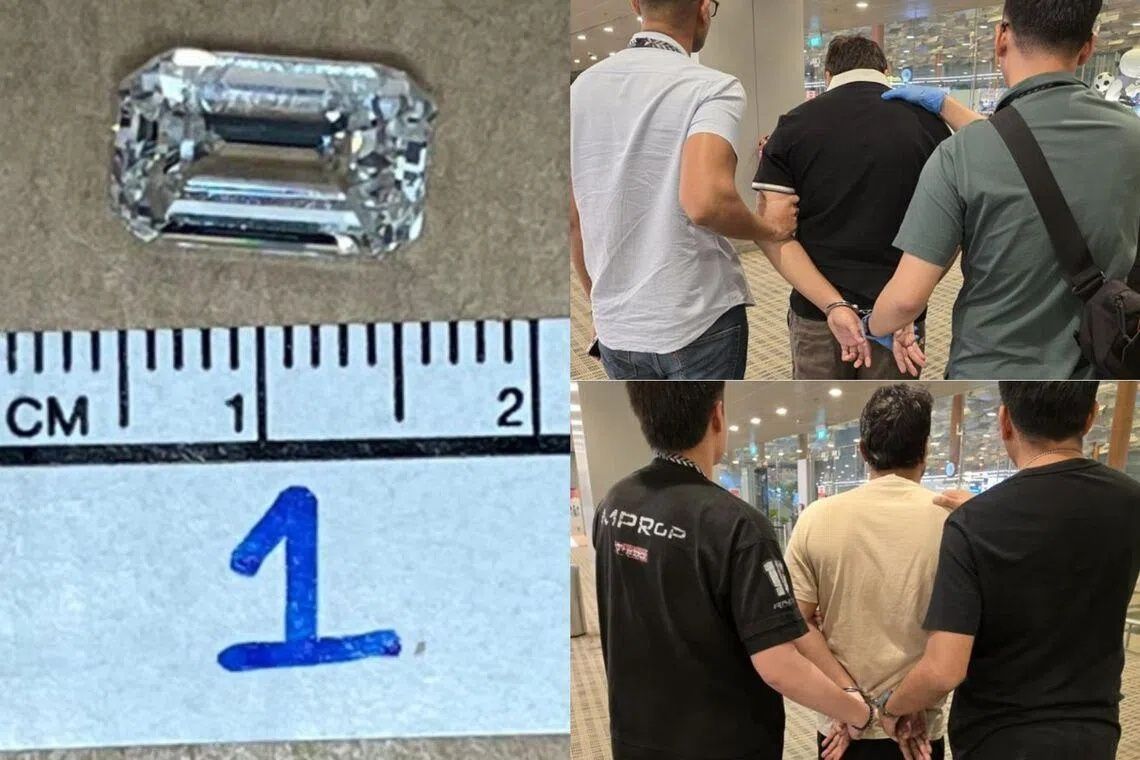
A meticulously orchestrated jewellery heist at a Chinatown store in Singapore has resulted in a jail sentence of two years, two months and two weeks for Indian national Mangroliya Manojkumar Kurjibhai, 41, following his guilty plea to theft charges. The brazen operation unfolded on June 19 when Mangroliya and his accomplice Serasiya Milan Ramnikbhai, 30, walked into Dianoche jewellery store on Kreta Ayer Road and executed what appeared to be a simple but cunningly planned gem substitution. Authorities moved quickly, apprehending both men at Changi Airport Terminal 3 that same evening as they attempted to leave Singapore. The recovered diamond, valued at approximately S$199,000, was discovered in Serasiya's haversack, providing authorities with crucial physical evidence of the theft.
The sophistication of this crime lay in meticulous preparation undertaken weeks before the pair even arrived in Singapore. Court documents revealed that Mangroliya and Serasiya had commissioned a counterfeit diamond in India, taking considerable care to match not only the appearance of the genuine stone but also its specifications and serial number. This level of detail suggests the operation involved substantial planning and resources, likely involving jewellery experts or skilled counterfeiters back in India. While court documents remained silent on how the tourists identified their target—a 4.95-carat diamond—the specificity of their preparation indicates prior intelligence gathering about the exact stone they intended to steal.
The actual theft unfolded with practiced efficiency on the afternoon of June 19. Serasiya arrived at the store with the counterfeit diamond hidden in his mouth, a concealment method that allowed him to pass through initial security measures undetected. Mangroliya then requested to examine the genuine diamond, valued at approximately US$154,000, providing a seemingly legitimate pretext for handling the precious stone. The theft's execution depended on keeping the store manager distracted and away from his position. Mangroliya accomplished this by asking to view multiple additional items, forcing the manager to repeatedly abandon his post to retrieve various pieces from secure storage areas.
During one of these absences, Mangroliya gave Serasiya the signal to execute the swap. Serasiya spat out the fake diamond and placed it on the counter while simultaneously retrieving the genuine stone and concealing it in his mouth. This physical exchange, captured by the store's CCTV system, would later serve as damning evidence during prosecution. The pair then informed the manager they would consider purchasing the items and calmly exited the store, apparently confident their deception would go undetected. However, the store manager's subsequent examination using an optical gemstone identification machine quickly revealed the substitution, initiating an investigation that would culminate in their arrest hours later.
The perpetrators wasted no time consolidating their escape. After leaving the jewellery store, they returned to their hotel and checked out, immediately booking a flight back to India. Their timing proved critical—they had arranged their departure for the same evening, presumably calculating that a few hours would provide sufficient cover before the theft was discovered and authorities could respond. However, this calculation proved fatally flawed. When immigration officials at Changi Airport screened them around 9pm that evening, they were detained pending investigation. Officers recovered the genuine diamond from Serasiya's haversack, conclusively linking him to the theft.
Mangroliya's guilty plea streamlined the judicial process and resulted in his sentencing by Friday, July 17. State Prosecuting Officer Yip Cheng Yee laid out the prosecution's case methodically, establishing premeditation through the commissioned counterfeit diamond and demonstrating clear intent through the execution at the store. The sentence of two years, two months and two weeks falls comfortably within the maximum seven-year imprisonment period prescribed for theft offences in Singapore, though the substantial jail term reflects the seriousness with which courts treat organised gem theft. For Malaysian readers familiar with regional crime patterns, this case exemplifies how Southeast Asian territories remain attractive targets for coordinated international theft operations originating from South Asia.
Serasiya Milan Ramnikbhai's case remains pending before the courts, suggesting his sentencing is forthcoming. His legal position may differ from Mangroliya's depending on whether he enters a guilty plea or contests the charges. As the individual who physically held the stolen diamond and facilitated the swap, his culpability is equally clear, though prosecutors may consider various factors including cooperation with authorities and his role in the operation's hierarchy. The distinction between the two defendants' judicial timelines could reflect ongoing negotiations or differences in their legal representation strategies.
This incident underscores vulnerabilities in even high-security retail environments across the region. The Dianoche store, while equipped with CCTV surveillance and gemological testing equipment, remained susceptible to distraction tactics and coordinated sleight of hand. The incident carries particular relevance for Malaysian jewellery retailers and consumers, as the same modus operandi could be deployed in shopping districts across Kuala Lumpur, Penang, or other commercial centres. Many Southeast Asian jewellery stores serve both local and international tourists, creating opportunities for organised criminals to exploit unfamiliar layouts and staff protocols. The swift police response and airport detection in Singapore highlight the importance of vigilant border controls and inter-agency coordination that should serve as a model for other regional law enforcement agencies.
The case also illustrates how modern counterfeit technology enables elaborate theft schemes. The ability to produce a fake diamond matching the specifications and serial number of a genuine stone demonstrates technical capabilities that extend well beyond simple forgery. Organised gem theft networks operating across South and Southeast Asia represent a persistent challenge for regional authorities, combining international coordination with sophisticated technical knowledge. For insurance companies and gem traders across Malaysia and the region, this conviction reinforces the necessity of enhanced verification protocols, staff training in recognising distraction techniques, and technological safeguards including blockchain certification for high-value pieces.

