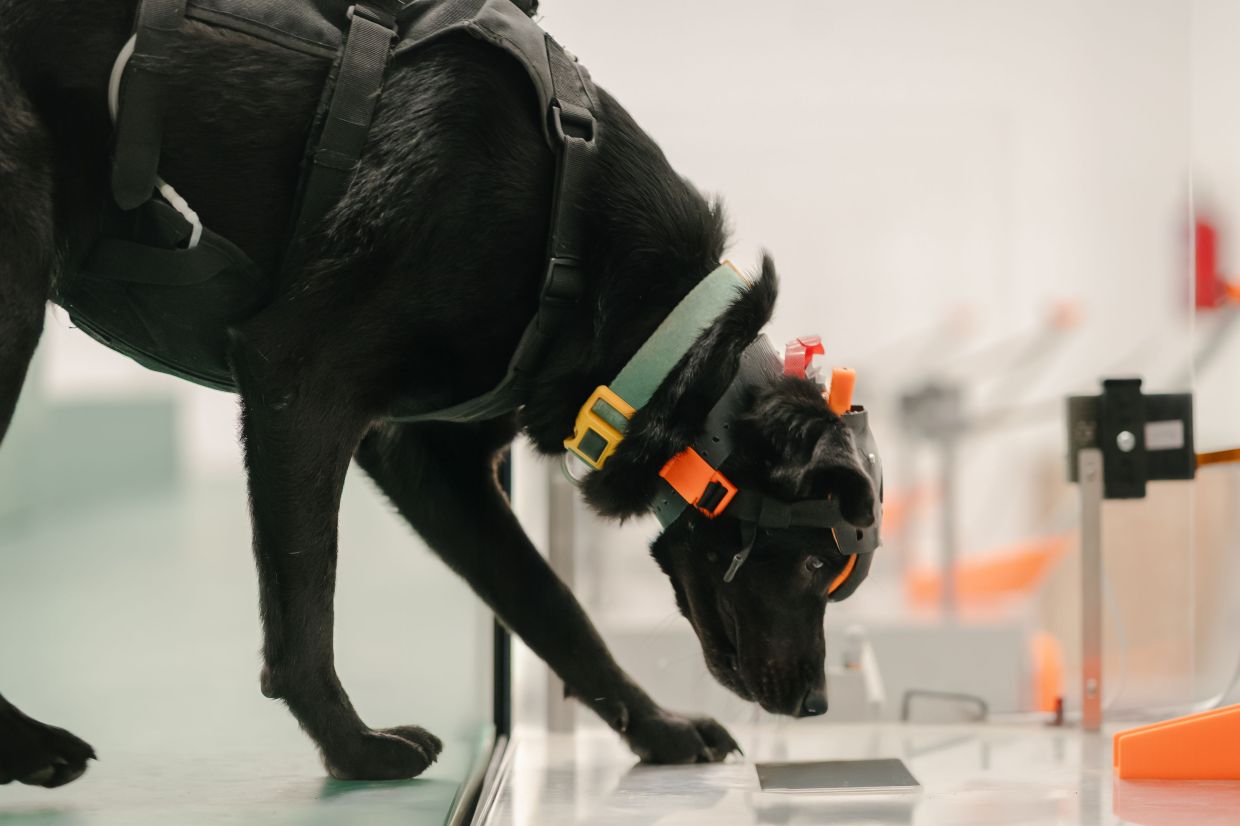
On a working farm near Bengaluru in southern India, a team of beagles, labradors and Dutch shepherds arrive each day to perform work that could reshape cancer detection across the region. Billy, Jessie and Banu are among several dogs trained by the startup Dognosis to identify early signs of cancer through their extraordinary sense of smell – a capability that the company is attempting to industrialise and make accessible to millions who currently lack affordable screening options.
Dognosis represents an unconventional approach to a critical public health challenge. Rather than relying solely on expensive imaging technology, blood work or invasive biopsies, the company has reimagined how canine olfactory abilities – traditionally deployed to identify drugs or explosives – might serve diagnostic medicine at scale. Patients breathe into specially designed masks that are then sent to the company's facility, where trained dogs are exposed to the breath samples. As the animals investigate each sample, sophisticated sensors coupled with artificial intelligence algorithms monitor their movements, respiration patterns, brain activity and body language to determine whether signs of cancer are present. This entirely non-invasive methodology eliminates the need for traditional diagnostic procedures.
The company's early clinical evidence has attracted investor backing from firms including Accel India and San Francisco-based Caffeinated Capital. Dognosis secured US$1.5 million through a pre-seed funding round in 2024, followed by an additional undisclosed investment, providing sufficient runway for the next two years of planned operations according to co-founder Akash Kulgod. The financial support reflects growing confidence that this hybrid approach combining animal biology with machine learning represents a viable commercial opportunity in the South Asian health technology space.
A Phase 2 clinical study published in the Journal of Clinical Oncology demonstrated that Dognosis's canine-AI system achieved approximately 90% sensitivity for early-stage cancers across seven broad categories encompassing more than 20 cancer types, including breast cancer. Intriguingly, the research also revealed that dogs trained to identify 10 specific cancer types subsequently detected an 11th cancer type they had never encountered before, suggesting their olfactory capabilities may generalise beyond the specific scents on which they were trained. This generalisable capacity could prove crucial for developing a scalable, multi-purpose screening tool.
The timing of Dognosis's expansion aligns with India's cancer burden. According to the International Agency for Research on Cancer, India ranks third globally in new cancer case prevalence, with an estimated 1.5 million new diagnoses and over 900,000 deaths recorded in 2024 alone. Approximately one in ten Indians face a cancer diagnosis before age 75, yet screening infrastructure remains severely underdeveloped. Data from 2019-2021 surveys revealed that only 1.9% of Indian women had ever undergone cervical cancer screening, whilst just 0.9% had participated in breast or oral cancer screening. Among men, screening participation was even lower at 1.2% for oral cancer. This diagnostic gap creates an enormous reservoir of undetected disease that conventional healthcare systems are ill-equipped to address.
The dogs themselves are integral to the operation's mechanics and culture. Located at the Bengaluru facility, they receive regular exercise, playtime and enrichment while spending approximately 30 minutes to an hour daily working on the detection platform, which is deliberately gamified to maintain engagement. Their compensation comes in the form of treats. During recent operations, a two-year-old beagle named Whiskey exemplified the process, systematically working through ten breath samples by approaching each in sequence, pausing and sniffing at suspicious samples, circling briefly before the system registered a positive result – behaviour patterns that the AI interprets as diagnostic signals.
Dognosis plans to launch an at-home prescreening test in India next year at a cost measured in thousands of rupees, making it substantially more affordable than conventional diagnostic pathways. The company's ambitions extend considerably further: it envisions processing one million tests annually within several years, expanding its canine workforce to 30 dogs, reducing turnaround times from several weeks to seven days, and establishing operations in the United States by late 2027 or early 2028. These targets reflect confidence that the model can expand beyond India's borders into developed markets where screening accessibility and cost remain persistent challenges.
The company is currently conducting a Phase 3 trial initiated in April involving 10 hospitals across India, with plans to recruit approximately 10,000 participants over the next 12 months. This study will focus on asymptomatic individuals at elevated cancer risk and survivors at risk of recurrence, with all participants flagged as potentially positive receiving conventional diagnostic follow-up including imaging and biopsy. The results from this trial will prove decisive in determining whether the canine-AI methodology can translate from controlled research settings into real-world clinical practice where patient populations, sample handling and environmental variables are substantially more variable.
Regulatory pathways appear relatively unencumbered, at least initially. Kulgod has stated that the test does not require Indian regulatory approval because it functions as a prescreening tool rather than a diagnostic device, and only the latter category faces regulatory scrutiny in India. This distinction may prove significant in enabling faster market entry, though it also raises questions about quality assurance and standardisation as the technology scales. The regulatory clarity contrasts sharply with challenges that such systems face in more heavily regulated markets.
Yet scepticism persists within India's medical establishment. Pankaj Chaturvedi, deputy director of the Centre for Cancer Epidemiology at Tata Memorial Centre in Mumbai, cautions that whilst emerging technologies offer genuine promise, they must strengthen rather than replace existing screening programmes. This perspective reflects legitimate concerns that a novel screening approach, regardless of its sensitivity, could fragment efforts to build comprehensive cancer detection infrastructure across India. The cautious optimism from within the Indian medical community suggests that acceptance will depend not only on clinical performance but also on demonstrating how canine-based screening integrates with established diagnostic workflows.
A comparable venture exists in North America, where the New Jersey startup SpotitEarly has reported similar results from canine cancer-detection trials, though such testing remains commercialised at only limited scale. The parallel development suggests that multiple organisations have identified the same opportunity and are pursuing similar technological pathways, which could either accelerate broader adoption or create competitive fragmentation in the emerging market for animal-assisted diagnostics.
The fundamental challenge facing Dognosis transcends technology or clinical performance. Akash Kulgod frames the core problem as standardising and scaling the dog's nose itself – converting an extraordinary but variable biological capability into a consistent, reproducible diagnostic system. Success in this endeavour could fundamentally alter cancer screening economics across India and comparable markets in Southeast Asia where conventional diagnostic infrastructure cannot accommodate screening at population scale. The stakes are substantial: millions of undiagnosed cancers might be detected years earlier, potentially shifting outcomes significantly. Whether dogs and artificial intelligence together can accomplish this transformation remains uncertain, but the Phase 3 trial results expected within months will substantially clarify the technology's genuine potential.

