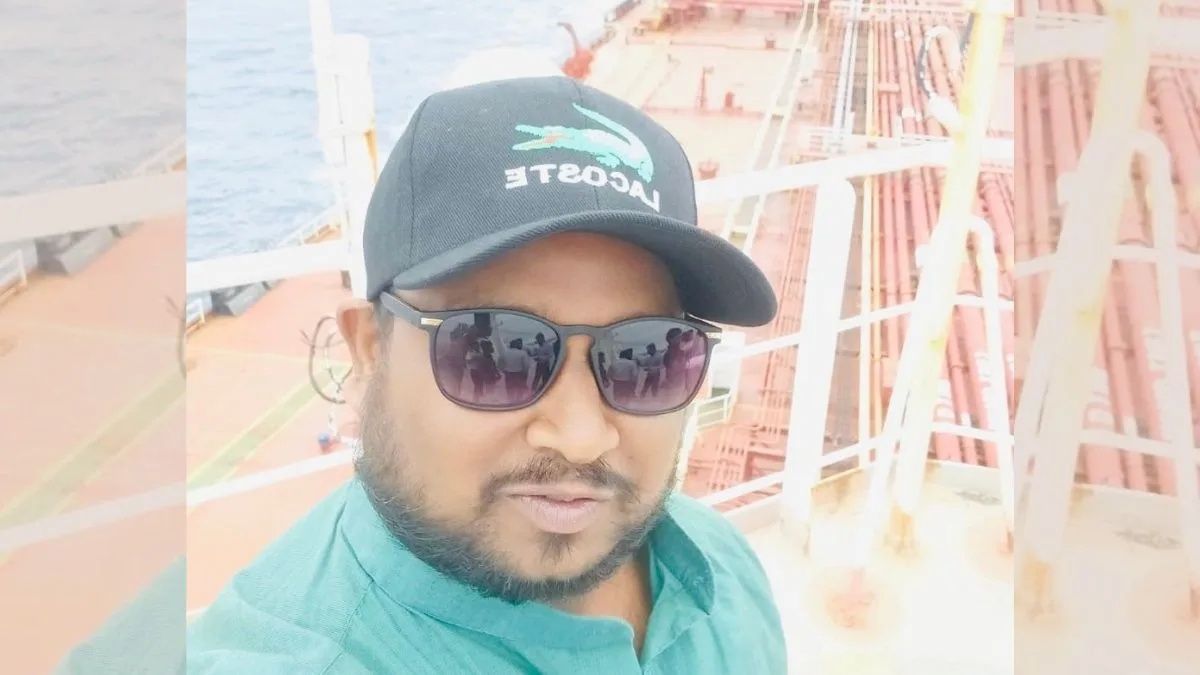
The sudden death of Rakesh Chauhan, a 33-year-old seafarer from Deoria district in Uttar Pradesh, has exposed troubling gaps in how maritime authorities across international borders handle worker casualties and raised alarming questions about the treatment of Indian sailors abroad. After his body returned to India nearly a month following his death in Venezuela, medical examination unveiled a chilling discovery: virtually every major internal organ had been surgically removed, rendering any meaningful determination of cause of death impossible and deepening suspicions that authorities in the South American nation may have concealed critical circumstances surrounding his passing.
Chauhan had embarked on what should have been a routine merchant vessel assignment in November 2025, seeking employment opportunities typical for Indian seafarers operating within global shipping networks. The trajectory of events unfolded with troubling speed. His employer first communicated to relatives that he had sustained injuries aboard the vessel and was receiving medical care. Within hours, the narrative shifted dramatically—company representatives informed the family that survival prospects had collapsed to merely five percent. By day's end, they delivered news of his death, attributing it to the original shipboard accident. Throughout these communications, Chauhan's employers maintained that his remains would arrive in India within seven days, a promise that went unfulfilled for nearly four weeks until his body finally reached home on June 4.
The physical evidence presented through India's re-autopsy raises profound and unsettling questions about what transpired in Venezuelan custody. Medical professionals documented systematic surgical incisions: one running from neck downward to the pubic region, and another cutting horizontally from ear to ear across the back of the skull. The body had remained frozen from May 7 through June 5, nearly a month in deep refrigeration. Yet the most disturbing finding emerged from what was conspicuously absent—the brain, heart, both lungs, liver, kidneys, spleen, pancreas, stomach, intestines, thyroid gland, hyoid bone, larynx, and trachea had all vanished. Indian physicians catalogued twenty-two separate stitches along the torso's vertical incision and twenty-one across the cranial wound, then rendered a damning professional judgment: cause of death could not be determined because the very organs necessary for pathological analysis had been removed.
The Federation of Seafarers' Unions of India has transformed this case into a broader indictment of how Indian maritime workers fare when they encounter death or medical crises in foreign jurisdictions. The union emphasizes that Venezuelan authorities released Chauhan's body without furnishing any autopsy report, medical documentation, or coherent explanation for his demise—a remarkable omission given that standard international protocols for repatriation of deceased individuals typically include comprehensive forensic records. The federation contends that vital organs were extracted without family notification or documented consent, a violation of basic medical ethics and fundamental human rights. For Malaysian and Southeast Asian readers, this case resonates uncomfortably within regional maritime employment patterns where crews from multiple nations work aboard the same vessels, often navigating opaque authority structures when emergencies arise.
Beyond the clinical horrors revealed by autopsy findings, the Federation of Seafarers' Unions has identified administrative irregularities that compound concerns about systematic mishandling. The receipt documenting Chauhan's repatriation bears a name variance—"Anjana Chauraisya" rather than "Ranjana Chaurasiya," the purported signatory representing Chauhan's wife. More problematically, shipping documentation reveals a fundamental discrepancy between the vessel listed in Chauhan's employment contract and the actual vessel where he worked. These administrative inconsistencies suggest either extraordinary carelessness in record-keeping or potential deliberate obfuscation of his actual employment circumstances, either scenario raising uncomfortable implications for worker safety accountability across maritime sectors.
The organ trafficking dimension has emerged as perhaps the most inflammatory concern articulated by Chauhan's advocates. While no direct evidence has been presented substantiating organized trafficking, the systematic extraction and removal of every significant internal organ—coupled with the absence of any official Venezuelan autopsy report, the documentation irregularities, and the extended delay in repatriation—has created a narrative pattern that fuels legitimate suspicion. Organ transplantation networks operate across multiple hemispheres with considerable opacity, and documented cases of trafficking among vulnerable populations have periodically surfaced in global medical literature. The timing, the completeness of organ removal, and the administrative chaos surrounding Chauhan's death align disturbingly with trafficking indicators.
Indian diplomatic and maritime authorities face mounting pressure to pursue intervention with Venezuelan counterparts and demand access to complete medical documentation from the South American nation. The Indian Embassy in Venezuela must escalate inquiries beyond routine consular channels, insisting upon full disclosure of circumstances, autopsy procedures performed, and the justification for organ removal. For Indian mariners and their families, this case illuminates a vulnerability that extends beyond typical workplace hazards—the possibility that workers employed in international waters might face exploitation or harm in foreign ports with minimal recourse to justice or transparent investigation. The seafaring profession, already marked by notoriously challenging working conditions and limited regulatory oversight, now carries the additional specter of unaccountable mortality in jurisdictions where Indian government influence remains limited.
The Federation of Seafarers' Unions has demanded comprehensive investigation with explicit accountability measures: full release of all autopsy reports and death documentation from Venezuelan authorities, immediate government intervention through diplomatic channels, and compensation for Chauhan's family alongside justice mechanisms. These demands reflect not merely anger at this singular case but frustration embedded within maritime labor structures that systematically disadvantage Indian seafarers relative to their employers and the nations where they meet their deaths. Shipping companies operating internationally often shield themselves through complex corporate structures and jurisdictional complexity, leaving workers and bereaved families navigating Byzantine bureaucratic systems with minimal leverage. Chauhan's case exemplifies how maritime labor—essential to global commerce yet profoundly unequal in power distribution—can leave workers vulnerable to harm with inadequate mechanisms for accountability or transparent investigation.
For Malaysia and the broader Southeast Asian region, this case demands attention beyond sentimentality toward fallen workers. Thousands of Malaysian seafarers labor aboard international vessels, encountering identical vulnerabilities when medical emergencies or deaths occur in foreign territorial waters. The mechanisms that failed Chauhan—absence of autopsy transparency, administrative irregularities, unexplained repatriation delays—could similarly affect Malaysian mariners working through similar employment networks. Regional governments ought to prioritize maritime safety agreements that mandate standardized autopsy procedures, mandatory family notification protocols, and transparent repatriation documentation. The Indian government's pursuit of accountability in Chauhan's case sets precedent for how maritime nations might demand higher standards of accountability from authorities in jurisdictions where their workers meet untimely deaths.
Ultimately, Rakesh Chauhan's case encapsulates systemic vulnerabilities affecting migrant workers globally, wherein employment arrangements transcend national jurisdictions while protective mechanisms remain territorially bounded and fragmented. His body's condition upon return to India—systematically stripped of diagnostic organs, stitched with precision, frozen indefinitely—suggests either grossly negligent medical stewardship or something far more sinister. Either interpretation demands urgent investigation, transparent accountability, and commitment from Indian authorities to pursue answers with appropriate diplomatic leverage. The federation's demands for full investigation and compensation represent not merely compensation for one family's tragedy but an assertion that maritime workers deserve basic dignity and accountability even when they die in circumstances involving foreign governments and international maritime corporations.

