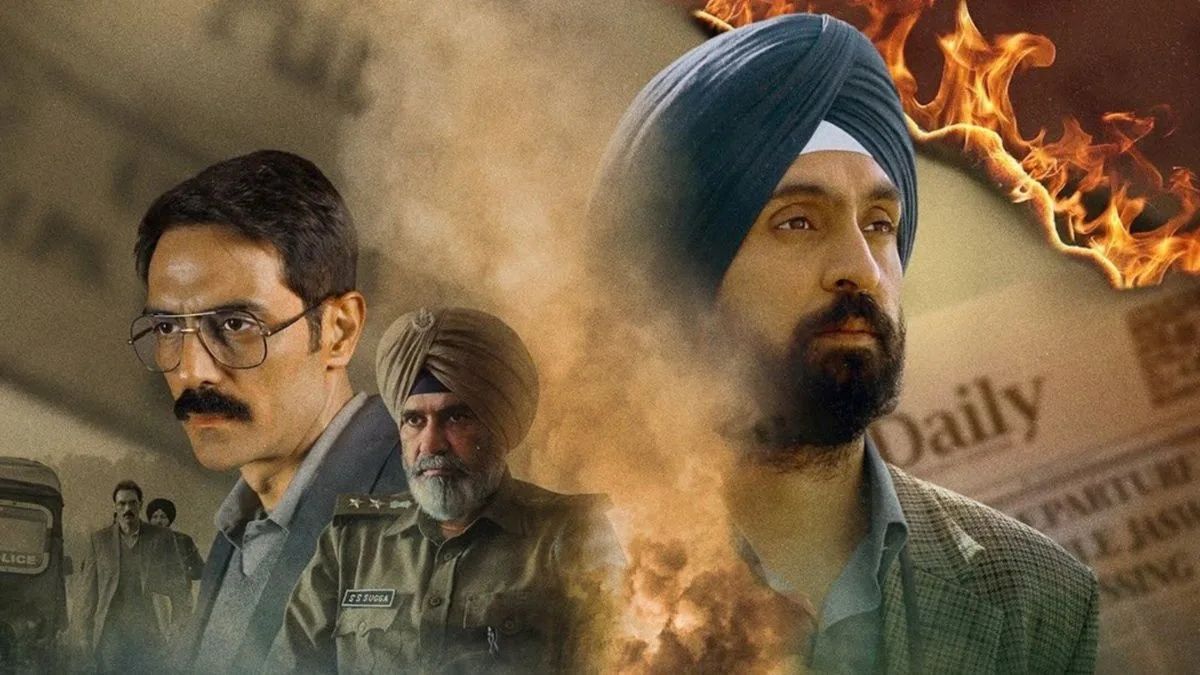
Filmmaker Honey Trehan has spent nearly four years locked in a grinding battle with India's film authorities over "Satluj," a biographical drama centred on Jaswant Singh Khalra, a Sikh human-rights advocate who documented extrajudicial killings and police brutality in Punjab during the turbulent 1980s and 1990s. Despite countless concessions—the censors demanded 127 separate alterations—Trehan eventually surrendered his theatrical ambitions and uploaded the film to ZEE5 streaming platform in early May. The relief proved fleeting. Within two days, the platform withdrew the film, citing vague "current developments" without elaboration. According to reporting by the Press Trust of India, government officials pressured ZEE5 to remove the content over alleged "security concerns," a characterization that Trehan contests as a thin pretext for political interference.
Trehan's experience illuminates what many in the Indian film industry now describe as a troubling shift towards state control over creative expression. "This is not the sign of a healthy nation," he said in frustration, accusing the Ministry of Information and Broadcasting of weaponising censorship for narrative control. The controversy surrounding "Satluj" has become emblematic of broader tensions between filmmakers and authorities in the world's largest film-producing nation. Critics argue that Prime Minister Narendra Modi's government has fundamentally altered the regulatory environment, using bureaucratic mechanisms ostensibly designed to protect public welfare as tools for suppressing politically sensitive storytelling.
The statistical evidence substantiates these concerns. Parliamentary data reveals that 3,033 films required cuts or modifications during fiscal-year 2025 alone—more than double the number from four years earlier. These figures represent a dramatic acceleration in interventionist censorship, yet the precise nature of demanded changes remains opaque. India's Central Board of Film Certification, the government-appointed body responsible for film classification, has ceased publishing comprehensive annual reports since 2017, creating an information vacuum that prevents independent scrutiny of its decision-making.
India's censorship regime occupies a unique position among major democracies. Unlike classification systems in the United States or Europe, which typically employ age-based ratings while leaving content decisions to distributors and filmmakers, India's film board retains the power to demand substantive edits before public exhibition. This structural authority fundamentally shapes what Indian audiences can see, vesting extraordinary discretion in state-appointed officials. The board's jurisdiction extends beyond mere ratings; it functions as an active gatekeeper over artistic expression, wielding authority comparable to pre-modern state censors rather than modern classification bodies.
Sadanand Dhume, a senior fellow at the Council on Foreign Relations specialising in South Asian politics, observes that while film censorship has deep historical roots in India—traceable to colonial-era legislation—the contemporary moment represents a qualitative departure. "The politics of the country has taken a sharp turn since the advent of Modi in 2014, and Bollywood is facing the downstream effects," he noted. The Modi government's approach to media regulation reflects broader ideological commitments regarding national sovereignty, religious identity, and the boundaries of acceptable political discourse. Officials justify censorship interventions by invoking the Board's statutory mandate to prohibit content that violates "sovereignty and integrity of India, security, public order, decency, morality, defamation, contempt of court or incitement to offence." These criteria, however, remain subject to interpretation, permitting considerable discretionary application.
The targeting of "Satluj" carries particular political significance given the historical context it depicts. The film examines police operations during Punjab's violent counterinsurgency campaign that effectively suppressed a Sikh separatist movement decades ago. Yet contemporary geopolitical tensions have revived sensitivities around this history. Since Canada accused Indian government agents of involvement in the 2023 killing of Sikh activist Hardeep Singh Nijjar in Vancouver, Sikh independence movements have gained renewed international attention. The Bharatiya Janata Party, which leads India's government, remains acutely concerned about potential separatism and regards sympathetic portrayals of independence advocates as security threats requiring suppression.
Recent cases across Indian cinema demonstrate patterns of escalating pressure. In 2025, Hindu nationalist groups successfully demanded 24 post-release cuts to the Malayalam blockbuster "L2: Empuraan" following objections to its depiction of 2002 communal riots. Filmmakers of the biopic "Phule," concerning 19th-century caste reformers, faced demands to remove caste-related language. Even India's Academy Awards submission, "Homebound," cleared certification only after surrendering 11 cuts targeting caste and religious references. Conversely, patriotic narratives encounter minimal resistance; the spy thriller "Dhurandhar," depicting Indian intelligence operations against Pakistan, achieved unrestricted release and became the highest-grossing Hindi-language film of all time, suggesting that ideological alignment with government priorities provides significant regulatory advantages.
Filmmaker Onir, who operates under a mononymous professional identity, exemplifies the encroaching restrictions on creative liberty. He reports that censors flagged the word "gay" appearing in a scene involving a nine-year-old character in his 2023 film "Pine Cone," demanding its removal before granting certification. Such interventions extend far beyond protecting minors from age-inappropriate content; they represent active state suppression of references to sexual minorities, reflecting broader ideological constraints on representation. "I feel that it's one of the worst phases of Indian cinema because the variety of cinema, the kind of narratives that one wants to see, all kinds of stories—that is disappearing slowly," Onir lamented, capturing the anxieties affecting creative practitioners throughout Indian film industries.
Despite regulatory obstacles, "Satluj" has discovered alternative pathways to audiences, demonstrating the limitations of state censorship in the digital age. Trehan arranged a private screening alongside the Cannes Film Festival in May, following the film's earlier selection for Toronto International Film Festival in 2023—a premiere ultimately withdrawn as collateral damage from the censorship battle. More remarkably, across Punjab, grassroots communities have organised screenings in Sikh temples, community centres, and village squares using downloaded copies. Trehan describes these spontaneous exhibition efforts as transcending their artistic significance; they have catalysed communal engagement that united Hindu, Sikh, and members of different castes and socioeconomic backgrounds. "It became a celebration," Trehan reflected. "What this film did, it brought the entire Punjab together."
For Malaysia and Southeast Asia more broadly, the Indian censorship trajectory carries cautionary implications. As regional governments contend with managing information environments and mediating between competing pressures for social cohesion and artistic freedom, the Indian experience illustrates how ostensibly neutral regulatory frameworks can metamorphose into instruments of ideological control. The gradual erosion of creative space through accumulating restrictions—demanding minor cuts that nonetheless establish precedents for intervention—represents a particularly insidious methodology precisely because individual modifications appear defensible while their cumulative effect fundamentally transforms the creative landscape. Trehan's protracted struggle and ultimate defeat, despite accommodating countless demands, underscores how appeasement of censors rarely purchases long-term security; rather, it signals that further pressure will succeed. The lesson extends beyond cinema: democracies require robust protections for cultural expression precisely because state regulation of narrative inevitably reflects governmental ideological interests rather than universal principles.

