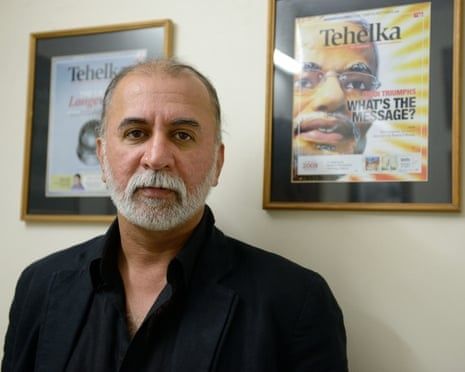
The Bombay High Court delivered a significant verdict on Thursday, convicting Tarun Tejpal, 63, of raping a junior journalist, effectively overturning a controversial acquittal issued by a trial court three years earlier. The case centres on an alleged assault that occurred in a hotel lift in Goa during November 2013, an incident that triggered widespread debate about workplace safety and sexual harassment in Indian media organisations. The conviction represents a pivotal moment in a decade-long legal battle that has captivated public attention and raised fundamental questions about accountability within India's journalism sector.
Tejpal founded Tehelka magazine and served as its editor-in-chief during the period when the alleged assault took place. Following his arrest, he spent seven months in custody before the Supreme Court granted him bail, allowing him to remain free throughout much of the subsequent legal proceedings. When a Goa trial court acquitted him in 2021 of rape, sexual harassment, and wrongful restraint charges, the decision shocked many observers who had followed the case closely. The Goa government subsequently challenged this acquittal before the Bombay High Court, arguing that the lower court's reasoning was flawed and that the evidence warranted conviction.
The conviction handed down on Thursday stands as vindication for the survivor, whose determination to pursue justice through the appellate system proved crucial. Sunita Sawant, the police investigator who led the original probe, underscored the broader significance of the judgment, noting that it represents a watershed moment for women asserting their rights within professional environments. The investigator's comments reflected recognition that the case transcends the individual circumstances, instead serving as a statement about institutional accountability and the protection of vulnerable workers in hierarchical workplace structures. The survivor's willingness to testify and see the case through multiple court proceedings, despite institutional barriers and public scrutiny, demonstrates the personal resilience required to challenge powerful figures in India's media landscape.
Tejpal maintained his innocence throughout the proceedings and retains the option to appeal the verdict in a higher court, meaning the legal saga is unlikely to conclude with this judgment. The severity of the conviction, however, creates significant obstacles for any successful appeal, given the appellate court's detailed review of evidence and witness testimony. The scheduling of his sentence for later on Thursday will determine whether he faces immediate incarceration or other penalties, though the precise sentencing remains to be announced. Legal experts have noted that the High Court's decision to overturn the acquittal demonstrates that appellate intervention remains available when trial courts reach conclusions that appellate judges deem inconsistent with the evidence presented.
The timing of this case proved particularly significant within India's broader reckoning with sexual violence. The alleged assault in 2013 occurred merely months after the fatal gang rape of a 23-year-old student aboard a New Delhi bus in December 2012—an atrocity that catalysed unprecedented nationwide protests and triggered international condemnation. That horrific incident forced the Indian government to substantially reform its rape laws, introducing stricter penalties and expanded definitions of sexual assault. The Tejpal case, unfolding against this backdrop of heightened public awareness about sexual violence, became emblematic of the pervasive nature of sexual harassment even within ostensibly progressive professional spaces.
The conviction carries particular irony given Tehelka magazine's historical positioning as a champion of women's rights and social justice. Throughout the 1990s and 2000s, the publication had established itself through hard-hitting investigations into corruption and abuse of power, earning widespread respect for its editorial courage. The revelation that its founder had been accused of perpetrating sexual assault against his own staff member delivered a devastating blow to the magazine's moral authority and credibility. The cognitive dissonance between the publication's stated values and the alleged conduct of its leadership prompted broader questioning about the integrity of media institutions that positioned themselves as defenders of the vulnerable.
Tehelka's trajectory following the 2013 incident illuminates the lasting damage inflicted by such scandals on institutional reputation. The magazine continues operating under new management, yet observers acknowledge that it has struggled substantially to regain the prominence and influence it commanded during its pre-2013 heyday. The publication's inability to recover its former standing reflects not merely the immediate reputational damage from the allegations, but also the deeper erosion of trust that occurs when an institution's leadership behaves in ways contradicting its professed principles. Readers and sources who once regarded Tehelka as a trustworthy vehicle for exposing injustice became understandably wary of an organisation whose own internal culture harboured such conduct.
For Malaysian and Southeast Asian readers, the Tejpal case offers instructive lessons about the vulnerabilities that junior staff members face within hierarchical media organisations across the region. Many newsrooms throughout Southeast Asia operate under similar power imbalances, where junior journalists—particularly women—lack adequate mechanisms for reporting and addressing sexual harassment from senior colleagues. The decade-long legal struggle that the survivor endured serves as a cautionary reminder that institutional investigations, police responsiveness, and judicial fairness cannot be assumed, particularly when the accused wielded significant institutional power and resources. The case underscores the necessity for media organisations to establish independent complaints mechanisms and transparent accountability structures that protect vulnerable workers.
The broader implications extend to questions of institutional reform within Indian journalism specifically and across South Asian newsrooms more generally. The case demonstrates that formal acquittals do not necessarily represent final justice, and that persistent advocacy through appellate mechanisms remains essential when lower courts reach questionable conclusions. For aspiring journalists in the region confronting harassment or assault, the Tejpal case simultaneously offers both hope—evidenced by the eventual conviction—and sobering recognition of the protracted legal battles required to obtain accountability. The survivor's decade-long pursuit of justice required exceptional courage, substantial financial resources, and access to legal expertise unavailable to many workers across Southeast Asia.
The sentencing scheduled for Thursday will provide the final element of this phase of the case, determining the specific consequences that Tejpal faces for his conviction. Whether he receives a custodial sentence or other penalties will significantly influence the case's deterrent effect on other potential perpetrators within Indian media and corporate environments. Beyond the immediate penalty, the conviction itself communicates to survivors of sexual assault that appellate courts may ultimately vindicate their claims even when initial trials result in acquittals. This message carries particular weight in jurisdictions where sexual assault survivors frequently encounter scepticism and institutional indifference.

