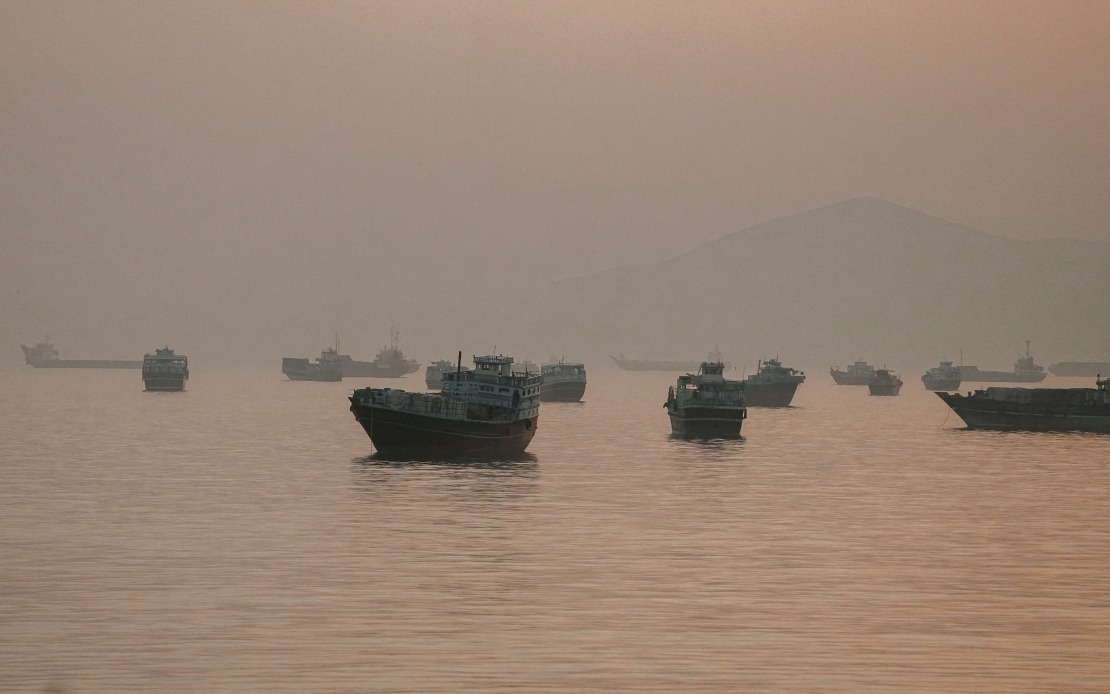
India's government has taken decisive action to protect its maritime workforce by prohibiting the deployment of Indian seafarers aboard commercial vessels transiting the Strait of Hormuz. The Directorate General of Shipping, India's principal maritime regulator, issued the directive late Wednesday following a series of concerning incidents in one of the world's most strategically important waterways. The order applies to shipowners, vessel managers, and recruitment agencies operating under Indian jurisdiction, effectively creating a no-go zone for Indian crew members in the volatile corridor.
The timing of this restriction underscores the rapidly deteriorating security situation in the Persian Gulf. The Strait of Hormuz, through which roughly 20 percent of global oil trade passes daily, has become increasingly hazardous for commercial shipping as tensions between the United States and Iran have reignited. Recent maritime incidents involving attacks on merchant vessels have transformed what was once a challenging but navigable route into an active conflict zone where civilian seafarers face extraordinary danger. The Indian government's decision reflects the stark reality that peaceful commerce and military escalation are fundamentally incompatible in this corridor.
The human cost of this escalation has already touched Indian maritime communities directly. Within the past three days alone, two Indian seafarers have lost their lives in vessel attacks within the region, while several others sustained injuries. These deaths represent more than abstract statistics—they reflect the vulnerability of maritime workers who, often from modest economic backgrounds, accept dangerous assignments to support their families. The Indian government's protective measure signals that tolerance for such casualties has reached its limit, and that commercial operators can no longer expect the state to permit uncontrolled exposure of its citizens to active hostilities.
For Malaysia and the broader Southeast Asian maritime industry, India's action carries significant implications. The region has long relied on a substantial workforce of seafarers from South Asia, including Indians, to crew commercial vessels operating across Asian waters and beyond. If the Hormuz route becomes effectively off-limits to Indian nationals, it creates ripple effects throughout global shipping networks. Indian seafarers have traditionally commanded competitive wages while maintaining strong professional standards, making them highly sought after by multinational shipping companies. Their withdrawal from Hormuz routes will necessitate recalibration of crew deployment strategies and may increase operational costs for shipping firms operating in the region.
The restriction also reflects a broader pattern of governments taking unilateral protective action when international maritime safety mechanisms prove inadequate. Traditionally, maritime security in contested waters has relied on international agreements, coastal state responsibilities, and naval escort arrangements. Yet the frequency and intensity of recent incidents suggest these mechanisms have failed to provide sufficient assurance. India's intervention represents a pragmatic acknowledgment that protective measures sometimes require individual national action, even when such action constrains commercial opportunities and complicates international shipping logistics.
Shipping companies operating in the Gulf face a genuine dilemma created by India's order. Vessels must still transit the Strait of Hormuz to access markets and complete contractual obligations, but they cannot do so with Indian crews. This forces expensive crew rotations at inconvenient points, creates gaps in staffing across multinational crews, and necessitates hiring replacements from markets where labour costs may be higher or regulatory oversight less stringent. The practical effect is that Indian shipping companies and those relying on Indian maritime talent will experience genuine competitive disadvantages, essentially penalizing India's maritime sector for the regional security crisis it did not create.
The geopolitical dimensions of this order deserve careful attention. By formally restricting its citizens from Hormuz operations, India makes a symbolic statement about the unacceptability of current conditions in the region while creating pressure on international actors—particularly major naval powers—to intervene more actively in maritime security provision. It also signals to international insurers and investors that India will not allow its workforce to bear disproportionate risks from great power competition, establishing a precedent that other labour-exporting nations might follow if conditions worsen.
The Directorate General of Shipping's authority to issue such binding directives demonstrates the centralized control most maritime nations maintain over their shipping industries through regulatory mechanisms. This stands in contrast to the fragmented nature of global shipping, where vessels operate under flags of convenience and crews hail from dozens of nations. When a major seafarer-exporting nation like India restricts its workers from particular routes, it leverages one of the few meaningful tools available to smaller nations seeking to influence behaviour in contested waters.
Maritime security analysts will monitor whether other nations follow India's precedent. The Philippines, which maintains an even larger share of global maritime employment, could face similar pressure from workers' advocates and safety-conscious families if attacks continue. Indonesia, Vietnam, and Bangladesh, all significant sources of seafaring labour, might eventually adopt comparable restrictions if the Hormuz situation remains volatile. A cascade of such measures could fundamentally disrupt shipping patterns throughout Asia and beyond, forcing companies to fundamentally reconsider how they crew vessels and route commercial traffic.

