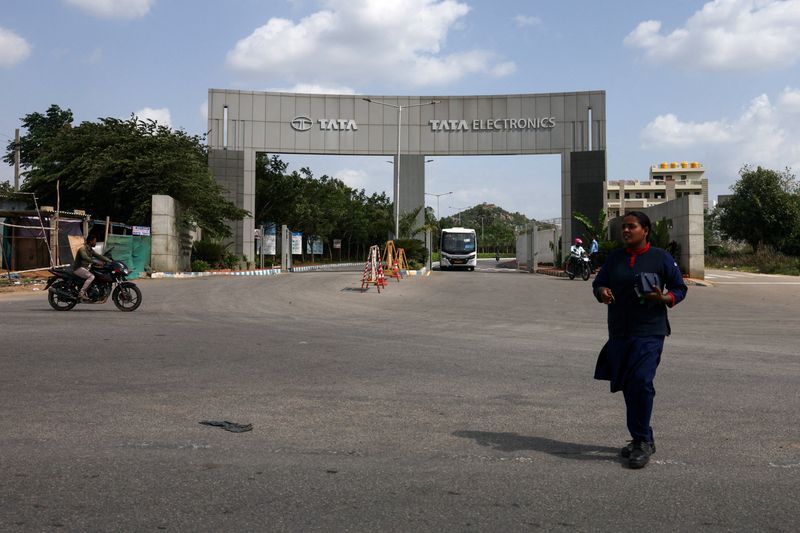
India's Ministry of Electronics and Information Technology has confirmed it is investigating a substantial data breach affecting Tata Electronics, Apple's key supplier in the country, following the public disclosure on dark web forums of sensitive materials connected to Apple's forthcoming iPhone 18 Pro lineup. The revelation marks the government's first formal acknowledgement of the incident, with India's IT secretary S. Krishnan telling members of the press corps that investigative procedures have been initiated and the matter escalated to the country's Computer Emergency Response Team, the principal federal authority overseeing information security threats.
The compromised files, which were circulated by an organised ransomware operation that successfully infiltrated Tata Electronics' systems, encompass a range of proprietary information that Apple typically guards with considerable rigour. Among the exposed materials are detailed inventories of components destined for the iPhone 18 Pro models, photographic documentation of the devices themselves, and crucially, the identities of manufacturers and suppliers responsible for producing specific parts. This type of supply chain intelligence is normally treated as highly confidential intellectual property; Apple maintains a formal public supplier list, but the leaked documents reveal additional procurement relationships and manufacturing partnerships that the technology giant has not voluntarily disclosed to investors or the broader market.
The timing of the breach carries particular significance given Apple's product release schedule. The technology manufacturer has announced plans to unveil the iPhone 18 Pro and Pro Max variants in September, meaning the company must now contend with the commercial and reputational implications of having its planned specifications, component sourcing strategies, and manufacturing arrangements publicly compromised months before the official launch. The premature disclosure of such details could potentially influence competitor strategies, affect supplier negotiations, or create consumer expectations that deviate from Apple's carefully orchestrated marketing timeline.
The security incident extends beyond Apple's sphere of influence. According to reporting from news organisations with access to the leaked material, the ransomware operation has also published proprietary files belonging to other major technology and manufacturing firms, including Tesla, Qualcomm, and Taiwan Semiconductor Manufacturing Company. This broader pattern suggests a sophisticated criminal enterprise executing a large-scale industrial espionage operation rather than a targeted attack on a single organisation. The involvement of TSMC, a cornerstone of global chip manufacturing, alongside Apple suppliers indicates the attackers may be focusing on strategically critical nodes in the technology supply chain.
Tata Electronics, which has emerged as a crucial manufacturing hub for Apple's products in India as the company diversifies its production away from China and Taiwan, now faces significant remedial efforts to contain the damage and prevent future breaches. The conglomerate has engaged international forensic consultancy firms to conduct comprehensive technical audits of its systems, examining how the attackers gained access, what safeguards failed, and what measures must be implemented to prevent recurrence. Such forensic investigations typically require weeks or months to complete, involving detailed analysis of network logs, access patterns, and system vulnerabilities.
For Malaysia and broader Southeast Asia, this incident carries implications for the region's aspirations to become a more prominent technology manufacturing hub. Several countries in the region, including Malaysia, have sought to attract semiconductor and electronics manufacturing investment as companies diversify supply chains. The Tata breach illustrates that even well-established manufacturing partners with significant global reputations remain vulnerable to sophisticated cyber attacks, suggesting that companies considering relocation or expansion of production facilities must invest substantially in cybersecurity infrastructure and protocols. The incident may prompt multinational technology firms to reassess their supply chain security posture across Asia.
The ransomware operation's decision to publicise the stolen data on dark web platforms, rather than attempting to monetise it through confidential ransom negotiations with Apple or Tata, suggests the attackers may be prioritising the dissemination of intellectual property over financial extraction. This approach carries different implications than traditional ransomware campaigns, which typically encrypt data and demand payment for decryption keys. The public distribution of sensitive manufacturing information may indicate ideological motivations, desire to cause maximum reputational damage, or an attempt to flood markets with proprietary information to devalue its commercial worth.
India's Computer Emergency Response Team, the organisation that will coordinate the government's technical investigation, operates as the primary cybersecurity authority within the country's administrative framework. Its involvement signals that Indian authorities view the breach as a matter of national significance, particularly given the strategic importance of semiconductor and electronics manufacturing to India's broader industrial development agenda. Prime Minister Narendra Modi's government has positioned India as an alternative manufacturing destination to China, attracting major electronics companies through production-linked incentive schemes and improved infrastructure development.
The breach underscores a persistent tension in global manufacturing: as companies concentrate production in fewer geographical locations to achieve cost efficiencies and streamline operations, those concentrated nodes become high-value targets for theft. Tata Electronics, by virtue of its role assembling iPhones for a major market, accumulates extensive knowledge of Apple's product roadmaps, component specifications, and supplier relationships. Protecting such information requires continuous investment in cybersecurity measures, employee training, network segmentation, and incident response capabilities. The apparent success of this ransomware operation in accessing and exfiltrating such sensitive materials will likely prompt Apple to reassess its vendor management and security requirements across its supply chain.
Apple's relationship with Indian manufacturing partners has grown increasingly important to the company's strategic objectives. The Indian government has offered substantial incentives for electronics manufacturing, and Apple has gradually shifted portions of its iPhone production to Indian facilities operated by companies like Tata and Foxconn. This diversification away from China and Taiwan reduces geopolitical concentration risk, but introduces new cybersecurity challenges. Companies manufacturing in India must navigate a complex landscape of government regulations, local security standards, and the cybersecurity capabilities of regional technology infrastructure that may vary from practices in more established manufacturing centres.
The incident also raises questions about information security standards and enforcement mechanisms within India's technology manufacturing sector. As the country attracts more sophisticated electronics manufacturing operations, questions inevitably arise about whether existing regulatory frameworks, security standards, and audit procedures are adequate to protect proprietary information entrusted to Indian firms. Regulatory bodies may face pressure to establish more rigorous cybersecurity requirements for companies handling sensitive data belonging to multinational corporations or accessing advanced manufacturing technologies.
Looking forward, this breach will likely accelerate discussions within Apple and other technology companies about supply chain security protocols. Enhanced background checks for supplier employees, stricter access controls, enhanced monitoring of data movement within networks, and more frequent security audits may become standard requirements. For technology companies operating manufacturing facilities or relying on partners across Southeast Asia, the incident serves as a reminder that cybersecurity must be treated as integral to operational planning, not as an afterthought.

