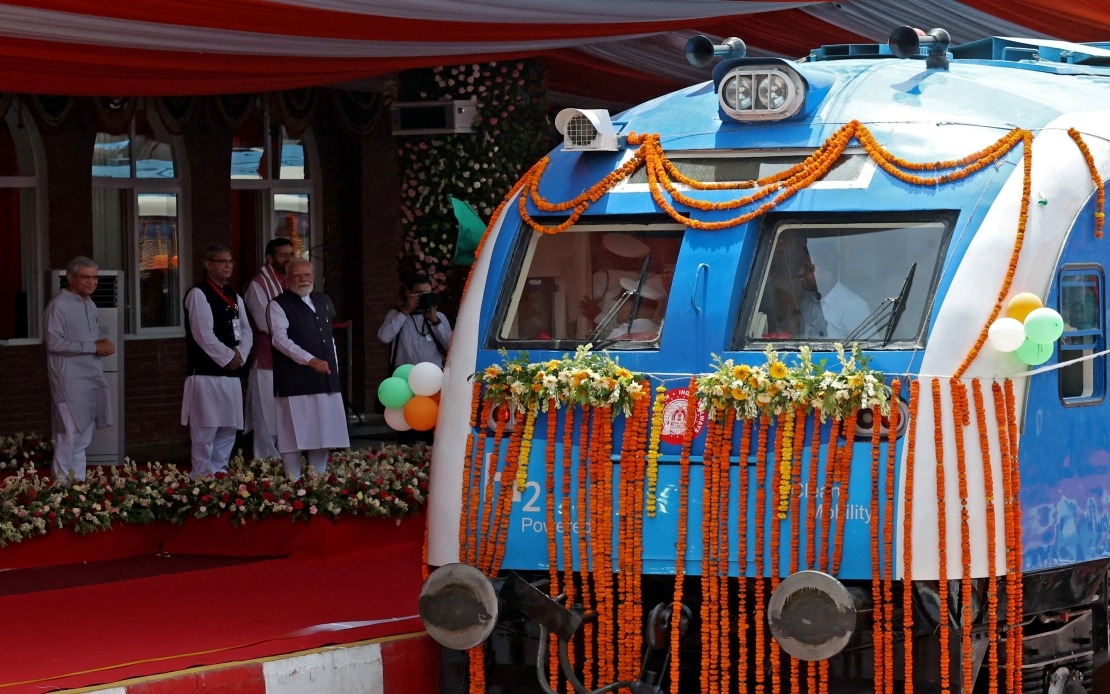
Prime Minister Narendra Modi has formally inaugurated India's maiden hydrogen-powered train, marking a significant milestone in the nation's shift towards environmentally sustainable transportation infrastructure. The ten-coach train, which commenced operations on the 89-kilometre Jind-Sonipat corridor in the northern state of Haryana, represents India's foray into a technology that until now has remained the preserve of a handful of advanced economies.
The development carries particular significance for India's railway modernisation agenda, which has long grappled with the environmental and operational costs of diesel-powered locomotives. By deploying indigenously developed hydrogen fuel cell technology on its rail network, India demonstrates both technical capability and commitment to decarbonising one of Asia's largest and oldest rail systems. This achievement underscores the nation's capacity to innovate in green technology rather than simply importing solutions from abroad.
At the core of this hydrogen train system lies a 1,200-kilowatt Proton Exchange Membrane Fuel Cell, or PEMFC, which generates electricity through a carefully controlled chemical reaction between hydrogen gas and oxygen. This electrochemical process converts chemical energy directly into electrical power, eliminating the inefficiencies inherent in combustion-based engines. The elegance of this technology lies in its remarkable cleanliness: the only outputs from the fuel cell reaction are water vapour and heat, making it arguably the most environmentally benign form of rail propulsion currently available.
The 10-coach train has been cleared for operations at speeds up to 75 kilometres per hour, though its design specifications allow for a maximum velocity of 110 km/h, suggesting scope for future acceleration of services on this corridor once operational experience accumulates. This conservative initial operating envelope reflects prudent safety protocols typical of new technology deployments in rail transport, where reliability and passenger safety take precedence over pushing performance boundaries.
India's entry into hydrogen rail technology positions it alongside an exclusive club of technologically advanced nations. China, Germany, Japan and the United States have all operated hydrogen-powered trains, but India's achievement gains added weight from the fact that the technology has been developed domestically rather than imported wholesale. This speaks to growing indigenous capacity within India's rail and energy technology sectors, potentially opening pathways for exports to other developing economies seeking to modernise their transport infrastructure.
The implications for Southeast Asia and the broader South Asian region warrant careful attention. As regional nations grapple with rapid urbanisation and freight transportation demands, many continue to rely heavily on aging diesel-electric rail fleets that impose substantial air quality costs, particularly in densely populated corridors. India's demonstration that hydrogen rail technology can be adapted and deployed locally, rather than remaining confined to wealthy Western and East Asian markets, could catalyse regional interest in similar projects.
For Malaysia specifically, India's hydrogen train holds instructive value. The success of this venture on a regional domestic route validates the technical feasibility of hydrogen rail in South Asian climates and infrastructure contexts that bear some resemblance to Malaysian conditions. As Malaysia contemplates future enhancements to its rail network—whether the proposed expansion of the KTM system or new rapid transit corridors in major urban centres—the Indian experience provides a practical case study of how emerging green rail technologies can be implemented outside laboratory conditions.
The Jind-Sonipat corridor itself represents a relatively modest distance, but this deliberate choice reflects sensible project sequencing. Pilot deployments on shorter routes allow operators to accumulate operational data, identify maintenance requirements, train staff, and resolve unforeseen technical challenges before scaling to longer corridors or busier routes. This methodical approach contrasts with more ambitious but risky megaproject strategies that occasionally characterise infrastructure development across South Asia.
The hydrogen fuel cell approach also addresses a persistent challenge in railway electrification: the substantial capital investment required to build and maintain overhead catenary systems across extensive networks. For developing nations with constrained budgets, hydrogen-powered trains offer a middle path that avoids diesel's environmental costs while circumventing the infrastructure expenses of electrified rail. This economic calculus may prove particularly attractive for secondary and tertiary rail lines serving smaller cities and towns.
Operationally, hydrogen trains demand new supply chains and refuelling infrastructure, creating opportunities for industrial development. India's emerging hydrogen economy, still in nascent stages, could benefit from transport sector demand that validates investment in hydrogen production, storage and distribution facilities. Over time, expanded hydrogen availability for rail transport might also enable adoption in heavy trucking and other transport modes.
The environmental benefits of displacing diesel locomotive traffic deserve emphasis in the context of South Asian air quality challenges. Many major cities across India, Pakistan, Bangladesh and other regional economies face severe atmospheric pollution, with transport contributing substantially to this burden. Each diesel locomotive removed from active service represents a marginal improvement in emissions profiles, and as fleets transition toward hydrogen propulsion, cumulative benefits would become increasingly apparent.
India's hydrogen train initiative also signals to global technology partners and manufacturers that the Indian market possesses both the technical sophistication and policy commitment to adopt advanced clean technologies. This announcement may accelerate private sector engagement in hydrogen infrastructure development, spurring competition and innovation that gradually reduces costs and improves performance characteristics.

