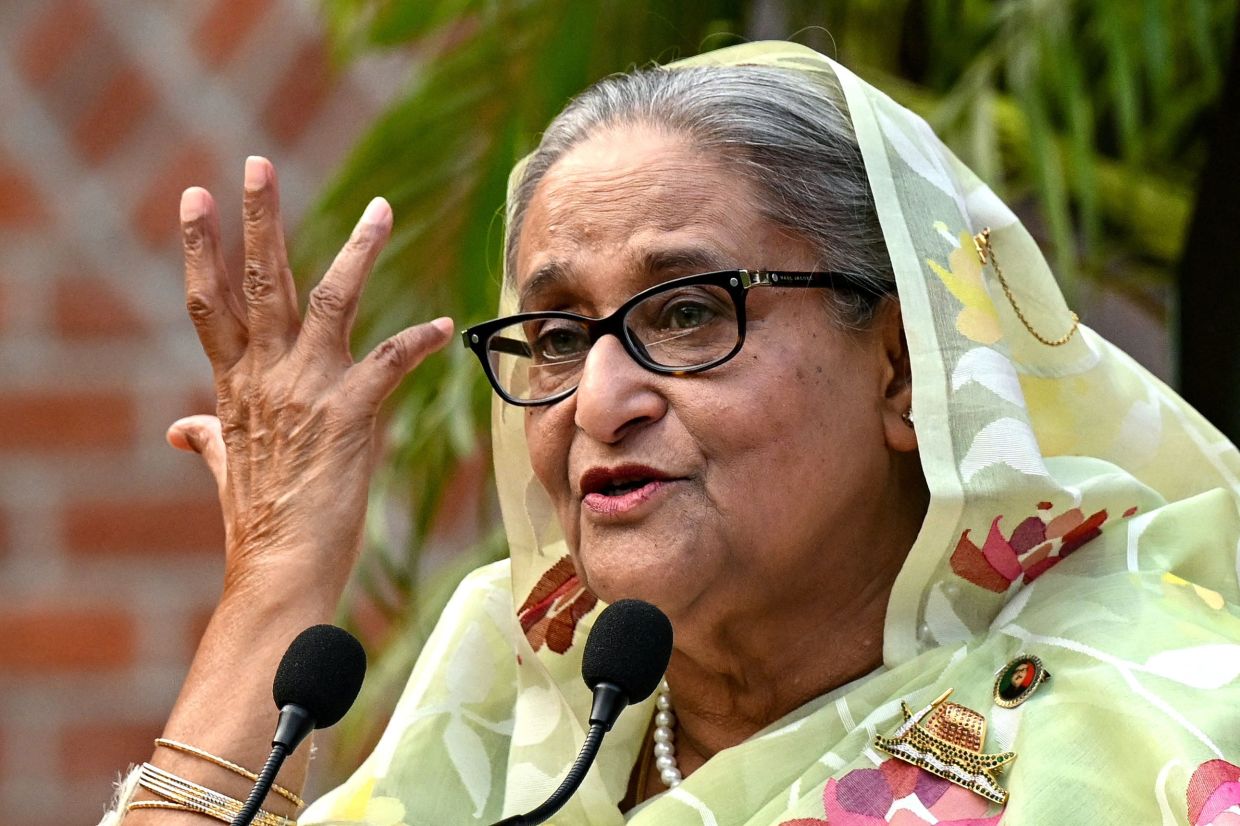
India's government has moved to deflect tensions with Bangladesh by declaring it bears no responsibility for a scheduled virtual address by the country's exiled former Prime Minister Sheikh Hasina, emphasising that a private media organisation is solely responsible for hosting the event. The clarification came after Dhaka expressed concern about allowing the fugitive politician to make public statements from Indian soil, raising fresh diplomatic friction between two neighbouring countries already strained by Hasina's dramatic departure from power eighteen months ago.
The address, set to be delivered remotely from India by Hasina on Wednesday, marks the second anniversary of the student-led uprising that forced her from office in 2024. The Foreign Correspondents' Club of South Asia in New Delhi will host the gathering, with Hasina's son Sajeeb Wazed Joy and other speakers also participating. Indian foreign ministry spokesperson Randhir Jaiswal made plain that the government maintains complete distance from the proceedings, stating neither the state nor its officials endorse any views expressed at the forum.
Bangladesh's response has been characteristically more forceful. The Information Adviser Zahed Ur Rahman issued a direct warning to domestic media organisations that broadcasting or publishing any content from Hasina's speech would breach a December 2024 order issued by Bangladesh's International Crimes Tribunal. This tribunal order explicitly prohibits news outlets and social media platforms from disseminating Hasina's speeches, statements, interviews, or any audio or video material featuring the former leader. The restriction effectively attempts to create an information vacuum around her political messaging within Bangladesh's borders.
The severity of Bangladesh's legal stance against Hasina reflects the intensity of political conflict surrounding her tenure. The former Prime Minister, now 78 years old, has been sentenced to death in absentia on crimes against humanity charges stemming from her government's violent response to the 2024 protests. Hasina has rejected the verdict as legally invalid, dismissing the proceedings as politically motivated. Her exile in India represents the most significant rupture in recent South Asian politics, effectively removing one of the region's most influential leaders from active political engagement.
Hasina's aides have remained defiant in face of Bangladesh's restrictions. Abu Obaidha Arin stated the event would proceed as planned, framing the matter as a battle between suppression and free expression. He contended that Dhaka's attempts to silence dissenting voices cannot extend beyond the country's borders, suggesting that exiled politicians retain rights to articulate their positions internationally. This assertion directly challenges Bangladesh's legal authority and raises questions about the limits of what a government can enforce against fugitives operating from foreign territory.
The broader strategic context involves Hasina's signalled intention to return from exile around December, accompanied by senior Awami League party colleagues, to face judicial proceedings. This move would represent a dramatic test of Bangladesh's new government's commitment to democratic norms and its handling of political opposition. Prime Minister Tarique Rahman's administration, which assumed office following elections in February, faces potential international scrutiny regarding how it treats its most prominent political rival, particularly given Bangladesh's aspirations to strengthen regional standing.
Dhaka's diplomatic approach has involved escalating pressure on New Delhi. State Minister for Foreign Affairs Shama Obaed Islam stated that Bangladesh has repeatedly raised concerns with India regarding Hasina and other Awami League leaders conducting political activities from Indian territory. The framing suggests that allowing such activities undermines bilateral confidence and could damage relations during a period when both nations have signalled desire for improvement. This represents a calculated attempt to leverage diplomatic channels to restrict Hasina's international visibility.
The situation illuminates the complex dynamics between South Asian nations regarding fugitive politicians. While India has chosen to maintain formal distance from Hasina's address, the mere fact that she remains comfortably based in India creates implicit political tension. The distinction between government involvement and private sector hosting, though technically valid, offers only partial cover for diplomatic friction. Bangladesh's concerns reflect genuine anxiety about allowing a death-sentenced former leader to project political narratives internationally.
For Malaysian observers and wider Southeast Asian audiences, the episode highlights how political upheaval in a neighbouring region can create diplomatic complications that ripple across international boundaries. It demonstrates the challenges governments face when managing relationships with fugitive former leaders, particularly when those individuals retain significant political constituencies and influence. The restriction of media coverage within Bangladesh also raises broader questions about press freedom and governmental control of information during periods of political transition.
The unfolding situation will likely determine whether Hasina's threatened December return materialises, making this virtual address a potential waypoint in her political rehabilitation strategy. If she does return to face trial, how Bangladesh's judicial system handles her case will signal whether the nation has genuinely moved beyond personalised political conflict toward institutionalised democratic governance. The international dimensions of this internal political struggle underscore how regional instability affects neighbouring countries' diplomatic calculations and economic interests across South Asia.

