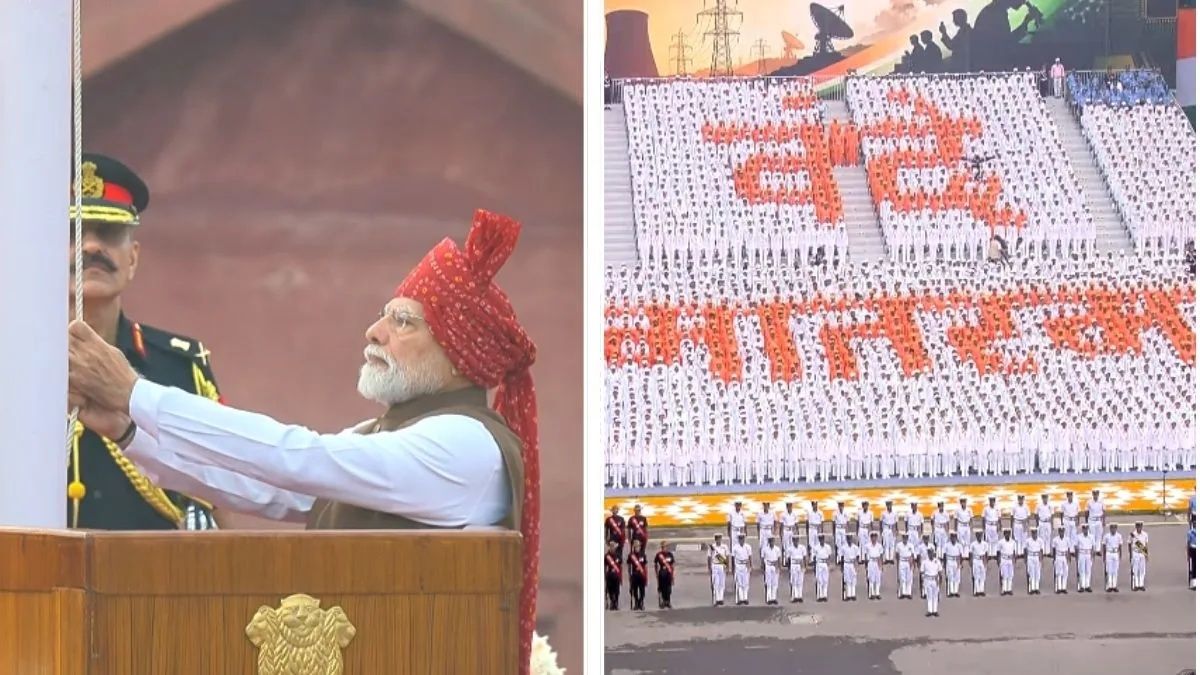
Prime Minister Narendra Modi used India's 80th Independence Day celebration at the Red Fort to announce an audacious development agenda that would transform the nation into a developed economy by 2047, a century after independence. Speaking from the historic monument on August 15, Modi framed the vision of 'Viksit Bharat'—or Developed India—as a defining national mission that would reshape global perceptions of the country and unlock the aspirations of its 1.4 billion citizens. The announcement represents a significant articulation of India's trajectory over the next two decades, setting the parameters for policy and investment decisions that will reverberate across the region's largest economy.
The Prime Minister's address centred on a transformational thesis: that India's collective commitment to development would demonstrate the nation's inherent confidence and resilience. Modi argued that when a country of India's demographic scale pledges to achieve developed status, the declaration carries profound implications for how the world reassesses Indian capabilities and potential. This framing matters considerably for Southeast Asian nations watching India's rise and its ambitions to play a larger role in regional geopolitics and trade partnerships. The vision suggests India is not merely responding to current economic circumstances but actively positioning itself as a major global power across the coming decades.
Modi specifically cautioned citizens against modest aspirations, urging them to embrace transformational thinking. He contended that incremental goals would constrain India's potential, whereas larger ambitions expand both individual vision and collective purpose. This rhetorical approach reflects a deliberate strategy to shift public consciousness from accepting incremental progress to envisioning fundamental structural change. For Malaysian and Southeast Asian observers, such messaging indicates India views itself as capable of competing with established developed economies, potentially reshaping regional economic hierarchies and investment flows.
The Prime Minister drew sharp contrasts with India's recent economic history, particularly referencing the country's previous classification among the 'Fragile Five'—a term coined during the 2013 emerging-market volatility crisis when India faced currency pressures and macroeconomic concerns. By highlighting India's transition from that vulnerable position to becoming a major, fast-growing economy, Modi framed the new development vision as both continuation and acceleration of existing momentum. This historical context matters for regional observers assessing whether India can sustain rapid growth or faces cyclical vulnerabilities that might interrupt its trajectory toward developed status.
Tangible sectoral achievements buttressed Modi's optimism about India's developmental capacity. The Prime Minister cited a fourfold increase in defence production over twelve years, a fivefold rise in Khadi and Gramodyog output, and a sevenfold expansion in electronics manufacturing. Mobile phone production surged by a third while digital transactions doubled, statistics that underscore India's technological modernisation and manufacturing diversification. These metrics matter for Southeast Asian policymakers evaluating India's competitive positioning in global manufacturing networks and digital economy development, particularly as countries like Malaysia seek to diversify supply chains away from China.
The ceremonial dimensions of Independence Day also carried symbolic weight. Modi highlighted that 'Vande Mataram', the national song, resounded at the Red Fort on August 15 for the first time since independence eighty years earlier. The Prime Minister characterised this moment as historically significant, suggesting renewed cultural affirmation of national identity accompanies the economic development agenda. The full rendition of 'Vande Mataram' alongside the tricolour flag hoisting represented a carefully choreographed assertion of national pride and collective resolve, elements Modi linked explicitly to India's readiness to pursue transformational development goals.
The flag-hoisting ceremony itself demonstrated India's emphasis on indigenous defence capabilities, utilising locally-produced 105mm Light Field Guns operated by the 1721 Field Battery (Ceremonial). Led by Major Pawan Singh Shekhawat with support from Naib Subedar Anuthosh Sarkar as Gun Position Officer, the ceremony exemplified Modi's broader theme of Indian self-reliance and technological advancement. For regional observers concerned about India's defence capabilities and its role in maintaining regional stability, such displays underscore India's commitment to indigenous military production and reducing dependence on foreign defence imports.
Beyond development economics and strategic messaging, Modi addressed immediate humanitarian concerns affecting ordinary Indians. He acknowledged recent flooding across multiple regions and expressed solidarity with affected families, assuring them of nationwide support. This pivot from long-term visionary goals to present-day calamities reveals the complex governance challenge Modi faces: balancing transformational ambitions with immediate relief and recovery needs. For Southeast Asian nations occasionally hit by similar natural disasters, India's acknowledgement that development visions must accommodate crisis management carries practical resonance.
The 2047 development target carries particular symbolic weight by coinciding with India's centennial of independence. Unlike arbitrary timeframes, this hundred-year milestone creates a powerful narrative arc linking India's founding as a modern state to its maturation as a developed economy. The choice of 2047 suggests Modi envisions a multi-decade journey requiring sustained policy consistency beyond any single electoral cycle, implicitly committing successive governments to this trajectory. For Malaysian observers assessing India's reliability as an economic and strategic partner, such century-spanning ambitions suggest continuity in Indian policymaking regardless of electoral outcomes.
The implications of India's developed-nation aspiration extend beyond Indian borders into Southeast Asian economic calculations. Should India successfully industrialise, modernise infrastructure, and raise per capita incomes substantially, the region would witness a recalibration of economic gravity. India's massive domestic market would absorb greater capital and manufacturing capacity, potentially competing with ASEAN nations for foreign investment and supply-chain integration. Simultaneously, a developed India might serve as a larger regional market and investment source for Southeast Asian economies, creating new commercial opportunities that compensate for competitive pressures.
Modi's articulation of the Viksit Bharat vision represents India's conscious reimagining of its economic destiny. By setting a definitive, symbolically resonant target and grounding it in documented sectoral achievements, the Prime Minister seeks to mobilise sustained effort across government, business, and civil society. The emphasis on collective ambition and rejection of incrementalism suggests frustration with development trajectories that have left India below its potential despite substantial gains. For regional policymakers, Modi's Independence Day address signals that India intends the next quarter-century to fundamentally alter its position in global economic hierarchies, with consequences for ASEAN trade, investment patterns, and geopolitical alignments.

