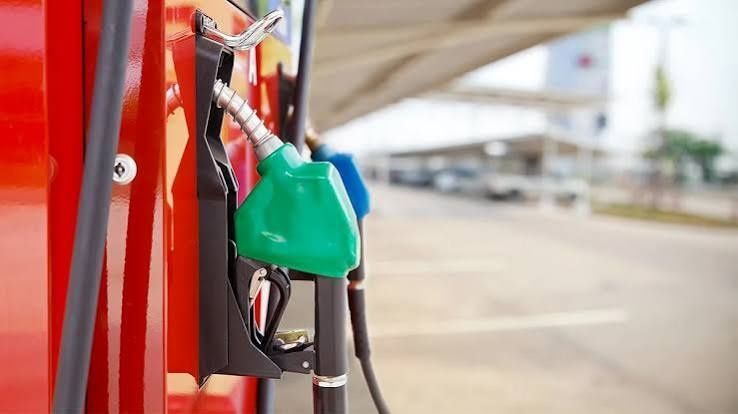
India's Prime Minister Narendra Modi administration is fighting a losing communications battle over its push toward ethanol-blended fuel, as consumers increasingly rebel against a policy that has already cost them both money and mobility options. The controversy crystallised this week when Attorney General R. Venkataramani appeared to undermine the government's own position by describing the E20 fuel programme—a mandatory 20 per cent ethanol blend—as an "experiment" during a court hearing. Although Venkataramani later claimed he had merely been referring to ethanol supply volumes rather than the policy itself, the damage to public confidence proved irreversible, with video footage of his courtroom remarks spreading rapidly across social media platforms and galvanising organised resistance.
The E20 mandate, which took effect last year, has emerged as one of the most contentious policy decisions facing Modi's government in India's third-largest automobile market. What might have been positioned as an environmentally progressive move has instead become a flashpoint for public grievance, revealing deep tensions between government objectives and consumer autonomy. Motorists across the country have discovered that they can no longer choose their fuel blend at petrol stations—the E20 option is now mandatory—leaving them no recourse but to adapt to a fuel that many claim delivers measurably worse performance. This loss of consumer choice, combined with real or perceived vehicle damage, has transformed the issue from a technical matter into a political liability.
The government's response has only amplified public frustration. On Friday, India's press office dismissed growing complaints as "wild claims" and accused critics of being manipulated by "rage bait," a tone-deaf response that fundamentally misunderstands the nature of the grievance. When citizens report declining fuel efficiency and mounting repair bills, dismissing these concerns as emotional manipulation rather than engaging substantively with the evidence serves only to deepen the credibility gap. By treating legitimate consumer feedback as a public relations problem rather than a policy implementation issue, the Modi administration has revealed the weakness in its communications strategy and, more troublingly, the absence of genuine mechanisms for gathering and responding to ground-level feedback.
Petroleum Minister Hardeep Singh Puri attempted damage control by comparing E20 fuel to its use in motor racing vehicles, suggesting that performance changes are normal and even desirable. "They use it in racing cars also, the acceleration increases. Mileage, yes, it may drop a little," Puri remarked, apparently unaware that this comparison fundamentally undermines the government's case. Most Indian motorists are not driving racing vehicles and do not prize acceleration over fuel economy; they are struggling with daily commutes on tight budgets, and losing kilometres per litre translates directly into higher household costs. This disconnect between ministerial rhetoric and ground-level reality exemplifies how the government has failed to anticipate or adequately address consumer concerns from the policy's inception.
The opposition has weaponised the controversy with surgical precision. Congress party state minister Priyank Kharge posted on X that the rollout lacked proper consultation and that the government cannot expect citizens to prove damage when the administration's own data remains incomplete. This argument strikes at the heart of the legitimacy question: if the government itself acknowledged that results would only emerge next year, on what basis was the policy implemented immediately? The accusation that the Modi administration rushed implementation without adequate pilot testing or transparency resonates with a growing segment of the public that feels like unwilling subjects in a large-scale experiment rather than citizens whose views matter in policy formulation.
Tehseen Poonawalla, a New Delhi-based socialite and Congress party supporter, has catalysed grassroots opposition by organising a Sunday protest in the capital, drawing interest from thousands of prospective participants. This mobilisation suggests that E20 has transcended being merely a technical policy debate and become a symbol of broader public alienation from top-down governance. When citizens feel that their material interests—their vehicles, their fuel costs, their repair bills—are being sacrificed without consultation or recourse, they mobilise. The fact that thousands are willing to protest on a Sunday indicates the depth of frustration and the potential for this issue to consume political oxygen in the lead-up to regional elections.
Social media has amplified individual grievances into a collective narrative of government insensitivity. Hundreds of motorists have documented their experiences online, posting videos and photographs showing alleged fuel-related vehicle damage. One particularly viral video, viewed over 500,000 times, features a motorist identified as Manish Kashyap standing in a workshop beside his damaged vehicle, lamenting that his car requires costly repairs after just two months of using E20 fuel. "I have spent a lot of money on this car and paid taxes only to find that after two months my car is not working," he says, capturing the emotional core of the public backlash: a sense that government policy has breached an implicit social contract between the state and taxpayers. Whether these claims are scientifically verifiable becomes almost secondary to the political fact that millions of Indians believe them and are prepared to act on that belief.
The government's stated rationale for E20—reducing carbon emissions, decreasing crude oil imports, and supporting agricultural incomes through increased ethanol feedstock demand—remains intellectually sound but politically obscured by the implementation debacle. These are legitimate policy objectives that align with global decarbonisation trends and India's strategic interest in reducing foreign exchange expenditure on oil imports. The agricultural support dimension also carries regional political significance, particularly in states where sugarcane farming constitutes a meaningful portion of rural income. However, these benefits remain abstract and temporally distant for most motorists, while the costs—worse fuel efficiency, potential vehicle wear, loss of consumer choice—are immediate and tangible.
For Malaysian observers, the E20 controversy offers instructive lessons about policy implementation in democratic societies with large vehicle-owning populations. Malaysia's own fuel policies, including historical subsidies and the movement toward market pricing, have generated significant public resistance when implementation appears rushed or poorly communicated. The Indian experience demonstrates that even well-intentioned environmental policies can become political liabilities if governments fail to invest adequately in public consultation, transparent cost-benefit analysis, and mechanisms for addressing legitimate consumer concerns. The Modi administration's attempt to contain the backlash through dismissal and reframing has backfired spectacularly, suggesting that in contemporary democratic societies, credible communication and genuine engagement matter as much as policy substance.
The E20 controversy also reflects deeper questions about the relationship between democratic legitimacy and technocratic decision-making in developing economies. The government appears to have relied on technocratic judgments about what constitutes good policy—lower emissions, reduced imports, agricultural support—without adequately weighing democratic preferences for consumer choice and personal economic interest. This tension between technocratic rationality and democratic responsiveness remains unresolved, and the Modi administration's handling of E20 suggests that dismissing public concerns as irrational or politically motivated only sharpens the conflict. As India navigates the transition toward cleaner fuels and more sustainable economic practices, policymakers will need to develop more sophisticated approaches to building public consent for changes that impose short-term costs on significant constituencies.
Moving forward, the Modi government faces a critical juncture. Either it must acknowledge legitimate public concerns and adjust the policy—perhaps by restoring consumer choice, investing in vehicle compatibility upgrades, or introducing transitional measures for affected motorists—or it must weather sustained political opposition and potential electoral consequences. The viral videos, the planned protests, and the mounting social media complaints suggest that the government cannot simply wait for this controversy to fade. By dismissing criticism as "rage bait" and refusing transparent engagement with consumer data, it has forfeited the opportunity to shape the narrative around E20. Instead, the narrative is being written by frustrated motorists, opposition politicians, and social media algorithms, all of which are amplifying grievance rather than generating consent. For a government that prides itself on communication effectiveness, the E20 backlash represents a significant strategic failure.

