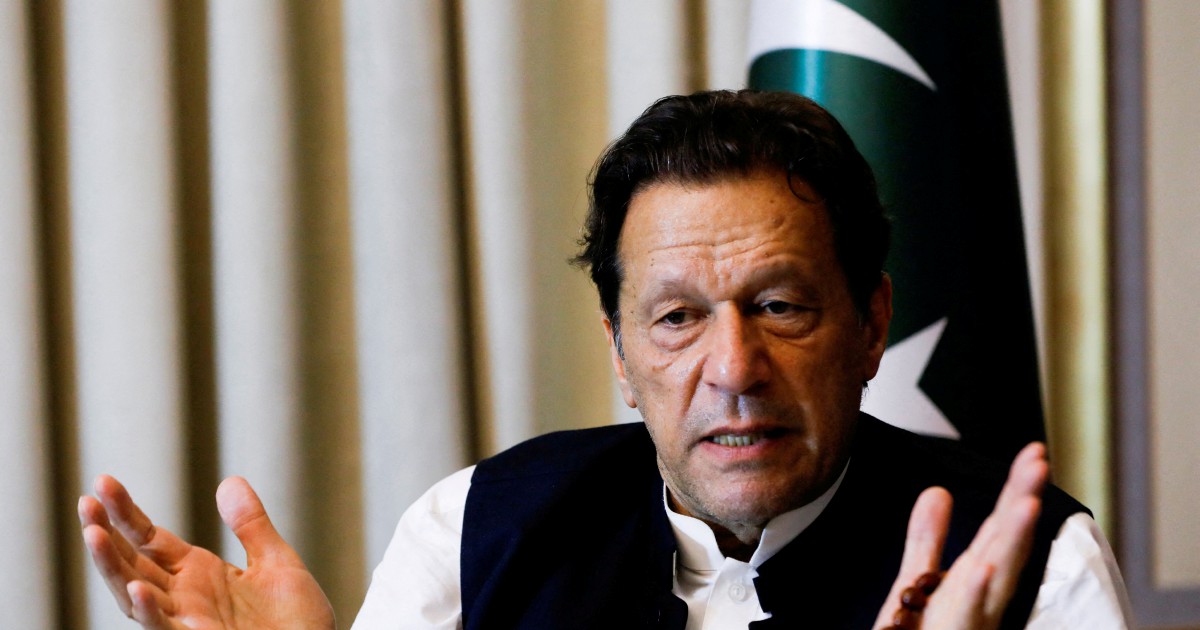
Former Pakistani Prime Minister Imran Khan has been returned to jail following a court-ordered medical examination conducted at a health facility in Islamabad, according to senior Pakistani officials who confirmed the development on Friday. The procedure, which took place amid escalating tensions surrounding his extended detention, signals the continuation of his imprisonment despite mounting international scrutiny and domestic political pressure surrounding his legal status.
Khan's return to custody marks another chapter in the former cricket star-turned-politician's tumultuous legal saga, which has gripped Pakistan for months. The medical examination itself appeared routine on the surface, yet the circumstances surrounding it underscore the deeply polarized environment in which Pakistan's justice system currently operates. The court's insistence on the health check and subsequent remand order reflects ongoing concerns about detainee welfare, though critics argue such measures have become procedurally disconnected from substantive legal progress.
The timing of these developments carries particular significance for Pakistan's political landscape. Khan has maintained his innocence against multiple charges, dismissing them as politically motivated persecution orchestrated by rivals seeking to neutralize his influence over the nation's volatile political terrain. His supporters view his detention as a watershed moment for judicial independence in Pakistan, where accusations of selective prosecution and executive interference in the courts have become increasingly commonplace.
For Malaysian observers and Southeast Asian policymakers, Khan's predicament illustrates broader concerns about institutional stability and rule of law in South Asian democracies. Pakistan's political history reveals recurring patterns where prominent opposition figures face arrest following changes in government, a dynamic that regional governments and civil society organizations continue to scrutinize. The case demonstrates how legal mechanisms can be weaponized during periods of political transition, raising questions about the durability of democratic norms in transitional environments.
The medical examination itself, while presented as a standard procedural requirement, underscores the controversial nature of Khan's detention conditions. Authorities assert such checks ensure compliance with international detention standards, yet human rights monitors have documented concerns about access to medical care and overall detention circumstances. The requirement for medical clearance before continued incarceration adds a layer of bureaucratic complexity that critics argue serves to legitimize extended custody rather than facilitate timely judicial resolution.
Pakistan's legal establishment faces mounting pressure from multiple directions regarding Khan's case. International human rights organizations have called for his immediate release, citing due process concerns and alleged violations of fair trial standards. Domestically, Khan's Pakistan Tehreek-e-Insaf (PTI) party continues organizing public demonstrations demanding his freedom, transforming his legal proceedings into flashpoints for broader civic discontent with government governance and institutional credibility.
The detention of Khan, once a transformative figure in Pakistani politics who led his party to electoral victory in 2018, represents a dramatic reversal of fortune that has paralyzed national politics. His imprisonment has fractured the ruling coalition and energized opposition movements, creating a political vacuum that complicates efforts toward institutional reform and economic stabilization. The international community, including major trading partners and traditional allies, has expressed concern about the implications for democratic governance and investment confidence in Pakistan.
From a regional perspective, Khan's situation resonates across Southeast Asia, where several countries grapple with similar tensions between executive authority and judicial independence. Malaysia's own experience with high-profile political detentions and legal proceedings demonstrates how such cases generate prolonged uncertainty that affects governance credibility and investor sentiment. The pattern observed in Pakistan—where legal processes become entangled with political conflict—presents cautionary lessons for maintaining institutional separation and ensuring transparent, expeditious judicial proceedings.
The court order mandating the medical examination and subsequent remand carries implications beyond Khan's individual circumstances. It demonstrates how procedural mechanisms, ostensibly designed for humanitarian purposes, can be embedded within prolonged detention frameworks. Pakistani civil society organizations have highlighted how such requirements, while superficially reasonable, can mask underlying delays in substantive legal adjudication and prevent timely resolution of cases involving prominent political figures.
Looking forward, Khan's case will likely continue commanding international attention as it intersects with Pakistan's broader trajectory regarding democratic consolidation and institutional reform. The manner in which authorities ultimately resolve his legal status will signal important messages about the durability of democratic principles within Pakistan's political system. For Southeast Asian governments and international observers monitoring South Asian developments, the case exemplifies the ongoing struggle between rule of law aspirations and political reality in jurisdictions navigating complex power transitions.

