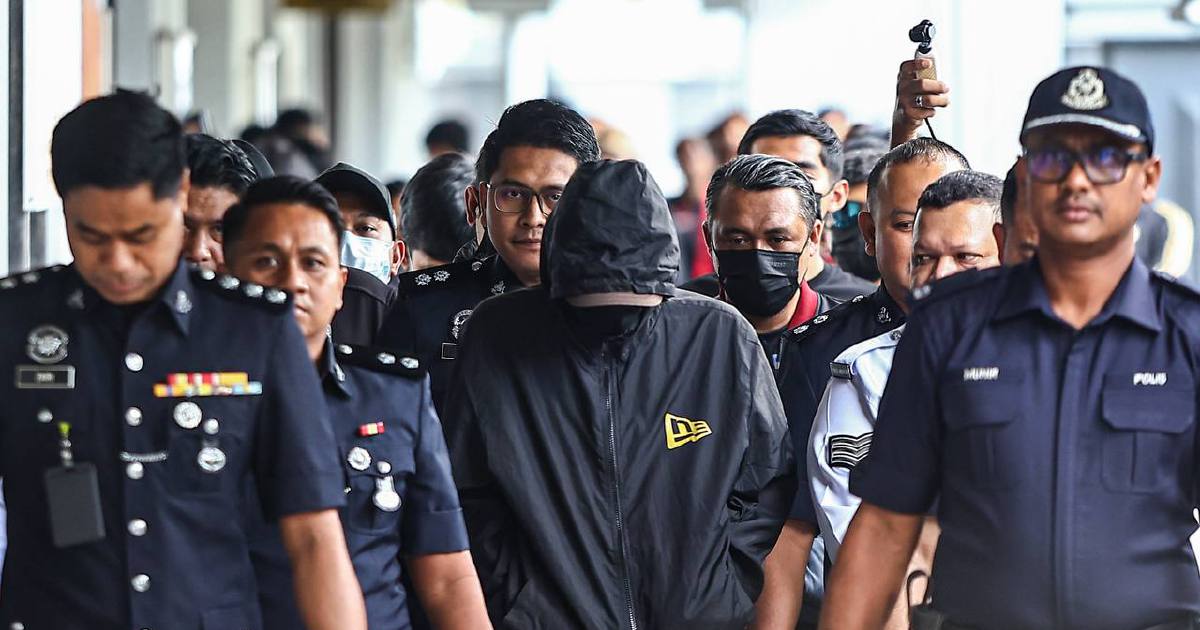
An Immigration Department lorry driver appeared before Kuala Lumpur Magistrates' Court today to enter a not guilty plea against five charges stemming from a catastrophic collision at Maju Junction that cost three lives. The case has drawn attention to safety concerns surrounding heavy vehicles operated by government agencies on busy urban thoroughfares, with the incident occurring at one of the capital's busiest intersection points during what would have been peak traffic hours.
The charges against the driver include three counts of causing death by reckless or dangerous driving—a serious offence under Malaysian traffic law that carries substantial penalties upon conviction. These charges relate specifically to the deaths of three members of a single family killed in yesterday's tragedy. The remaining two charges relate to additional circumstances of the crash, though the court filings do not provide immediate detail on their precise nature.
The Maju Junction intersection, where the collision occurred, serves as a critical confluence of major arterial routes serving both commuter traffic and commercial vehicle movements across the Klang Valley. The location's prominence in the city's transport network means such incidents invariably raise questions about intersection design, traffic management protocols, and whether adequate safeguards exist to prevent heavy vehicle accidents in high-density traffic zones.
Government vehicles, including those operated by the Immigration Department, regularly navigate Kuala Lumpur's congested roads while performing official duties. The involvement of an Immigration Department lorry in this fatal crash underscores how even routine government operations can result in catastrophic outcomes when safety protocols are not rigorously maintained. Such incidents typically prompt internal reviews by the relevant departments concerning vehicle maintenance standards, driver training requirements, and compliance with road safety regulations.
The judicial process now ahead will require the prosecution to establish the facts surrounding the collision, including vehicle speeds, road and weather conditions, visibility factors, and whether any mechanical failures contributed to the accident. The defence will likely examine whether the driver exercised reasonable care and whether circumstances beyond the operator's control played a contributory role. The magistrate will eventually determine whether sufficient evidence exists to proceed to trial in the high court, which would handle sentencing if a conviction is secured.
Family members affected by the tragedy face a prolonged legal process while simultaneously grieving their losses. In Malaysian accident cases involving multiple fatalities, civil proceedings for compensation often run parallel to criminal proceedings, adding further complexity and expense for families seeking redress. The three-death toll makes this among the more serious multi-fatality accidents occurring in the capital in recent months.
This incident arrives amid ongoing national discourse about road safety standards and driver behaviour, particularly concerning commercial and heavy vehicles. Statistics consistently show that accidents involving lorries and commercial vehicles produce more severe consequences than collisions between passenger vehicles, reflecting both the mass and momentum involved in such crashes. The presence of a government driver in this case adds a layer of public interest, as it raises accountability questions for state-operated transport assets.
The not guilty plea suggests the driver's legal team will contest the charges rather than seek a negotiated outcome, indicating the case may proceed to full trial with comprehensive examination of evidence. This process typically extends over several months, during which accident reconstruction experts may be called to provide technical analysis of how the collision occurred. Witnesses to the crash will likely testify regarding visibility, traffic conditions, and the apparent cause of the initial loss of vehicle control.
For road safety advocates in Malaysia, this case exemplifies broader concerns about preventing high-consequence accidents in urban settings where pedestrian exposure and bystander risk remain significant. The concentration of dense traffic, multiple intersection entry points, and varied vehicle types creates an inherently challenging environment for accident prevention. Improved enforcement of speed restrictions in high-risk zones and enhanced driver training standards have been proposed as countermeasures in various safety studies.
The court's handling of this case will be closely observed by civil society organisations focused on road safety, as outcomes in high-profile accident prosecutions influence both public perception of traffic law enforcement and the deterrent effect of penalties on driver behaviour. Beyond the immediate parties involved, the judicial determination of culpability in this matter carries implications for how government agencies assess their own vehicle safety protocols and driver accountability frameworks.
Subsequent court dates will be scheduled as the magistrate's court processes the case through preliminary stages. Should the magistrate determine sufficient evidence exists for trial, the case would transition to the high court, where more substantial penalties become available if the driver is ultimately convicted. Until then, questions surrounding the precise circumstances of the collision and the adequacy of intersection safety measures remain matters of legitimate public concern in an accident-prone capital city.

