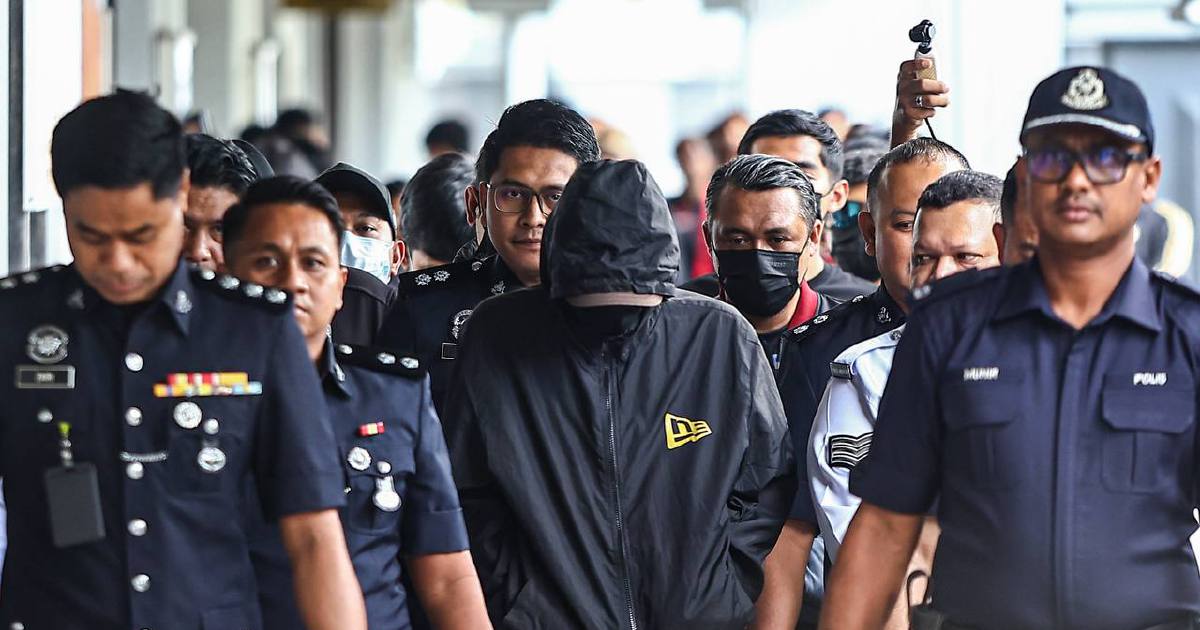
A driver employed by Malaysia's Immigration Department appeared in magistrates' court to enter a plea on five charges brought against him following a fatal traffic collision that claimed the lives of three family members at the Maju Junction intersection on Jalan Sultan Ismail. The lorry driver claimed trial to all charges, setting in motion proceedings that will examine the circumstances leading to what has become another tragic reminder of road safety hazards in the nation's busier thoroughfares.
The incident occurred at one of Kuala Lumpur's key transport arteries, where traffic volumes are consistently high and the convergence of multiple road users creates an environment where even momentary lapses in attention can prove catastrophic. The Maju Junction location sits within a busy commercial and residential zone where the interaction between heavy vehicles and passenger cars demands heightened alertness from all road users. The fatal nature of yesterday's collision underscores the particular vulnerability of passenger vehicles when struck by lorries, which carry substantially greater mass and momentum.
Three members of a single family perished in the collision, transforming a routine traffic incident into a personal tragedy with rippling consequences for relatives, community networks, and the wider discussion around road safety standards. Fatalities involving entire family units invariably attract greater public and official attention, as such losses represent the compounding nature of preventable deaths and the incomplete safety frameworks that permit them. The convergence of three deaths in a single impact heightens scrutiny on both driver competency and vehicle maintenance standards within government agencies.
The specific charges lodged against the Immigration Department driver focus on causing death through reckless or dangerous driving, a criminal standard that requires prosecutors to demonstrate a significant departure from careful operation or a deliberate disregard for road safety. This legal threshold distinguishes such cases from simple traffic violations, acknowledging that fatal road collisions resulting from seriously negligent conduct deserve treatment as serious criminal matters rather than administrative infractions. The three death charges reflect the seriousness with which Malaysian authorities treat multiple fatalities in singular incidents.
Beyond the three death charges, the driver faces two additional charges, bringing the total to five. These supplementary charges likely encompass related offences such as rash or negligent acts causing injury or property damage, extending the scope of accountability beyond the deaths alone. The multi-charge approach allows courts to consider the full scope of harm and negligence involved in the incident, providing prosecutors with multiple pathways to secure convictions and enabling sentencing that reflects the comprehensive nature of the driver's conduct.
The decision to claim trial rather than accept a guilty plea means the case will proceed to a full hearing, during which evidence will be presented regarding the circumstances immediately preceding the collision. Investigators will likely present testimony concerning vehicle condition, driver behaviour, witness observations, and traffic conditions at the moment of impact. The trial process provides opportunity for scrutiny of whether the lorry exhibited mechanical defects, whether the driver displayed signs of fatigue or impairment, and whether road or visibility conditions contributed to the collision.
Employment within government agencies, including the Immigration Department, places particular expectations on professional standards and conduct. Public servants operating heavy vehicles carry explicit responsibility for safe operation, and incidents resulting in fatalities invite wider examination of recruitment standards, training protocols, and ongoing supervision mechanisms. Questions will likely emerge regarding the driver's experience, prior incident history, and whether departmental procedures adequately emphasise safety consciousness among vehicle operators.
The incident contributes to Malaysia's ongoing road safety challenge, where annual fatalities remain among the region's highest relative to vehicle population. The Jalan Sultan Ismail corridor, serving as a major urban arterial, experiences consistent accident clusters where heavy traffic volumes and mixed vehicle types create collision risk. Infrastructure improvements, enforcement operations, and driver education initiatives around such locations remain subjects of policy discussion among transport and public safety authorities.
Insurance and liability questions will emerge alongside the criminal proceedings, as the surviving family members will seek compensation through civil channels. The government's role as employer of the at-fault driver creates distinct legal considerations compared to privately-operated commercial vehicles, potentially involving state liability frameworks and compensation mechanisms distinct from standard insurance recovery.
The magistrate's court proceedings represent the initial stage of judicial examination into the incident. Should the driver be convicted of the most serious charges—causing death by dangerous driving—sentencing could encompass substantial imprisonment, reflecting Malaysian courts' approach to fatal traffic offences. Outcomes in this case may influence ongoing policy discussions regarding heavy vehicle operation standards in the federal capital and the adequacy of current safety frameworks protecting road users in high-traffic urban corridors.
Beyond individual accountability, this collision invites examination of systemic factors: whether government agencies adequately maintain fleet vehicles, whether driver training standards require enhancement, and whether urban road design adequately separates vulnerable users from heavy traffic streams. The three-member family whose lives were lost in the Maju Junction collision represent preventable tragedies, their deaths highlighting the ongoing need for comprehensive approaches to road safety that engage infrastructure planning, vehicle maintenance, driver conduct, and enforcement simultaneously.

