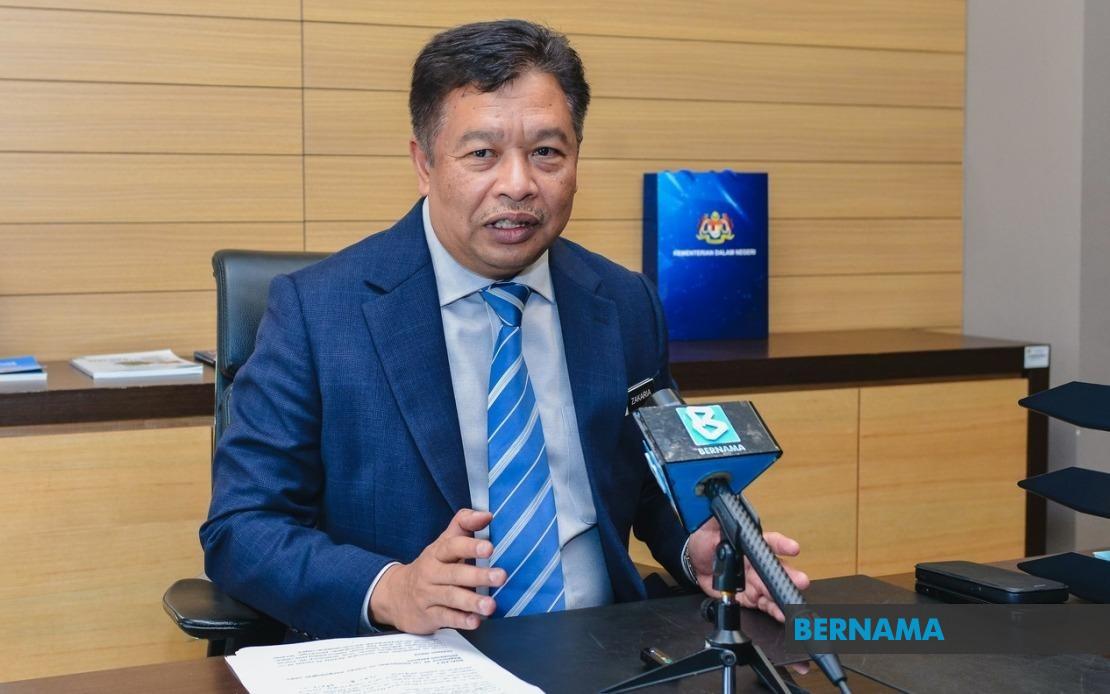
With the Johor State Election just days away, the Immigration Department has shifted into heightened alert status to manage the anticipated surge of voters crossing from Singapore back into Malaysia for the July 11 polling day. Datuk Zakaria Shaaban, the department's director-general, confirmed that intensive preparations are underway at the country's primary entry points, with particular focus on the two major complexes that connect Johor to the city-state.
The Sultan Iskandar Building at JB Sentral and the Sultan Abu Bakar Complex in Tanjung Kupang represent critical infrastructure nodes for this cross-border movement. These facilities, linked to Singapore via the Malaysia-Singapore Second Link infrastructure, process approximately 300,000 individuals daily during normal operations. On a polling day when eligible voters are mobilising across the Strait, the department anticipates volumes that will test the system's capacity, necessitating advance contingency arrangements and staffing adjustments.
Zakaria detailed the operational strategy during remarks in Johor Bahru, emphasising that existing inspection infrastructure remains stable and responsive. The Immigration Department is maintaining its current technological framework rather than implementing new systems that could introduce untested variables during this critical period. This conservative approach reflects an institutional preference for reliability over innovation when operational continuity is paramount.
The technical contingency planning assumes particular importance given that system failures at these checkpoints would directly impede the democratic participation of Malaysians working in Singapore. The department's round-the-clock monitoring protocols enable rapid identification of any performance degradation, with trained technical teams positioned to troubleshoot issues in real time. Should the automated inspection infrastructure experience downtime, manual processing procedures are pre-positioned to sustain throughput without halting border operations entirely.
Home Minister Datuk Seri Saifuddin Nasution Ismail has publicly committed his ministry to facilitating seamless travel for the transnational voting population. This political commitment translates operationally into comprehensive mitigation strategies that extend beyond immigration alone, encompassing customs and quarantine procedures that integrate with the border crossing experience. The government's framing of voter mobility as a civic responsibility underscores the legitimacy value attached to enabling electoral participation across diaspora communities.
The Johor election itself presents a substantive political contest with 172 candidates vying for 56 state seats across the 16th iteration of the state assembly electoral cycle. Early voting commenced on July 7, with the main polling day scheduled for July 11, providing a compressed timeline within which the immigration apparatus must accommodate dual-flow border management. The election's competitive intensity—evident from the candidate-to-seat ratio—suggests robust engagement that could translate to elevated voter participation including from the Singapore-based electorate.
The Malaysia-Singapore border represents a unique political-administrative space where democratic participation obligations intersect with sovereignty enforcement mechanisms. Unlike purely domestic polling, this election involves mobilising voters who have temporarily relocated across an international boundary for employment, family, or other considerations. The immigration department's preparatory efforts acknowledge this complexity, positioning border management not merely as security protocol but as democratic infrastructure supporting electoral legitimacy.
For Malaysian voters based in Singapore, accessing polling stations requires navigation of multiple jurisdictional systems. The streamlined border crossing experience that the department is engineering becomes instrumental in reducing transaction costs—both logistical and financial—associated with voting. A labour-intensive or unpredictable border crossing experience could discourage participation, particularly among voters facing time constraints or travel cost considerations. The government's assurances thus carry material implications for democratic inclusivity.
The preparatory measures also reflect institutional learning from previous cross-border electoral mobilisations. Border management during electoral cycles tests infrastructure capacity while simultaneously maintaining routine customs and immigration functions. The department's decision to avoid system upgrades during this period suggests past experience with implementation risks and unforeseen complications that could compromise operational stability during heightened demand periods.
Looking forward, the immigration infrastructure stress test represented by the Johor election provides valuable data about cross-border democratic participation patterns. As Malaysia's economy sustains significant population segments working across the Straits, understanding voter behaviour and infrastructure capacity becomes relevant for future electoral planning. The July 11 polling day will effectively measure both system resilience and the magnitude of transnational voting participation.

