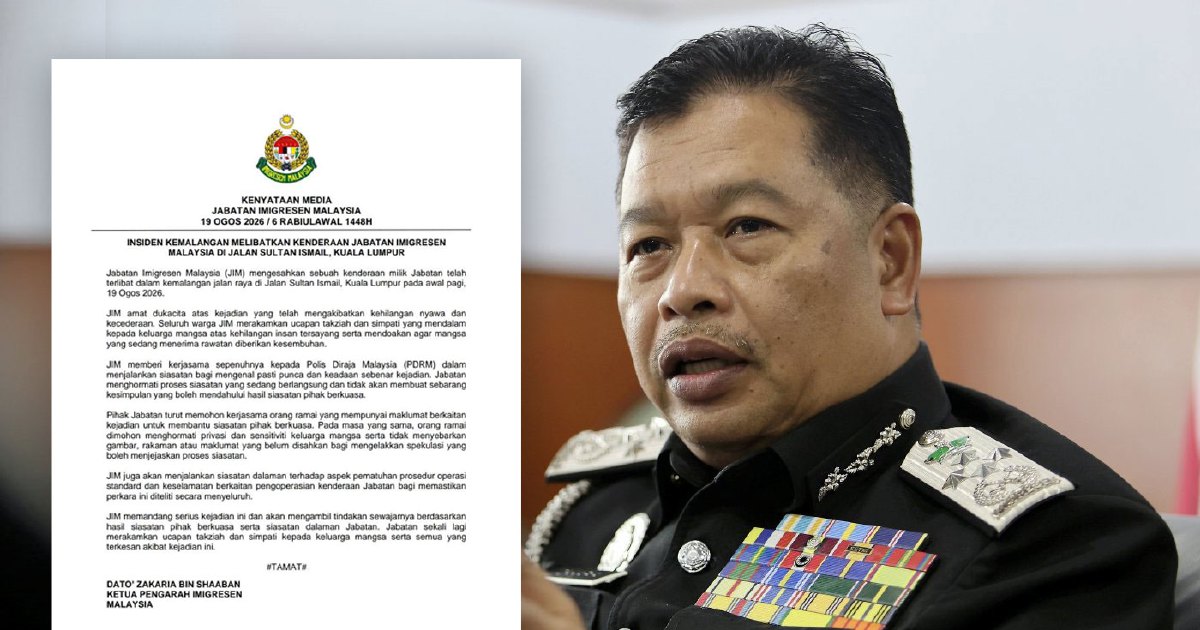
The Immigration Department is undertaking a comprehensive internal review following a fatal collision involving one of its vehicles on Jalan Sultan Ismail in the early hours of today. The accident has prompted the department to scrutinise its adherence to established standard operating procedures and the adequacy of safety measures that govern its fleet operations across the capital.
The incident marks a significant moment for Malaysia's immigration enforcement apparatus, raising questions about vehicle maintenance protocols, driver training standards, and compliance frameworks within one of the country's key government agencies. The timing of this review comes as traffic safety on Kuala Lumpur's major thoroughfares has become an increasingly pressing concern for urban residents and road safety advocates.
Jalan Sultan Ismail, a prominent arterial route through the heart of Kuala Lumpur's business district, has historically witnessed considerable vehicular traffic, particularly during peak hours. The location of this accident on a well-travelled road adds another layer of concern regarding the visibility and predictability of government vehicle movements along congested urban corridors.
The Internal Affairs and Compliance Division of the Immigration Department will lead the investigation, examining whether operational guidelines were properly followed prior to and during the incident. This includes scrutinising driver qualifications, vehicle inspection schedules, journey planning procedures, and the deployment of safety equipment. The department's focus on SOP compliance suggests officials are considering whether administrative lapses may have contributed to the accident.
Safety protocols within government agencies have come under increased public and parliamentary scrutiny in recent years. For the Immigration Department, which operates multiple vehicles carrying personnel across Kuala Lumpur and surrounding areas daily, establishing robust safety frameworks is critical to protecting both staff and the public. The investigation will likely result in recommendations for enhanced training or procedural modifications.
For Malaysian drivers and commuters, incidents involving government vehicles underscore the universal importance of road safety regardless of vehicle ownership or operator status. While the Immigration Department operates under specific regulatory frameworks, the accident serves as a reminder that all road users—public or private sector—must maintain the highest standards of vehicle operation and maintenance.
The internal probe represents standard practice when government agencies experience significant incidents. By conducting thorough investigations and publishing findings, departments can identify systemic gaps and implement corrective measures before similar accidents occur. This approach has become increasingly common across Southeast Asian governments attempting to modernise their oversight mechanisms and demonstrate accountability.
Stakeholders including immigration staff, their families, and the general public will be watching for transparency in how the department handles its investigation and what recommendations emerge. The outcome may influence how other Malaysian government bodies evaluate their own vehicle safety protocols and operational guidelines.
The Immigration Department's willingness to initiate an internal investigation promptly suggests an institutional commitment to addressing potential weaknesses in its systems. However, the effectiveness of this review will ultimately depend on the thoroughness of the examination and the willingness of the department to implement substantive changes based on findings.
For the broader Southeast Asian region, where rapid urbanisation and increasing vehicular traffic present ongoing challenges, the lessons from this investigation may have relevance. Malaysia's experience in examining government agency compliance with safety standards could inform regional discussions about best practices in fleet management and occupational safety.
As the investigation proceeds, the Immigration Department faces the dual challenge of maintaining operational continuity while conducting a rigorous internal review. The department will need to balance these imperatives while ensuring that identified gaps receive appropriate remedial attention. Preliminary findings may inform decisions about whether additional resources or training programmes are required across the department's vehicle operations.
The public disclosure of investigation outcomes will be crucial in rebuilding confidence in the Immigration Department's commitment to safe operations. By transparently addressing the findings and communicating corrective actions, the department can demonstrate that it takes road safety and procedural compliance as seriously as it does its core immigration enforcement responsibilities.

