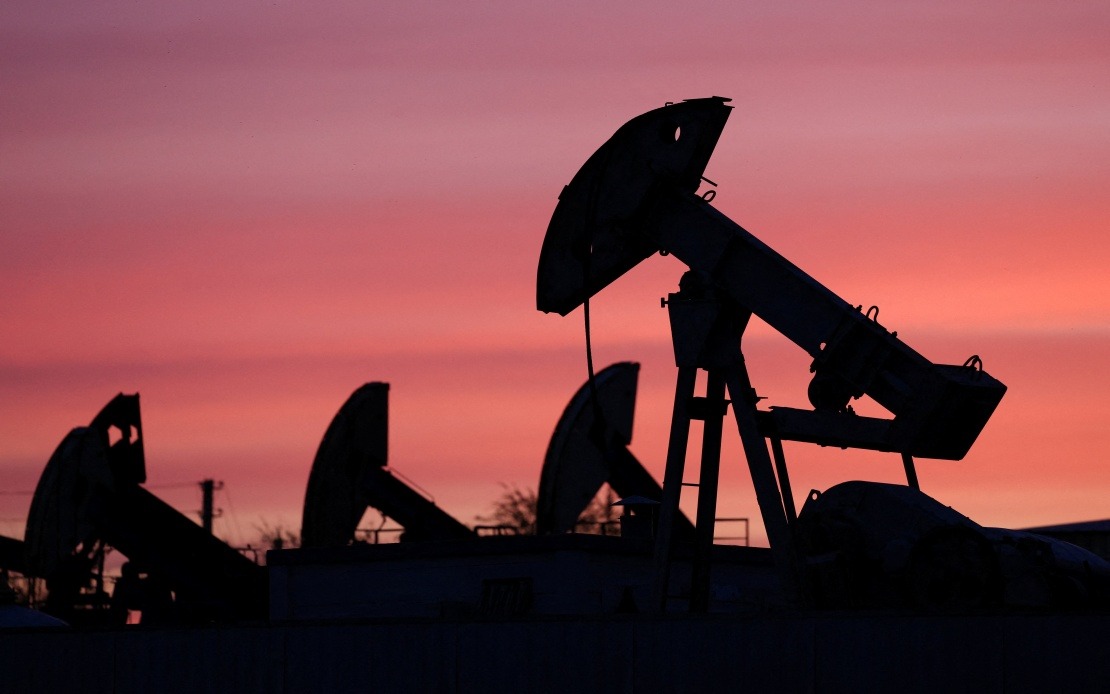
The International Energy Agency released revised projections on Friday that signal a modest but noteworthy shift in anticipated global oil market conditions for 2026. According to the latest assessment, worldwide oil demand is now forecast to reach 103.463 million barrels per day—an increase from the 103.292 million barrels per day projected in the agency's previous month's report. This upgrade reflects IEA's reassessment of how petroleum consumption will evolve over the coming years as economic outlooks and energy transition pathways continue to develop across major consuming regions.
The adjustment in demand expectations, while appearing marginal in absolute terms, carries significance when viewed alongside concurrent revisions to supply-side forecasts. The IEA simultaneously increased its 2026 production outlook by 0.22 million barrels per day to reach 102.6 million barrels daily—a meaningful revision from the prior estimate of 102.37 million barrels per day. This upward movement in production capacity expectations reflects confidence that supply-side investments and technological developments will proceed largely as anticipated by the agency's analysts.
For Malaysian policymakers and energy stakeholders, these updated forecasts carry implications across multiple dimensions of national and regional energy security. Malaysia, as both an oil and liquefied natural gas producer, maintains strategic interest in global crude price dynamics and supply-demand equilibrium. The IEA's revised outlook suggests a tightening relationship between supply and demand growth, with production forecasted to fall short of demand by roughly 0.863 million barrels per day in 2026. Such a supply-demand gap underscores the continued relevance of reliable producers and the premium placed on stable, diversified energy portfolios.
The current year's demand trajectory offers additional context for understanding medium-term trends. The IEA now anticipates that global oil demand will decline by 1.047 million barrels per day in 2025, a more modest contraction than the 1.118 million barrels per day projected a month earlier. This represents a reduction of 71,000 barrels per day from the previous forecast, indicating that the agency has modestly revised upward its assessment of near-term petroleum consumption despite broader discussions surrounding energy transition and electrification.
These revisions reflect the complex interplay between structural forces reshaping global energy markets and near-term demand resilience. On one hand, the continuing adoption of renewable energy technologies, electric vehicle proliferation, and improved energy efficiency standards are expected to weigh on conventional oil demand. On the other hand, robust economic activity in developing economies, expanding petrochemical demand, and aviation sector recovery continue to support petroleum consumption growth in absolute terms. The IEA's latest forecasts suggest these competing forces will produce a gradual decline in oil demand growth rates rather than absolute demand destruction in the near to medium term.
Regional considerations add further nuance to these global projections. Southeast Asian economies, including Malaysia, operate within demand patterns shaped by rapid urbanisation, expanding middle-class transportation needs, and industrial development. Petroleum product consumption in the region has demonstrated resilience and continued growth despite global energy transition narratives. The IEA's refined forecasts acknowledge this reality, suggesting that demand-side pressures in Asia-Pacific will substantially offset declines in more mature developed economies during the projection period.
From a production perspective, the upgraded 2026 outlook reflects expectations regarding investment flows to petroleum development projects. Major producing regions, including those in the Middle East, North America, and increasingly off-shore operations in Southeast Asia, are anticipated to maintain or expand output capacity. The IEA's confidence in production growth, while modest in percentage terms, indicates that investment cycles and project completion timelines remain broadly aligned with previous expectations despite geopolitical uncertainties and energy transition discussions affecting long-term investment decisions.
The supply-demand balance implied in these forecasts carries consequences for international petroleum pricing and, by extension, fiscal revenues for oil-exporting nations. A tight supply-demand balance typically supports crude prices at levels that enable capital investment recovery for both conventional and emerging production technologies. For Malaysia's energy sector, maintaining robust exploration and production economics remains essential for sustaining current output levels and funding associated infrastructure development.
Looking forward, the IEA's revisions demonstrate that energy market forecasting remains a dynamic exercise, subject to regular adjustment as new data emerges and underlying assumptions shift. The modest magnitude of these latest changes—typically measured in hundreds of thousands of barrels daily—reflects the inherent uncertainty in long-range projections while affirming the agency's previous analytical frameworks. Market participants, including Malaysian energy companies and policymakers, will monitor subsequent quarterly updates for signals regarding whether these revised trajectories prove accurate or require further adjustment.
The importance of these forecasts extends beyond crude oil markets to encompass broader energy security and economic policy considerations. As Southeast Asia and Malaysia navigate simultaneous imperatives around energy access, economic development, and environmental stewardship, understanding global oil market dynamics remains foundational. The IEA's latest assessment suggests a world where petroleum remains a significant energy source through the 2020s, even as its growth trajectory moderates and renewable alternatives expand their share of global energy supply.

