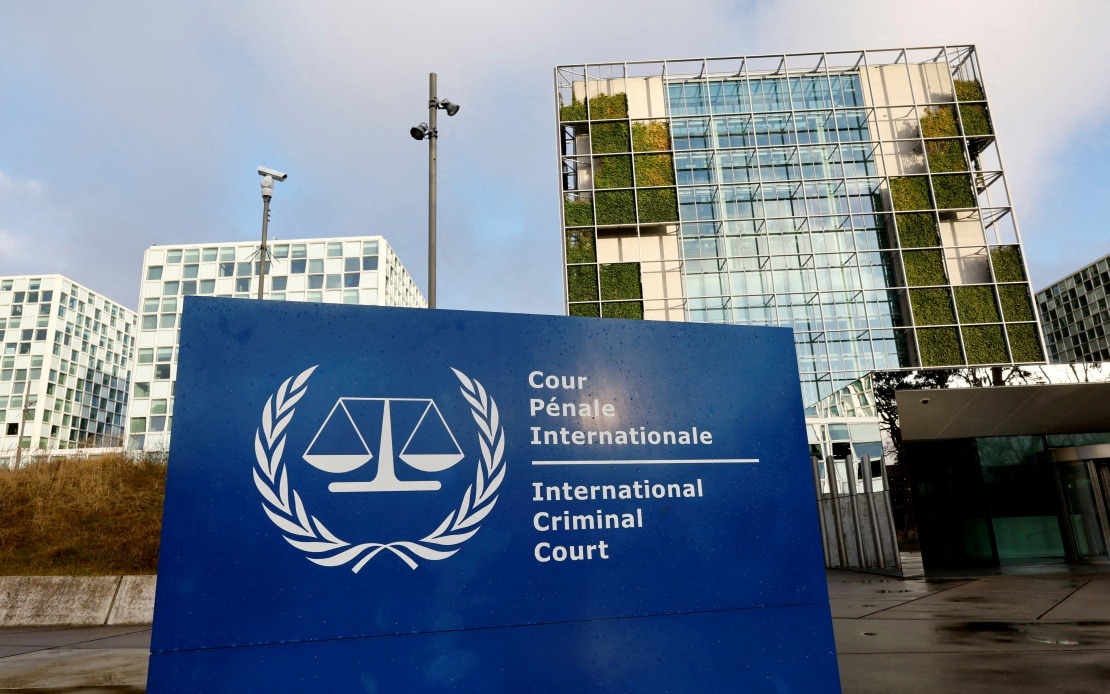
The International Criminal Court moved swiftly to rebuke the United States after Washington imposed additional sanctions targeting the institution's leadership and personnel. The new measures, announced on Wednesday, represent an escalation in tensions between Washington and The Hague-based tribunal, which has increasingly found itself at odds with American foreign policy objectives. The sanctions now ensnare ICC President Tomoko Akane of Japan and Abdoulaye Seye of Senegal, a senior trial lawyer within the Office of the Prosecutor, marking a broadening of Washington's financial and diplomatic pressure on the court.
The cumulative effect of successive rounds of American sanctions has grown considerably, with the ICC now finding nine of its 18 judges, both deputy prosecutors, a former prosecutor, and one staff member all designated under US restrictions. This concentration of sanctions across multiple levels of the court's judicial and prosecutorial apparatus suggests a systematic effort to constrain the institution's capacity to function, rather than targeting isolated individuals for specific actions. For observers of international law, the pattern raises serious questions about whether Washington is attempting to disable the court's operations altogether.
The ICC responded with unusual sharpness in its official statement, employing the phrase "flagrant attack" to characterise American actions and emphasising that such sanctions strike at the independence of an impartial judicial institution. The court reiterated that it operates pursuant to a mandate conferred by its member states, a diverse coalition spanning multiple regions and reflecting a broad international consensus on the need for accountability mechanisms for grave crimes. This appeal to the court's multilateral legitimacy underscores a fundamental tension: the ICC exists precisely because the international community determined that some crimes warrant justice regardless of geopolitical considerations.
At the heart of this dispute lies a competing vision of how international justice should operate. The United States has objected strenuously to ICC investigations that touch upon American interests or those of close allies, particularly regarding Israel's conduct in Gaza and the West Bank. The court maintains that its mandate requires impartial investigation of all allegations without regard to the geopolitical weight of the nations involved. This collision between American exceptionalism and the principle of equal accountability before international law has grown more acute as the court pursues investigations that Washington views as politically motivated or beyond the court's proper jurisdiction.
The ICC's statement articulated a concern that extends beyond the immediate dispute with Washington. When sanctioning judges and prosecutors for carrying out their official duties, the court argued, states undermine the rule of law itself and place the broader international legal order at risk. This argument possesses real force in the context of global governance, where the willingness of powerful states to respect institutions they do not control has always been fragile. If the United States—the world's dominant military and economic power—can unilaterally punish officials of a multilateral court, the precedent invites other states to do likewise, potentially hollowing out international judicial institutions altogether.
An element of the ICC's statement particularly relevant to vulnerable populations is its warning about victims' access to justice. The court noted that sanctions and threats targeting its operations inhibit the ability of survivors and families of victims to pursue accountability when all domestic legal avenues have been exhausted. In situations of mass atrocity where national courts are either compromised, incapacitated, or unwilling to act, the ICC serves as a court of last resort. Constraining the court's functioning therefore amounts to foreclosing justice for those with nowhere else to turn—a consideration that carries moral weight even for those sceptical of some of the court's decisions.
The rebuttal also highlighted support from member states, civil society organisations, and others committed to international justice principles. This coalition building is strategically important for the ICC, which lacks enforcement mechanisms and relies ultimately on the voluntary cooperation of states to arrest and surrender indictees. By rallying diplomatic and institutional support, the court signals that it retains legitimacy in the eyes of much of the international community, even if Washington has withdrawn its backing. For Malaysia and other Southeast Asian nations, this dynamic presents a question about where to position themselves in a contest between a superpower and an international institution.
The underlying structural problem is that the Rome Statute, which established the ICC, does not anticipate how a major power might respond if the court investigates matters that power considers beyond its jurisdiction or politically untenable. The United States itself has never ratified the treaty and long maintained the position that Americans should not be subject to foreign justice systems. This fundamental disagreement about the legitimacy of international criminal justice, unresolved since the court's founding in 2002, has now erupted into open sanctions warfare. The question of whether international institutions can function when great powers withdraw their support and actively obstruct their operations remains unresolved.
For the broader Asia-Pacific region, the confrontation carries implications worth monitoring. The ICC has expanded its reach into situations affecting the region, including investigations into the Philippines and potential inquiries into other states. If the United States successfully constrains the court's operations through economic coercion, other powers may feel emboldened to do the same regarding investigations they oppose. Conversely, if the court survives this pressure and continues functioning effectively, it might establish precedent that multilateral institutions can resist superpower pressure when backed by sufficient international support. Malaysia's position within this evolving dynamic, as a nation with both historical UN commitment and growing strategic alignment with China, deserves careful consideration.

