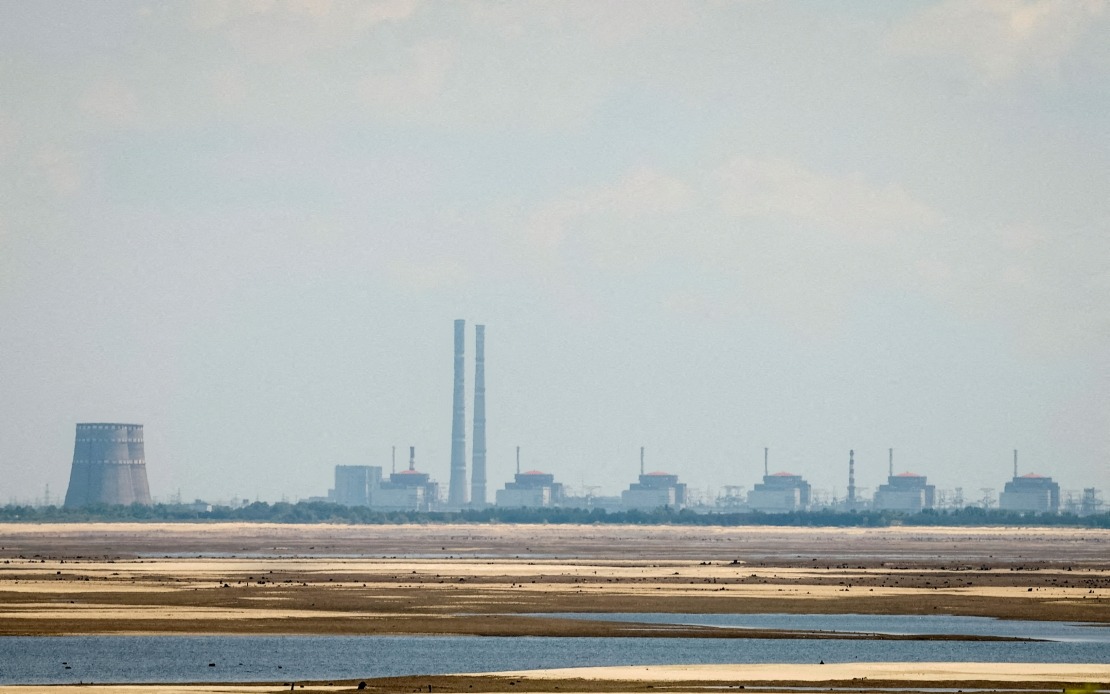
The International Atomic Energy Agency (IAEA) has raised the alarm over deteriorating conditions at Europe's largest nuclear facility following yet another power disruption at the Zaporizhzhia Nuclear Power Plant in Ukraine. The facility lost its off-site electrical supply on Friday after military activity damaged transmission infrastructure, marking the 21st such incident since the conflict intensified. The recurrence of these outages has prompted IAEA Director General Rafael Grossi to warn that nuclear safety at the plant has become dangerously precarious, demanding immediate military de-escalation to avert a potential catastrophe.
The specific incident involved the disconnection of the 330 kV Ferosplavna-1 transmission line, which supplies critical power to the installation. According to IAEA personnel stationed on-site, military operations in the vicinity triggered electrical protection systems designed to safeguard the transmission infrastructure, causing an automatic shutdown of the external power supply. This mechanism, while intended as a safety feature for the electrical grid itself, leaves the nuclear facility dependent on backup systems within seconds. The pattern of repeated disruptions underscores how the ongoing conflict has transformed the plant into a site of persistent vulnerability rather than stable operation.
When external power is lost, the facility's emergency diesel generators immediately engage to maintain cooling systems for the nuclear reactors and sustain other essential safety functions. These backup systems have proven reliable thus far, preventing the kind of meltdown scenario that haunts nuclear safety experts. However, relying repeatedly on backup power generation is not a sustainable long-term strategy for managing a nuclear complex of this magnitude. Each activation of emergency systems represents an added stress on equipment that was designed for occasional use during genuine emergencies, not for routine substitution of regular power supplies.
The Zaporizhzhia plant, which commands substantial strategic significance both as critical infrastructure and as a potential flashpoint in the broader conflict, has faced continuous disruptions since Russia's military operations began and accelerated in 2022. The facility normally supplies electricity to millions of households across Ukraine and surrounding regions. Every power loss introduces uncertainty into the plant's operational capacity and raises questions about how long backup systems can sustain their required functions if external connectivity is not restored. The sheer frequency of these incidents—21 times in roughly 18 months—indicates a pattern rather than isolated occurrences.
Rafael Grossi's statements emphasize that the deteriorating situation demands a fundamental shift in how the conflict's belligerents approach the facility. The IAEA chief has repeatedly called for military restraint and demilitarization of the plant, arguing that the nuclear risks transcend the immediate military considerations of either side. An uncontrolled nuclear incident at Zaporizhzhia could have consequences extending far beyond Ukraine's borders, potentially affecting populated regions across Eastern Europe and beyond. This transnational dimension of nuclear hazards creates obligations that supersede conventional military strategy.
For regional observers including those in Southeast Asia, the Zaporizhzhia situation serves as a sobering reminder of how military conflicts can transform critical infrastructure into zones of acute danger. The incident pattern also highlights the vulnerability of large nuclear facilities located in active conflict zones, a concern that reverberates globally as nations consider their own energy security arrangements. The inability of the international community to ensure protection for such strategically significant infrastructure raises broader questions about the adequacy of existing international mechanisms for safeguarding civilian nuclear facilities during armed conflicts.
The reliance on emergency backup systems reveals another layer of concern: the long-term sustainability of maintenance and fuel supply chains for these generators. Diesel generators require regular servicing, parts replacement, and fuel replenishment—activities that become increasingly difficult when military operations disrupt transportation networks and supply routes. A prolonged conflict means that even if backup generators function today, ensuring their continued operation months or years hence becomes progressively more challenging. The IAEA's monitoring role becomes ever more critical as conditions deteriorate.
The incident also underscores the interconnected nature of modern infrastructure vulnerability. The transmission lines connecting Zaporizhzhia to the broader grid are themselves susceptible to damage from military activity, whether deliberate targeting or incidental spillover from combat operations. Repairing such infrastructure requires security and stability that the conflict environment cannot guarantee. This creates a catch-22 situation where restoring external power supply—the preferred solution to reducing reliance on emergency systems—becomes hampered by the same military activity that necessitates that restoration.
International diplomatic efforts to establish humanitarian corridors or protective zones around the Zaporizhzhia plant have yielded limited tangible results despite IAEA advocacy and United Nations involvement. The plant's location within contested territory and its proximity to front-line operations means that even nominal agreements for demilitarization remain difficult to enforce and verify. The frequency of power losses suggests that either such agreements are not being honored, or that the geographic proximity of military operations to the facility makes accidental infrastructure damage inevitable despite de-escalation intentions.
Looking forward, the trajectory of events at Zaporizhzhia points toward an escalating crisis unless circumstances change fundamentally. Each successive power loss increases the probability that backup systems will eventually fail, that fuel supplies for generators will become exhausted, or that some other critical component of the safety infrastructure will be degraded beyond immediate repair capacity. The IAEA's warnings, while consistent and forceful, have not yet translated into the behavioral changes among belligerents that would be necessary to substantially reduce the risk profile. Nuclear safety cannot depend indefinitely on the hope that backup systems will continue functioning under increasingly adverse conditions.

